
Plan Your Trip
Raja Ampat Liveaboard FAQ Advanced — 30 More Questions Answered
This supplementary FAQ addresses specific, nuanced questions for divers preparing for a voyage to Raja Ampat.
It is designed for those who have already reviewed our core FAQ. These thirty detailed points cover logistics, technical diving, conservation, and comparative choices, providing the clarity required for a significant expedition. Raja Ampat, an archipelago of over 1,500 islands, is the epicenter of marine biodiversity, containing 75% of all known hard coral species as identified by the Coral Triangle Initiative. Our aim is to equip you with precise, actionable information.
01
Plan Your Voyage
These details provide a deeper understanding of what a Raja Ampat expedition entails. Our team is available to discuss any of these points further, from technical diving logistics to cabin selection. We build itineraries based on two decades of operational experience in the region. To start the conversation and receive a personalized proposal, contact our specialists via WhatsApp at wa.me/628113823875 or by email at sales@komodoluxury.com.
FAQ
Frequently Asked Questions
How long does a Raja Ampat liveaboard trip actually feel?
A typical 10-night itinerary feels shorter than its duration suggests, closer to a week in perception. The operational rhythm—dive, eat, surface interval, repeat—compresses time. Days are structured and full, from the pre-dawn dive briefing to the post-dinner debrief. The constant sensory input from the diverse marine environment and the remote island landscapes creates a focused, immersive experience where the days blend together, distinct from a land-based holiday’s pace.
Can I do a Raja Ampat liveaboard if I get seasick?
Yes, with preparation. The traditional Phinisi schooners, with their heavy ironwood hulls, offer significant stability compared to monohull vessels. Most itineraries through the Dampier Strait or Misool navigate relatively protected waters. We recommend booking a lower-deck, midship cabin to minimize motion. Consult your physician about preventative medications such as Scopolamine patches or Meclizine, and start your regimen before you feel any effects. Ginger supplements and acupressure bands are also effective non-drowsy options.
What time zone is Raja Ampat in (for booking calls)?
Raja Ampat is in Eastern Indonesia Time (WIT), which is UTC+9. This zone does not observe daylight saving. For reference, this is the same time zone as Japan and South Korea. When coordinating booking calls or flight arrivals from Jakarta (WIB, UTC+7), be aware there is a two-hour time difference. Your flight from Jakarta (CGK) to Sorong (SOQ) will cross these two time zones, impacting your arrival time.
Do I need a Sorong layover hotel before boarding?
We strongly advise it. Scheduling a one-night stay in a Sorong hotel provides a crucial buffer against flight delays or cancellations, particularly on domestic routes with airlines like Garuda or Batik. This ensures you arrive for embarkation rested and stress-free. It also allows time to manage any luggage issues or last-minute purchases. Our concierge can recommend and arrange accommodation at vetted hotels near the port or airport.
What happens if my flight to Sorong is cancelled?
In the event of a flight cancellation, contact our operations team immediately via the provided emergency number. We will coordinate with the vessel’s captain. For minor delays, the vessel may wait. For significant delays or cancellations, we will arrange for a speedboat transfer to the liveaboard at your expense. This contingency highlights the non-negotiable requirement for comprehensive travel insurance that covers trip interruption and additional transport costs.
What is the deposit policy for a Raja Ampat liveaboard?
To secure a reservation, a non-refundable deposit of 30% of the total voyage cost is required at the time of booking. The final balance is then due 90 days prior to the departure date. For full-charter bookings, the deposit requirement may be 50%. A booking is not confirmed until the initial deposit has been received and acknowledged by our sales team. We recommend processing payment promptly to guarantee your cabin.
Can I pay in EUR, AUD, or GBP instead of USD?
Our pricing is denominated in United States Dollars (USD), the industry standard for international marine tourism in Indonesia. While we can accept payments in other major currencies such as EUR, AUD, or GBP, the transaction will be processed based on the USD amount. The final cost in your local currency will be determined by the prevailing exchange rate at the time of payment, and may include conversion fees charged by your bank.
What happens if I need to cancel my Raja Ampat liveaboard?
Our cancellation policy is stringent due to the remote nature and high operational costs of our voyages. All payments, including the initial deposit, are non-refundable. If you cancel more than 90 days before departure, you forfeit the deposit. If you cancel within 90 days of departure, the full voyage cost is forfeited. We will make a reasonable effort to resell your spot; if successful, a partial credit may be offered for a future trip, less administrative fees.
Do you offer last-minute Raja Ampat liveaboard deals?
Last-minute discounts are exceptionally rare, especially during the peak season from October to April. Our voyages are typically booked 12-18 months in advance. Any availability that does arise is usually due to a late cancellation. These spots are offered first to our waitlist clients. To secure a place on a premium Phinisi, we advise booking as far in advance as possible rather than anticipating a reduced rate.
Can I bring my own dive guide on a private charter?
Yes, on a full-vessel private charter, you may bring your own dive guide, trip leader, or instructor. This must be declared during the booking process to ensure proper cabin allocation and to integrate them into the vessel’s safety and operational protocols. The guide's professional liability insurance and active teaching status credentials must be submitted in advance. They will be expected to work in conjunction with our onboard cruise director and dive team.
Is sidemount diving available in Raja Ampat?
Yes, sidemount diving can be accommodated on most of our liveaboards with advance notice. You must specify your need for sidemount-configurable tanks (typically aluminum 80cf/11.1L with left/right-hand valves) at the time of booking. Divers are required to bring their own complete sidemount harness, regulators, and rigging. Our crew is familiar with handling sidemount divers, but instruction or specialized guiding is not provided as standard.
Can I do tec/decompression dives on a Raja Ampat liveaboard?
Standard recreational liveaboard itineraries do not support planned decompression dives. The remote locations, insurance limitations, and safety logistics are geared towards no-stop profiles. However, dedicated technical diving charters can be arranged. These trips require a full-charter booking and significant advance planning to organize decompression gases (e.g., EANx50, pure O2), support equipment, and a technical-certified cruise director. Please contact us directly to discuss a custom tec expedition.
What is the deepest dive site in Raja Ampat?
Raja Ampat's topography features dramatic underwater walls and pinnacles that drop to hundreds of meters. Sites like Black Rock in Misool or the walls around Wayag have profound depths. However, the most biologically active and vibrant zone—where 75% of coral species and the highest fish density are found—is above 30 meters. Our dive profiles focus on this prolific range. We adhere to recreational depth limits of 40 meters for certified deep divers to ensure safety.
Is rebreather support available on Raja Ampat liveaboards?
Rebreather support is not a standard offering but can be facilitated on a case-by-case basis, almost exclusively for full-vessel charters. This requires extensive logistical planning at least six months in advance. We would need to arrange for the shipment of CO2 absorbent (sofnolime) and secure high-pressure oxygen fills. Divers must be fully self-sufficient with their units, including all spares and bailout cylinders. Contact our specialists to discuss the feasibility for your group.
What is the average SAC rate I should target for Raja Ampat?
For planning purposes, a proficient diver should target a Surface Air Consumption (SAC) rate of 14-18 liters per minute (0.5-0.6 cubic feet per minute). While many dives are gentle drifts, certain sites can have strong currents requiring exertion. Maintaining a calm breathing cycle is key to maximizing bottom time, especially on multi-level profiles where you might spend extended periods observing behavior, like the tasselled wobbegong (*Eucrossorhinus dasypogon*) hunting, without covering much distance.
What lens should I bring for Raja Ampat macro diving?
A 100mm or 105mm macro lens is the definitive tool for Raja Ampat’s smaller subjects. This focal length provides the ideal working distance for shy creatures like the endemic Raja Ampat pygmy seahorse (*Hippocampus pontohi*) or Denise's pygmy seahorse (*H. denise*), which are often found on gorgonian fans. It is also versatile enough for capturing detail on nudibranchs, flatworms, and the intricate patterns of juvenile fish. A diopter is recommended for super-macro subjects.
Is there a camera room on Raja Ampat liveaboards?
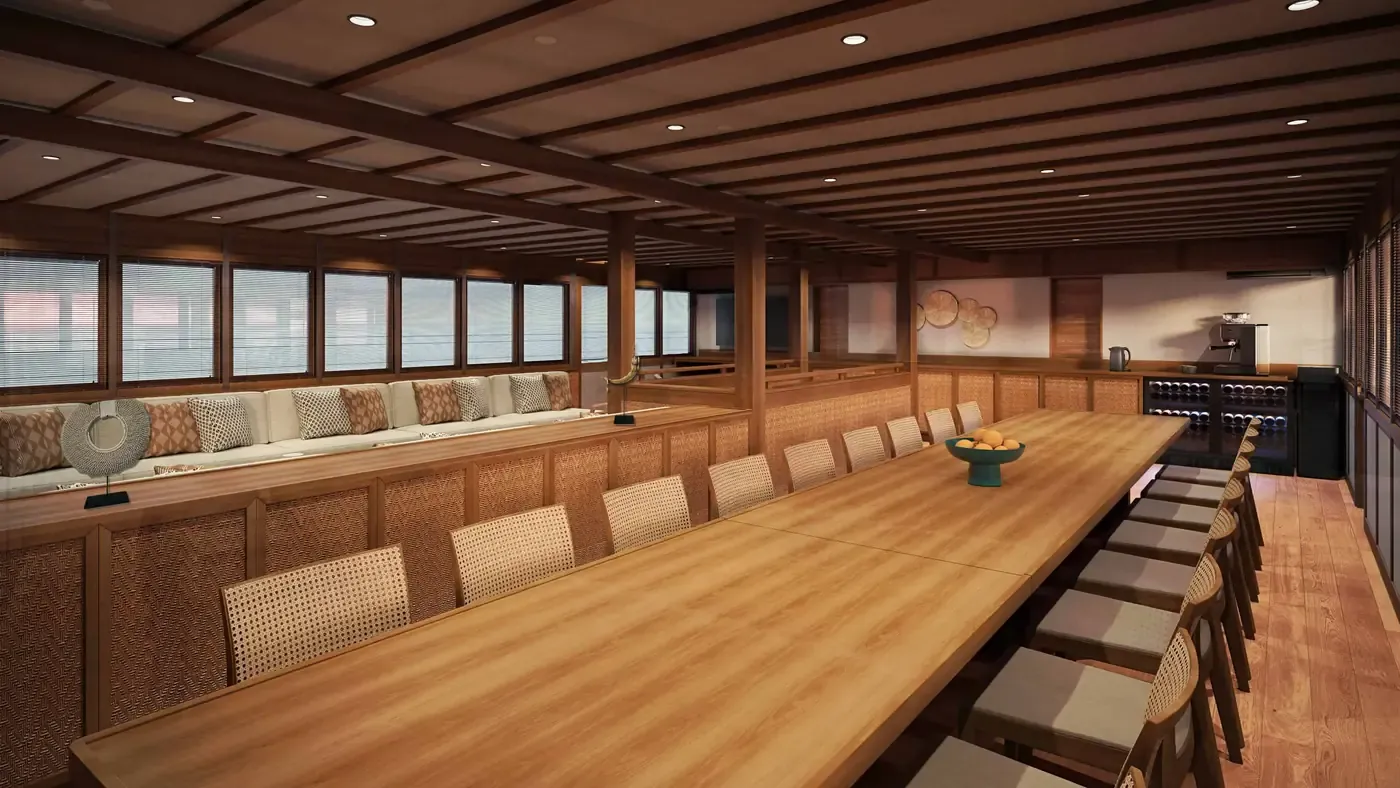
Yes, all premium Phinisi vessels feature a dedicated, climate-controlled camera room. These spaces are designed for professional and amateur photographers, providing individual stations with padded mats, ample power sockets (typically universal or European two-pin) for charging batteries, high-pressure air guns for drying equipment, and tiered shelving for organized storage. The room is a dry zone, separate from the main dive deck, to protect sensitive electronics.
Can I rent underwater photography equipment in Raja Ampat?
Rental options for high-quality underwater camera systems in Sorong are extremely limited to non-existent. We strongly advise you to bring your own complete camera, housing, strobe, and arm setup, including all necessary backups and spare parts (o-rings, batteries, memory cards). For specific rental needs, arrangements must be made well in advance from major hubs like Bali or Jakarta, with the equipment hand-carried to Sorong.
What is the best dive site for Raja Ampat manta photography?
For reliable manta ray encounters, two sites are primary. Manta Sandy is a shallow cleaning station ideal for photographing reef mantas (*Mobula alfredi*). Divers remain stationary on the sandy bottom, allowing the mantas to approach. For oceanic mantas (*Mobula birostris*), Magic Mountain is the premier location. This open-ocean seamount attracts both manta species and offers a dramatic, wide-angle backdrop of schooling fish and vibrant coral.
Are drone permits required for aerial filming in Raja Ampat?
Yes, drone operation in Indonesia is regulated. While rules are evolving, flying within the Raja Ampat Marine Park often requires a specific permit (Surat Izin Masuk Kawasan Konservasi or SIMAKSI) in addition to standard drone registration. Operation is restricted over certain villages and sensitive wildlife areas. Always consult with the cruise director before flying to ensure compliance with local regulations and to respect the privacy and safety of other guests and local communities.
Where does the Raja Ampat marine park fee actually go?
The mandatory Marine Park fee (IDR 1,000,000 per diver) directly funds the conservation and management of the 40,000 km² protected area. The funds are managed by the Raja Ampat Marine Park Authority (UPTD). A significant portion supports ranger patrols to combat illegal fishing. The remainder is allocated to scientific monitoring, waste management initiatives, community development programs, and environmental education for local villages, ensuring a direct benefit to the ecosystem and its inhabitants.
Are Raja Ampat liveaboards eco-certified?
While there is no single, overarching "eco-certification" mandated for all Indonesian liveaboards, reputable operators adhere to international best practices for sustainable marine tourism. This includes following guidelines from organizations like Green Fins. Our fleet implements strict protocols for waste management, uses mooring buoys instead of anchoring on reefs, operates onboard watermakers to eliminate single-use plastic bottles, and sources provisions locally where possible to support the regional economy.
Can I volunteer for reef surveys on a Raja Ampat liveaboard?
Standard liveaboard voyages are not structured to accommodate volunteer reef surveys. These scientific activities require specific methodologies and training (e.g., Reef Check, Coral Watch). However, we do host dedicated citizen science expeditions in partnership with research organizations several times a year. If you are interested in actively participating in data collection, please contact our sales team to inquire about the schedule for these specialized conservation-focused voyages.
How is plastic waste handled on a Raja Ampat liveaboard?
We enforce a strict zero-discharge policy. All waste generated on board is segregated into recyclables and non-recyclables. Plastics are compacted and stored securely until the vessel returns to port in Sorong. There, it is transferred to a designated waste management facility. We have eliminated single-use plastic bottles by providing all guests with reusable containers and access to filtered water from our onboard desalination systems, significantly reducing our plastic footprint.
What is the Raja Ampat reef etiquette diver code?
The code is based on minimal impact. Maintain perfect neutral buoyancy to avoid contact with coral. Secure all equipment, ensuring no gauges or octopus regulators drag. Do not touch, chase, or block the path of any marine life. Photography should be conducted with patience and awareness of your surroundings. The use of gloves is discouraged, as it can foster a false sense of security and encourage touching. Always follow the instructions of your dive guide.
Raja Ampat vs Maldives liveaboard — which is better for divers?
The choice depends on your priorities. Raja Ampat offers exceptional biodiversity, with the world's highest concentration of coral and reef fish species—Dr. Gerald Allen famously recorded 374 fish species on a single dive at Cape Kri. It excels in macro life and vibrant coral gardens. The Maldives is known for channel or "thila" diving, focusing on larger pelagics like sharks and rays in strong currents. The experience in Raja Ampat is more expeditionary; the Maldives is more resort-focused.
Is a Raja Ampat liveaboard worth it for non-photographers?
Absolutely. While photographers are drawn to the region's subject matter, the immersive experience is not contingent on capturing images. The sheer density and diversity of marine life is a profound sensory experience. Observing the complex behaviors within the ecosystem, navigating the intricate topography of the reefs, and witnessing the spectacle of schooling fish is deeply engaging. The value lies in the direct, unfiltered observation of one of the planet's most vibrant marine habitats.
Raja Ampat vs Banda Sea liveaboard — what's the difference?
The primary difference is itinerary focus and seasonality. Raja Ampat offers year-round diving (peaking Oct-Apr) with a focus on extreme coral and fish biodiversity in a relatively compact area. Banda Sea liveaboards are seasonal (typically Sep-Nov and Apr-May) and involve long, open-ocean crossings. They target pelagic action along a volcanic island arc, including schooling hammerhead sharks, and have a stronger historical and cultural element from the Spice Islands trade.
Should I do a Raja Ampat liveaboard or land-based stay first?
For a first-time visitor wanting to comprehend the scale of the archipelago, a liveaboard is the superior choice. It provides access to the most remote and diverse dive sites across different regions like the Dampier Strait and Misool, which are inaccessible on a day-trip basis. A land-based resort stay offers a more relaxed pace and focuses on the dive sites within a single, localized area. A liveaboard is an efficient survey of the entire 40,000 km² park.
Is a Raja Ampat liveaboard suitable for solo travelers?
Raja Ampat liveaboards are highly suitable for solo travelers, who often make up a significant portion of guests on any given voyage. We offer twin-share cabins, pairing individuals of the same gender to avoid a single supplement fee. The structured daily schedule and communal dining create a convivial atmosphere, making it easy to connect with like-minded divers from around the world. It is a secure and socially engaging way to explore the region.
Plan Your Trip
More in Plan Your Trip
Plan Your Raja Ampat Voyage
Our dive concierge team is ready to design your private phinisi charter. We manage all logistics — from arrival in Sorong to your departure.