Skip to content
Raja Ampat Liveaboard Diving
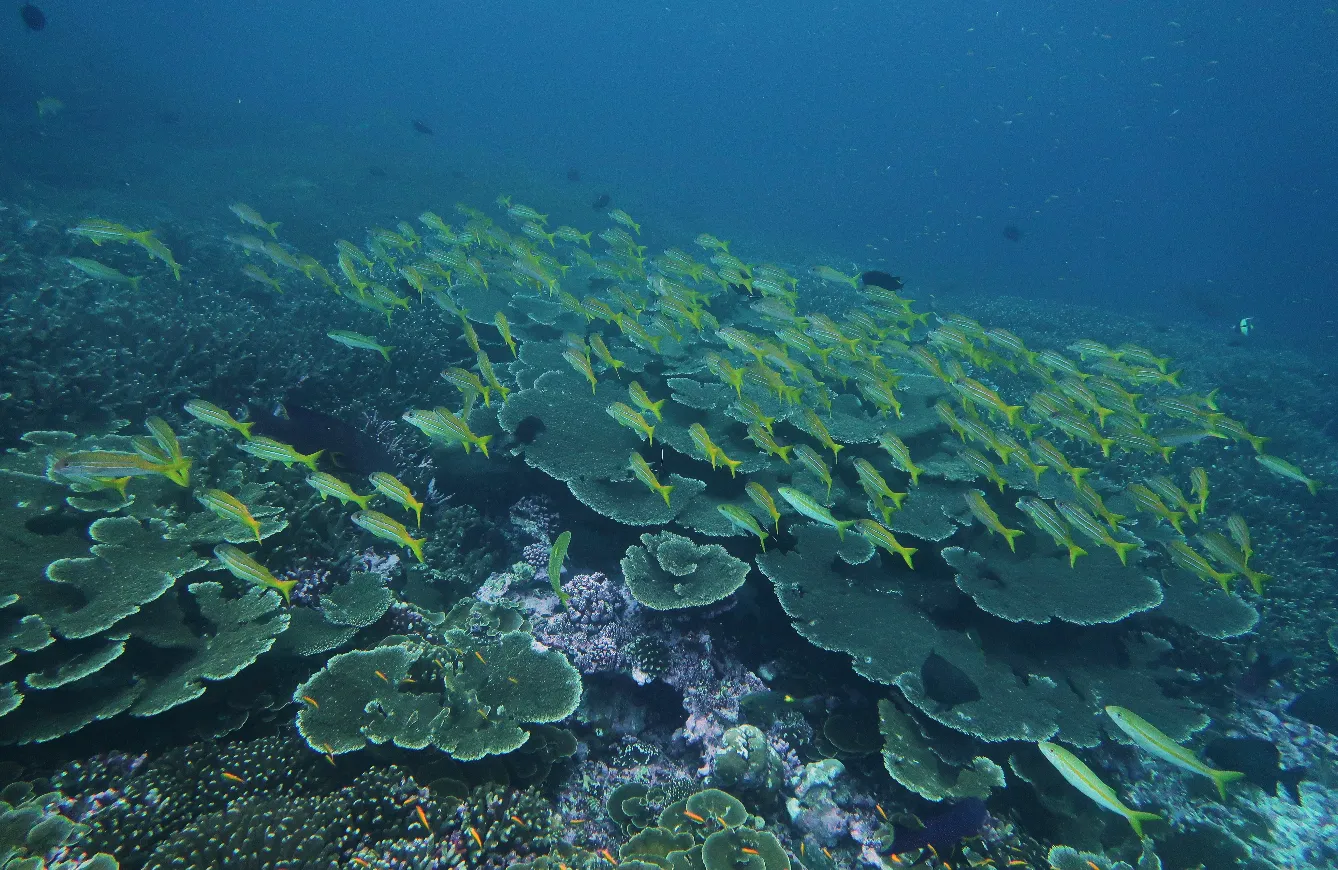
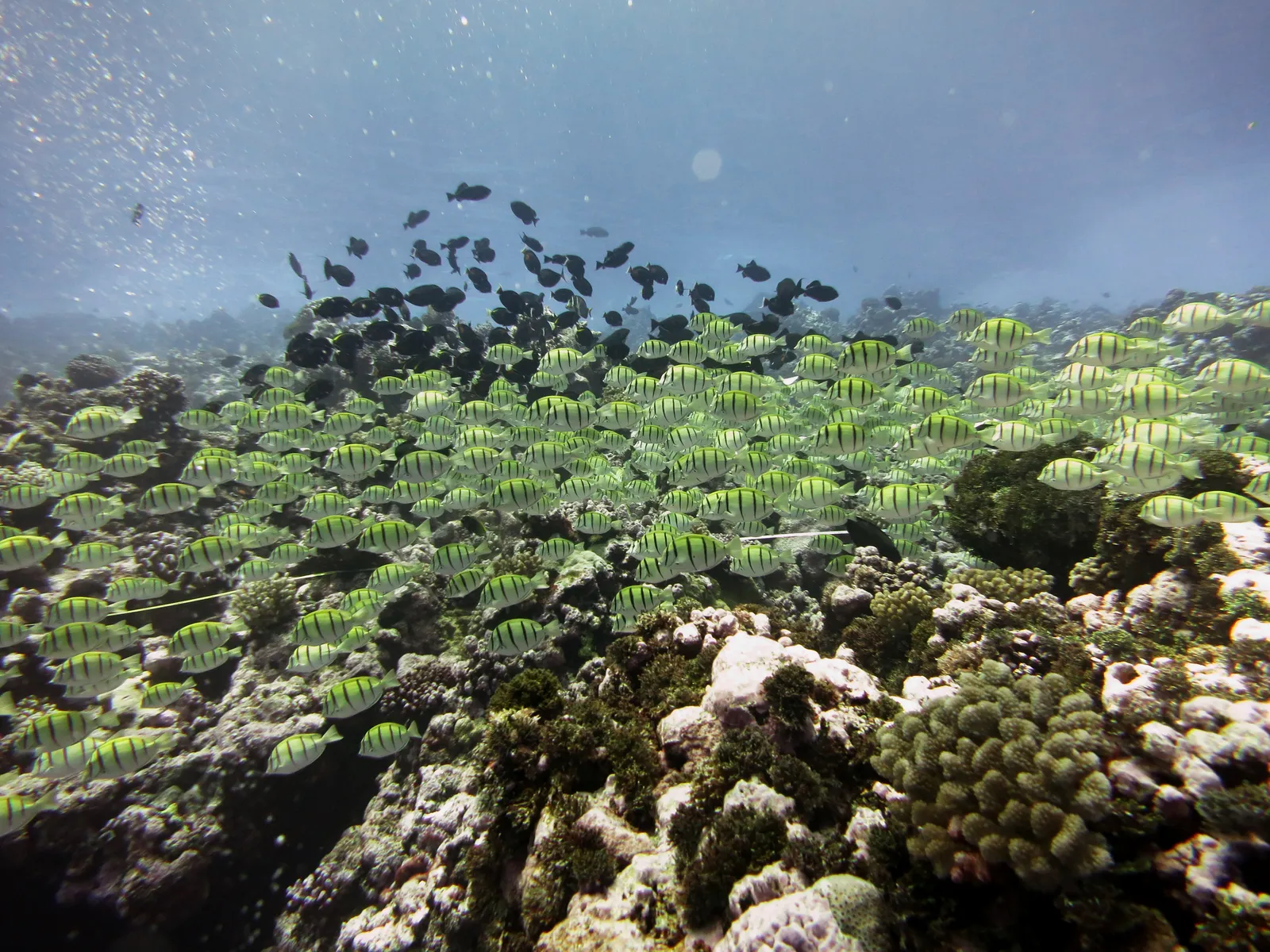
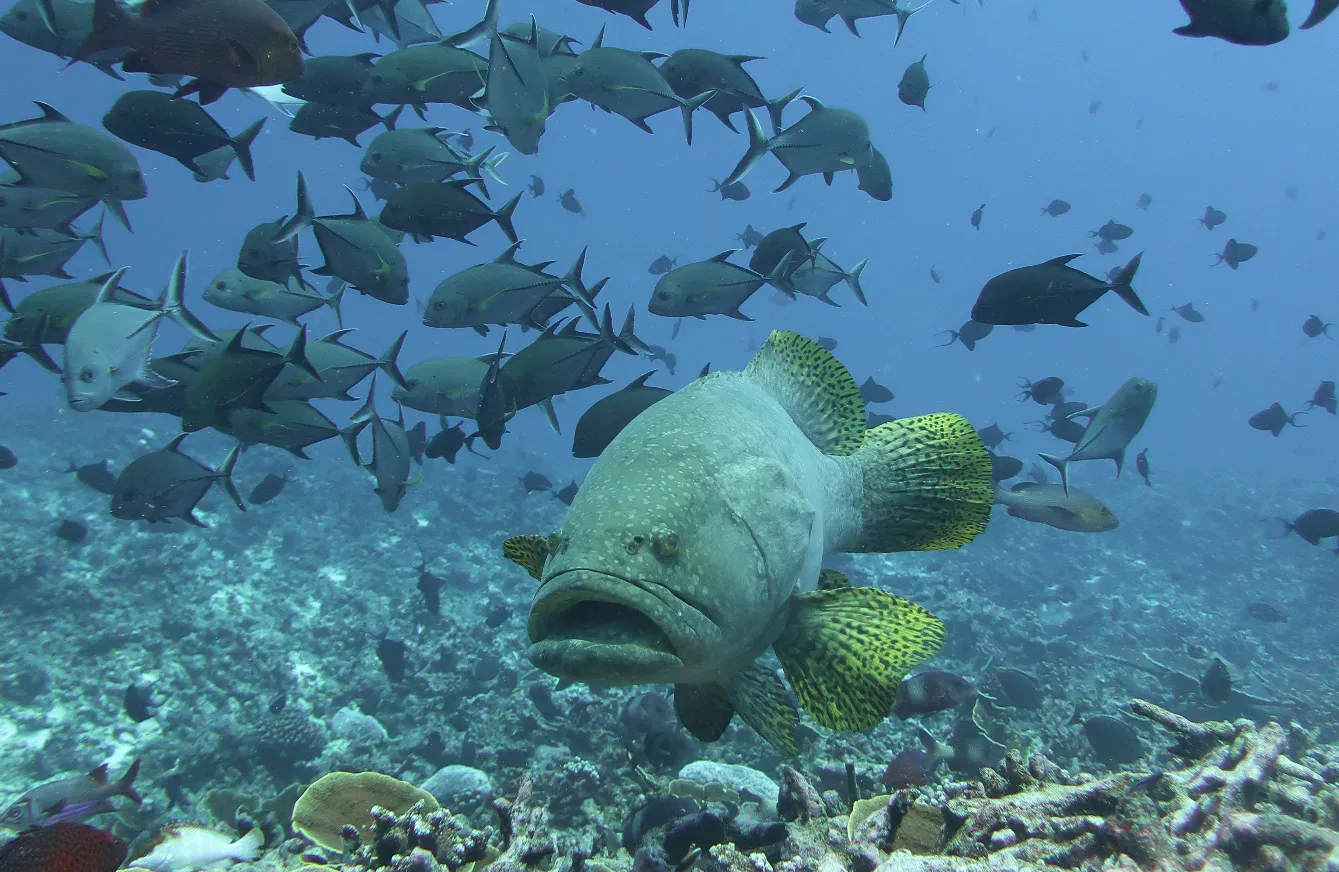
Coral reef and reef fish — Giant grouper black jacks Baker Island 2023

Dive Sites

Sardine Reef: The Dampier Strait’s Mid-Water Epicenter

Sardine Reef is an offshore, submerged pinnacle in the central Dampier Strait, defined by the immense biomass it supports.

This oval-shaped seamount rises from a 40-meter seabed to a reef top just five meters below the surface. Its exposed position in the channel makes it a focal point for currents and the vast schools of fish that thrive within them. The name is a direct reference to the sheer density of marine life, which can obscure the reef structure itself. For divers, Sardine Reef presents a dynamic, action-oriented drift dive where positioning and current awareness are paramount to observing the pelagic activity that makes this one of Raja Ampat’s most consistent and concentrated dive sites.

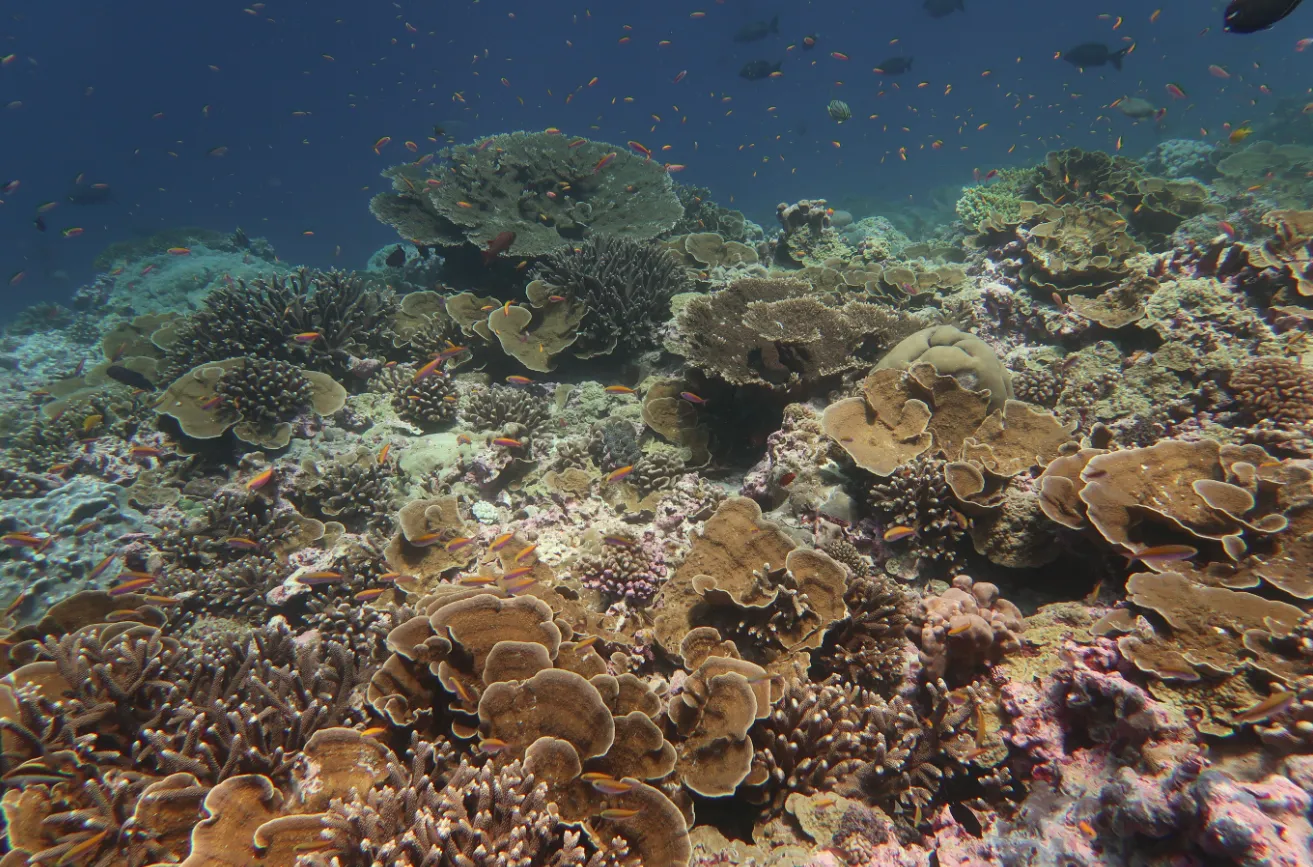
Coral reef and reef fish — Mimic goatfish coral reef Howland Island 2023

01

Site Topography and Dive Strategy

The physical structure of Sardine Reef dictates every aspect of the dive plan. The pinnacle is elongated, oriented roughly east to west, with a wide, sloping reef top covered in a dense carpet of fusiliers. The up-current side, known as the "split point," is where the dive begins and the primary action unfolds. Here, the current hits the reef structure and accelerates up and over the top, bringing a constant supply of nutrients.

Executing a dive here requires precision. Our dive tenders drop divers several meters upstream of the reef’s split point, a location confirmed by our guides using a GPS pin marked on their briefing slates. A negative entry is standard procedure, ensuring divers descend quickly through any surface chop and into the calmer water column below, arriving on the reef at a depth of 12 to 18 meters. From here, the primary technique is to secure a position with a reef hook on a bare rock or dead coral patch. This allows for a stable, low-exertion observation point from which to watch the spectacle without damaging the delicate coral substrate.

After spending the majority of the dive at the split, the plan involves releasing the hook and drifting with the current along the pinnacle’s flanks. The sides of Sardine Reef are decorated with large gorgonian sea fans and vibrant soft corals. The dive typically finishes on the leeward side of the reef, where the current slackens, allowing for a relaxed safety stop in the blue before deploying a surface marker buoy for pickup.

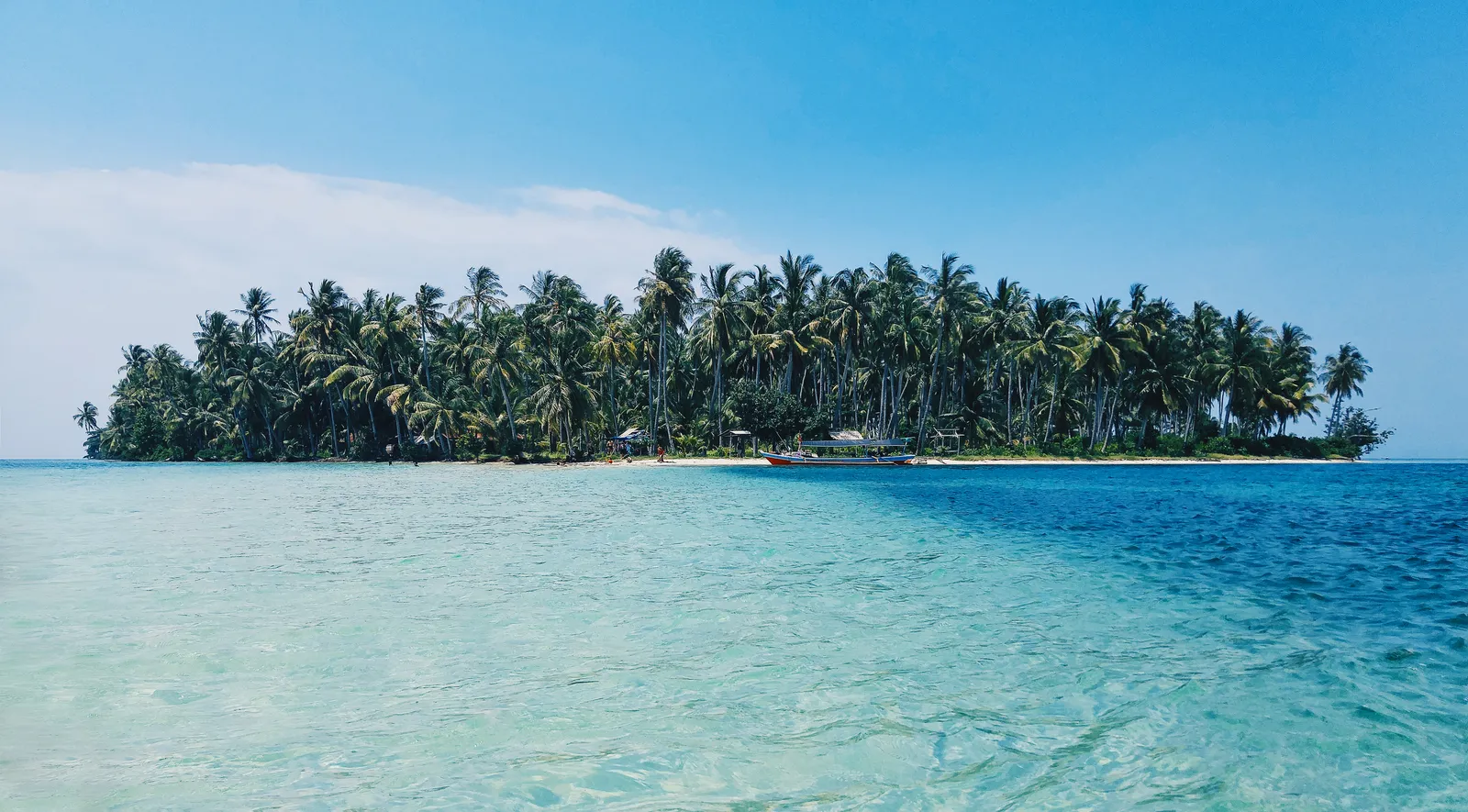
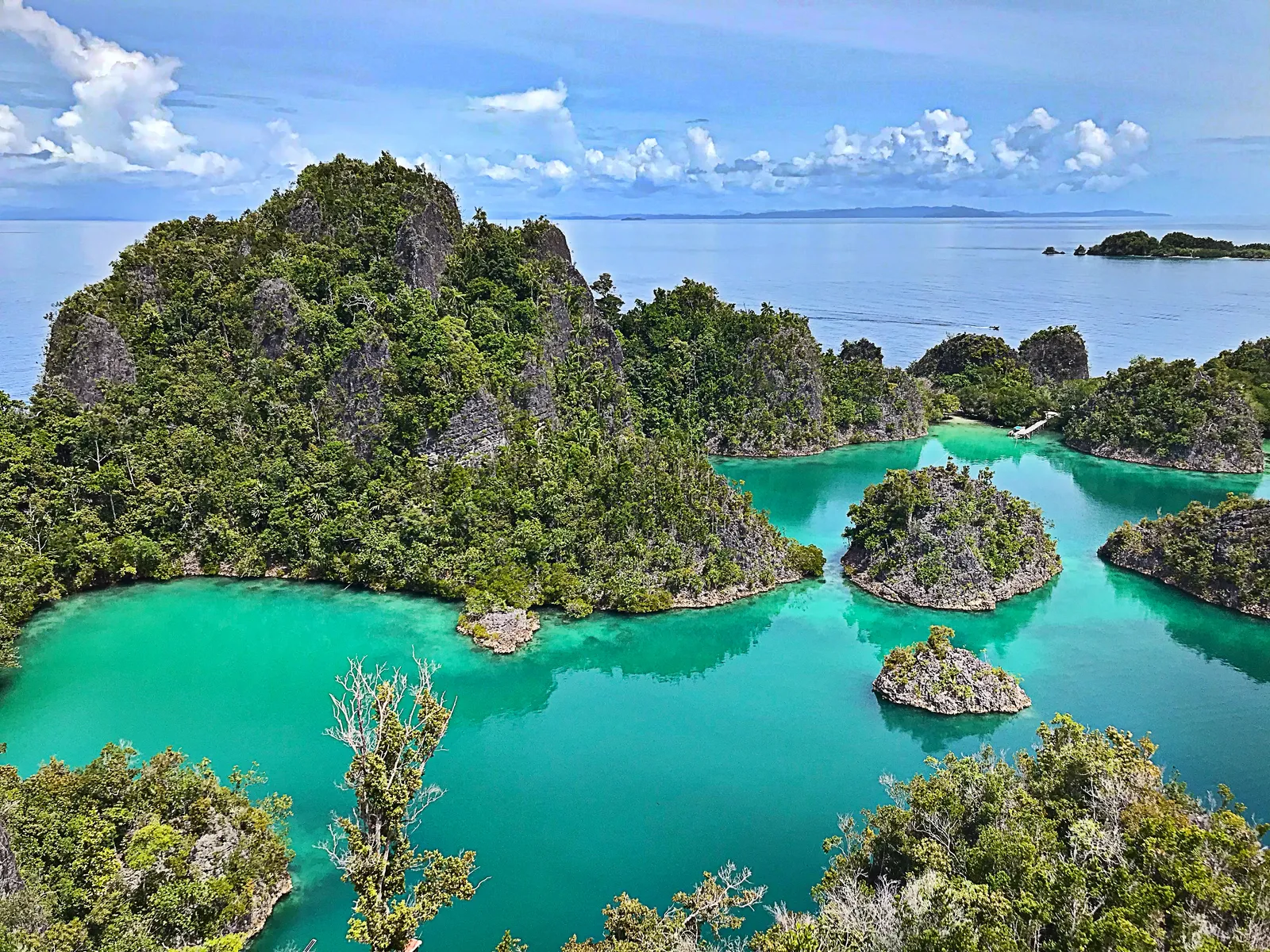
Tropical island seascape — Pahawang Island, Indonesia (Unsplash)

02

The Engine of Life: Dampier Strait Currents

To understand Sardine Reef is to understand the powerful hydrodynamics of the Dampier Strait. This channel, separating the islands of Waigeo and Batanta, acts as a primary conduit for the Indonesian Throughflow—a massive volume of water moving from the Pacific to the Indian Ocean. This constant flow is the engine that drives the entire ecosystem.

Current speeds at Sardine Reef consistently range from one to three knots, and can sometimes exceed this during peak lunar cycles. This is not a gentle drift; it is a powerful force that concentrates nutrients and, in turn, the marine life that feeds on them. The water is often so rich with plankton that visibility, while generally clear at 20-40 meters, can appear hazy with life. This nutrient-rich water is precisely why the reef supports such a staggering volume of fish. The currents are predictable based on tide charts, a critical component of our voyage planning for every Raja Ampat liveaboard itinerary. Our experienced guides, with data from over 1,240 operated voyages, select dive times that coincide with optimal current conditions—strong enough for action, but manageable for certified Advanced Open Water divers.

03

Marine Life: A Study in Aggregation

The defining characteristic of Sardine Reef is its schooling fish. The sheer numbers create a constantly moving, three-dimensional wall of life that is the site's signature. Unlike many dive sites where sightings are a matter of chance, these aggregations are a permanent feature.

01

The Pelagic Mainstays

From the moment you descend, you are enveloped by fish. Enormous schools of yellow-ribbon sweetlips (Plectorhinchus polytaenia) often hover in dense clouds just off the reef slope. Above them, a vortex of bigeye trevally (Caranx sexfasciatus) circles in the blue. Divers often find themselves positioned directly in the center of a massive, shimmering school of chevron barracuda (Sphyraena qenie), their silver bodies forming a synchronized, disciplined wall. Adding color and movement to the reef top are rivers of blue and yellow fusiliers (Caesio teres), which flow over the coral like water.

02

Predators and Passing Giants

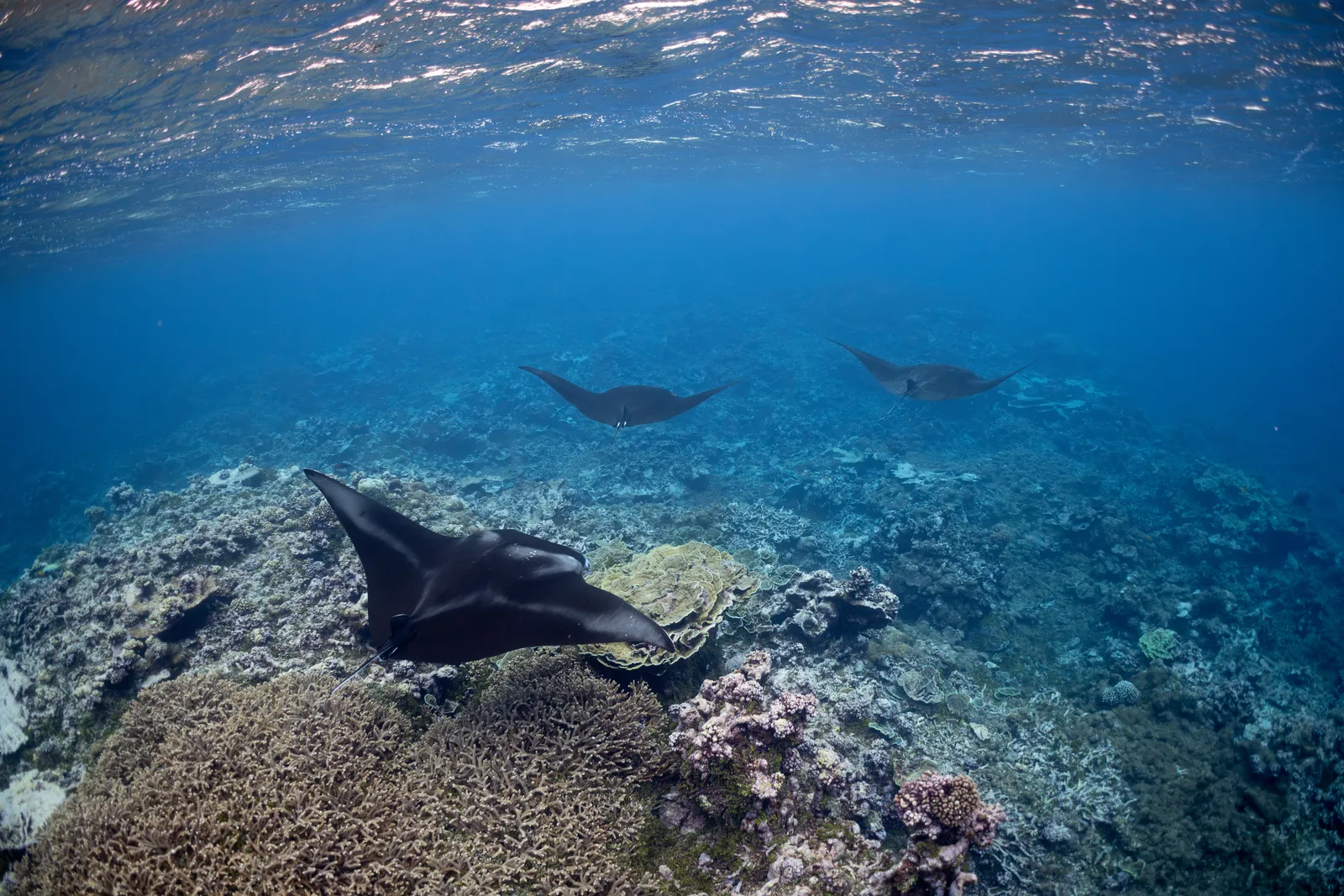
Where there are immense schools of fish, predators are never far behind. The action at Sardine Reef is frequently punctuated by high-speed hunting. Giant trevallies (GTs) patrol the edges of the schools, making explosive dashes into the bait balls. Spanish mackerel, sleek and powerful, shoot through the water column. Multiple species of reef shark—primarily blacktip (Carcharhinus melanopterus), whitetip (Triaenodon obesus), and the larger grey reef sharks (Carcharhinus amblyrhynchos)—are common sightings, cruising effortlessly in the current. On occasion, a cruising oceanic manta (Mobula birostris) or even a scalloped hammerhead has been documented passing in the deep blue off the pinnacle.

03

Macro Subjects and Reef Inhabitants

While the pelagic action commands attention, the reef substrate itself hosts a diverse community. While hooked in, divers can inspect the surrounding area for smaller life. Wobbegong sharks (Eucrossorhinus dasypogon) are frequently found camouflaged on the reef top. The large gorgonian fans that populate the reef's flanks are ideal places to search for the tiny Pontoh's pygmy seahorse (Hippocampus pontohi), an endemic species to this region. A variety of nudibranchs, scorpionfish, and crustaceans can be found by those with a keen eye, offering a macro counterpoint to the wide-angle spectacle unfolding just meters away. Exploring these subjects offers a productive way to spend the final, drifting portion of the dive. For photographers, this duality makes Sardine one of the most productive dive sites in Raja Ampat.

Liveaboard interior — Cabin 2 El Aleph

04

Dive Requirements and Best Season

Due to the prevailing currents and the necessity of a negative entry, Sardine Reef is designated for Advanced Open Water (AOW) certified divers with experience in drift diving. Comfort with deploying a surface marker buoy (SMB) is mandatory. The use of a reef hook is standard practice and highly recommended for both diver safety and environmental preservation, preventing contact with the reef.

The peak season for diving Sardine Reef aligns with the general Raja Ampat season, running from October through April. During these months, the northwest monsoon brings calmer seas, making the crossing to the exposed site more comfortable and predictable. Water temperatures are stable year-round, ranging from 27-30°C. This period offers the most consistent conditions for the high-voltage action the site is known for. Our private charter itineraries are specifically designed around these optimal windows to ensure the best possible access to Sardine Reef and other premier sites in the Dampier Strait.

FAQ

Frequently Asked Questions

Why is it named Sardine Reef if there are no sardines?

The name is metaphorical, coined by pioneer divers to describe the experience of being surrounded by fish so densely packed they resemble a "tin of sardines." The primary schooling species are fusiliers, jacks, sweetlips, and barracuda, not literal sardines. The name effectively communicates the sheer biomass and density of marine life that is the site's defining feature, making it one of the most memorable dives in the Dampier Strait.

What is the minimum certification required to dive Sardine Reef?

An Advanced Open Water (AOW) certification or equivalent is the strict minimum requirement. This is due to the operational demands of the dive: depths regularly reach 25 meters, strong currents necessitate drift diving skills, and a negative entry is standard procedure. Our dive team enforces this standard to ensure the safety and comfort of all guests. Divers must be proficient and confident in these conditions before joining a dive at this site.

Is a reef hook essential for this dive?

While not legally mandatory, we consider a reef hook an essential piece of equipment for Sardine Reef. It allows a diver to maintain a stable position in strong current with minimal effort and, crucially, without touching or damaging the coral. Our guides provide instruction on its proper, low-impact use—hooking only onto bare rock or dead substrate. It enhances the dive experience by allowing you to relax and observe the marine life spectacle.

How does Sardine Reef compare to Cape Kri?

Both are premier Dampier Strait sites, but they offer different experiences. Cape Kri, which holds the record for fish species on a single dive, is a long reef point defined by incredible biodiversity across its entire length. Sardine Reef is a smaller, more concentrated pinnacle defined by massive, dense aggregations of specific schooling fish. While Cape Kri offers more to explore, Sardine Reef delivers a more intense, focused pelagic spectacle.

Experiencing Sardine Reef is a matter of precise timing and expert logistical support. The site's full potential is unlocked when visited under the right tidal conditions from a vessel equipped for performance diving. As a core component of our Dampier Strait itineraries, we position our Phinisi schooners to dive this site at its peak. To incorporate Sardine Reef into your voyage, contact our concierge team directly to discuss our scheduled expeditions or to design a custom private charter. We are available on WhatsApp at +62 811-3823-875 to begin planning.

Coral reef and reef fish — Giant grouper black jacks Baker Island 2023

Plan Your Raja Ampat Voyage

Our dive concierge team is ready to design your private phinisi charter. We manage all logistics — from arrival in Sorong to your departure.