Skip to content
Raja Ampat Liveaboard Diving
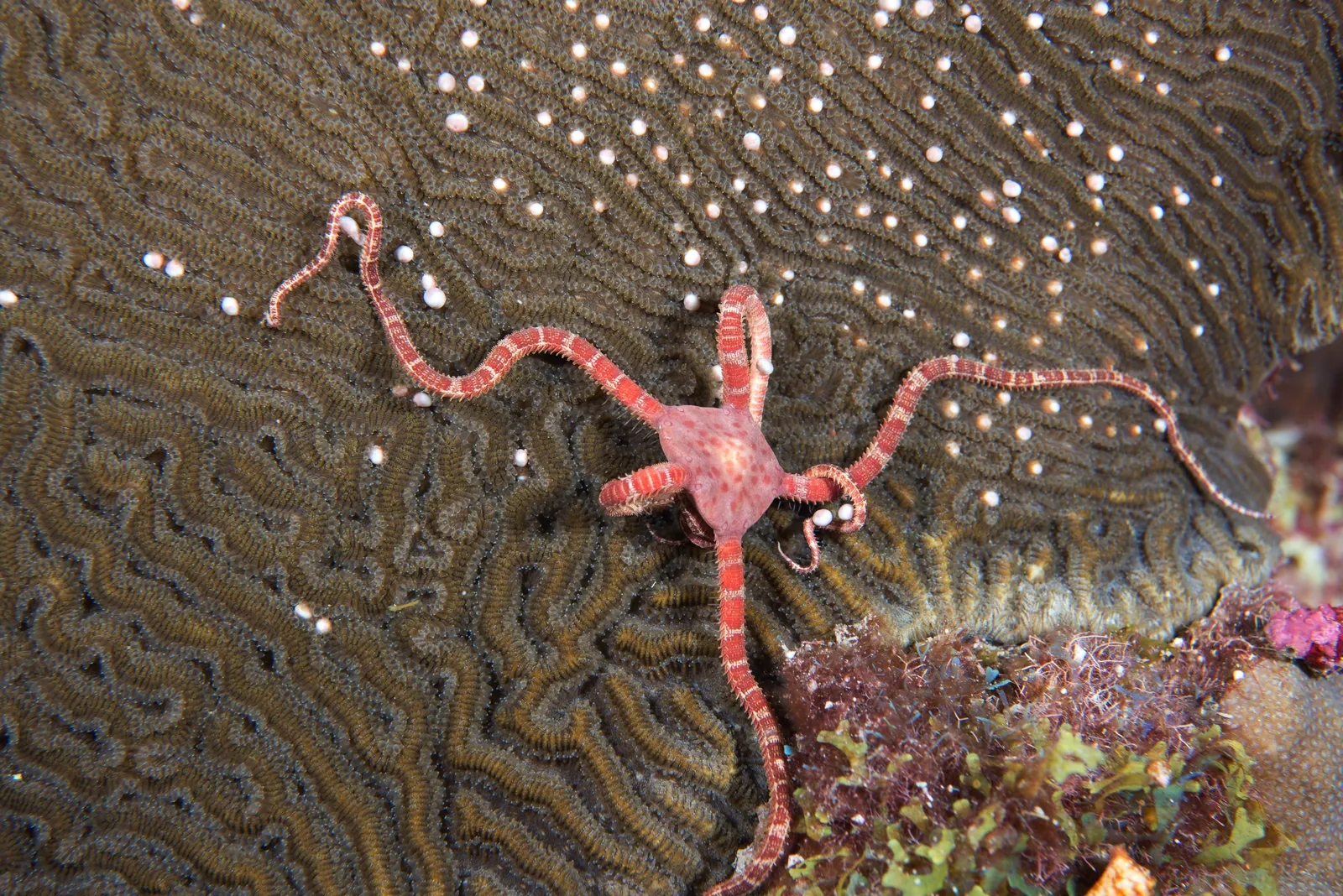
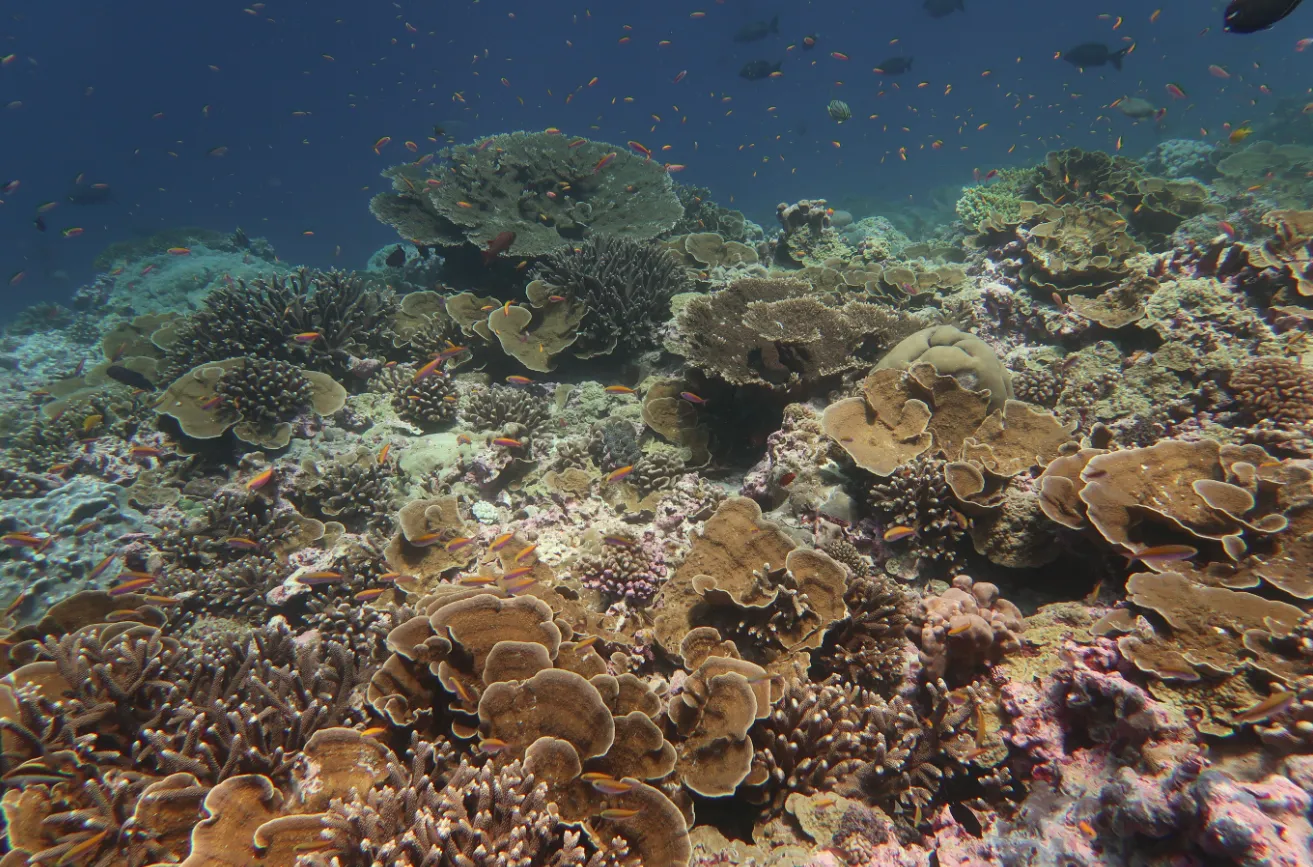
Coral reef and reef fish — Baker Island reef Anthias 2023

Dive Sites

Raja Ampat Dive Sites — Complete Liveaboard Guide to 40+ Sites

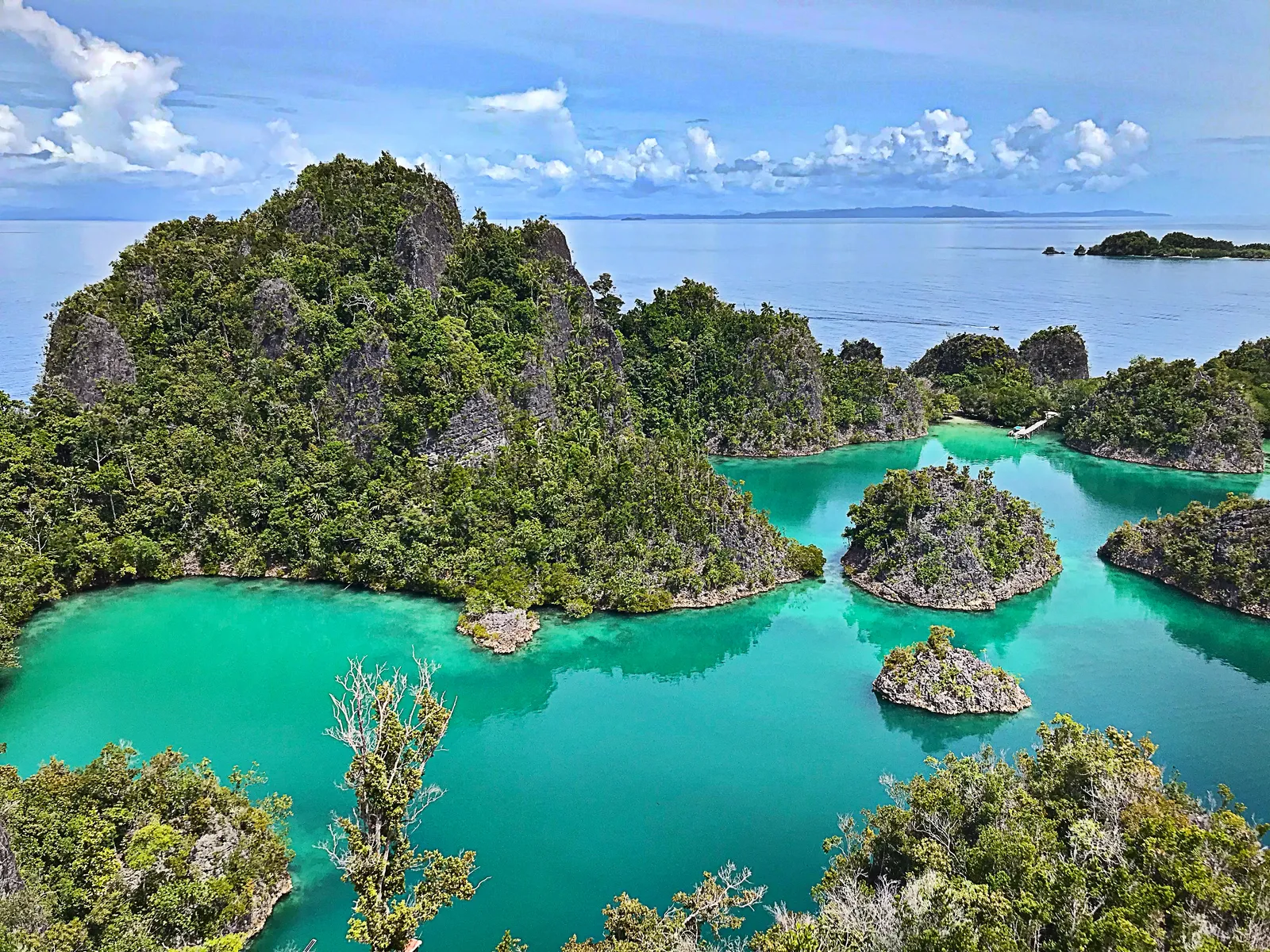
Raja Ampat's dive sites are a network of submerged reefs, volcanic pinnacles, and current-swept channels distributed across an archipelago of over 1,500 islands.

Located in Indonesia's West Papua province, this 40,000 km² region forms the epicenter of the Coral Triangle, hosting 75% of all known hard coral species. The biodiversity is quantifiable: a 2012 survey by Dr. Gerald Allen at the Cape Kri dive site documented a record-breaking 374 reef fish species on a single 90-minute dive. Accessing the premier Raja Ampat dive sites, which are separated by significant nautical distances, is exclusively a liveaboard undertaking. A phinisi-based voyage is the most effective platform for navigating these waters, moving between anchorages in the Dampier Strait, the southern archipelago of Misool, and the remote northern islands of Wayag and Kawe.

01

The Dampier Strait: High-Voltage Channels

The Dampier Strait is a deep, nutrient-rich channel that separates the islands of Waigeo and Batanta. This passage acts as a primary funnel for the Indonesian Throughflow, concentrating immense volumes of water and the plankton it carries. The result is a series of dive sites defined by strong currents, typically ranging from 1 to 4 knots, and a corresponding density of marine life that is difficult to overstate. Navigating these sites requires experience with drift profiles and the proper use of a reef hook. Our liveaboard itineraries are meticulously planned around the lunar cycle to dive these locations during optimal tidal windows, maximizing both safety and pelagic encounters. Review our standard 8-day Dampier Strait package for a typical route through this region.

01

Cape Kri

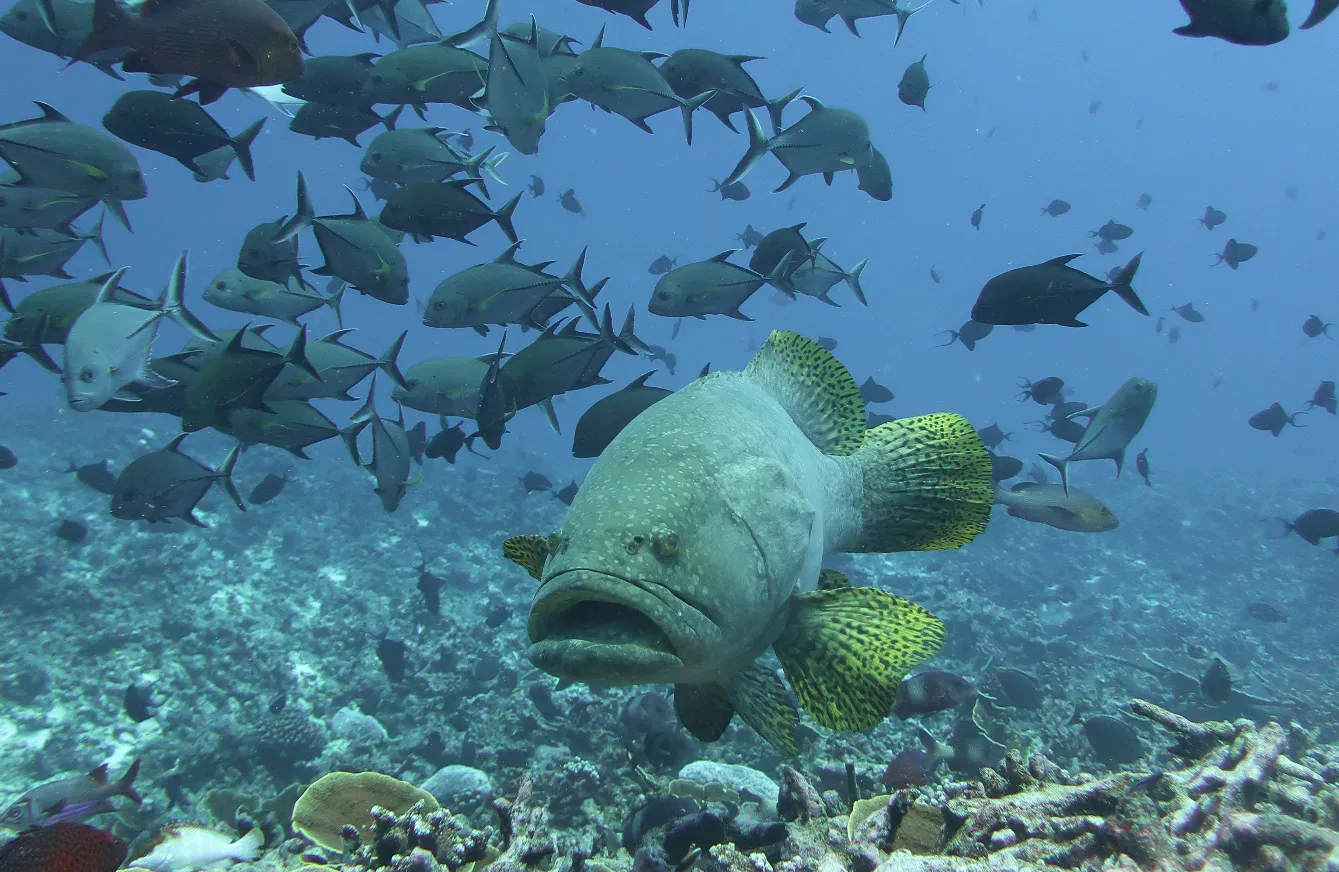
Cape Kri is a sloping reef extending from the northeastern tip of Kri Island. It is this site that holds the world record for fish species diversity. The dive profile begins on the current-exposed point, descending to 30 meters to observe patrolling grey reef, whitetip, and blacktip reef sharks in the blue. As you ascend, you drift along a steep slope covered in hard corals and massive barrel sponges. The sheer biomass is the primary feature; vast, dense schools of yellow-fin barracuda, bigeye trevally, and fusiliers obscure the reef itself. Tasseled wobbegong sharks (Eucrossorhinus dasypogon) are frequently found resting under table corals on the reef top at 5-10 meters. A reef hook is essential equipment here.

  • Depth: 5–40 meters
  • Current: Moderate to very strong
  • Marine Life: Grey reef sharks, giant trevally, Napoleon wrasse, schooling barracuda, wobbegong sharks, pygmy seahorses
  • Certification: Advanced Open Water required
02

Blue Magic

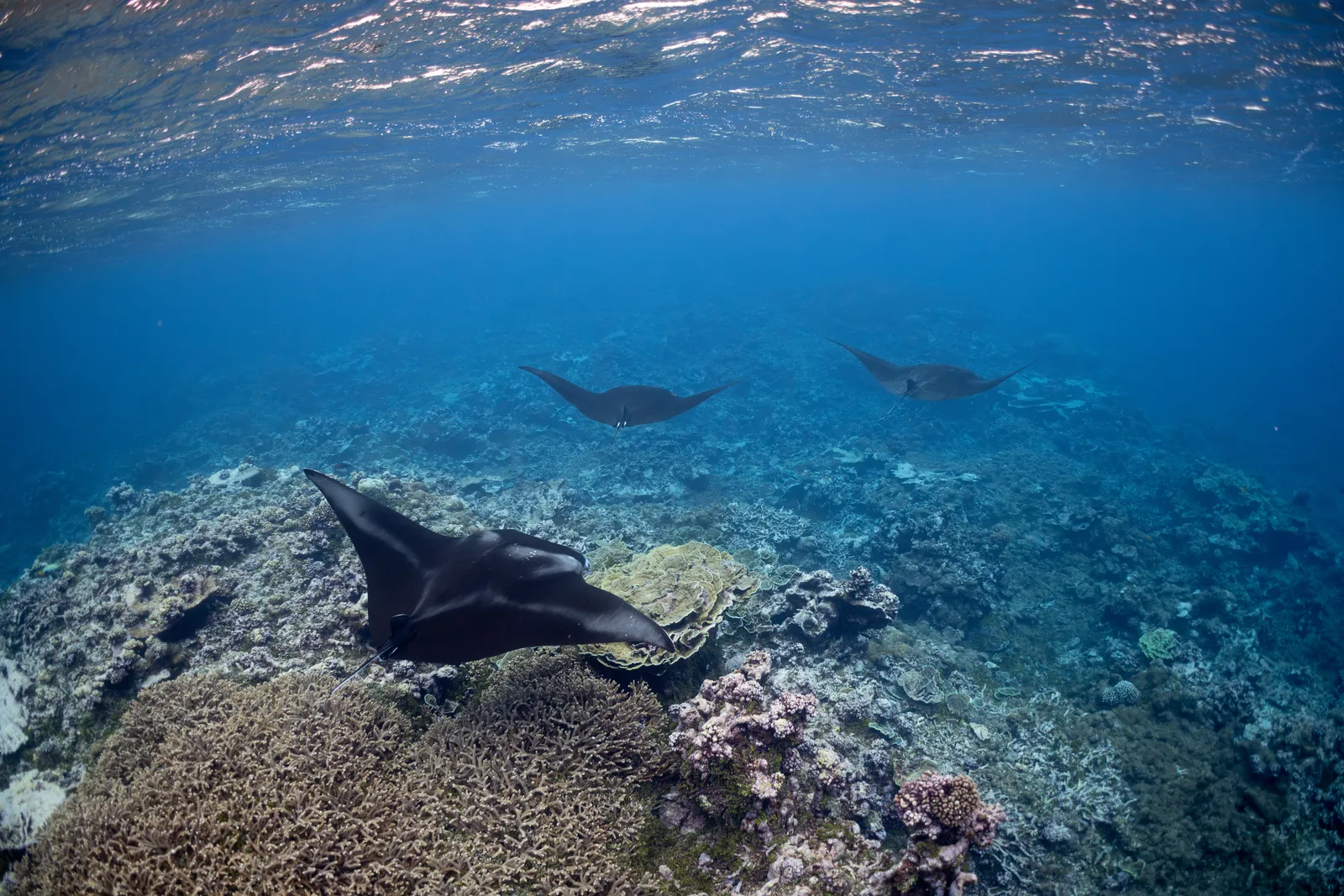
Blue Magic is a submerged, oval-shaped pinnacle located in the open water of the Dampier Strait, approximately 1.5 nautical miles from Cape Kri. The reef top sits at 7 meters, descending steeply past 30 meters. This exposed location makes it a magnet for pelagic species and often demands a negative entry to get below surface chop. The primary attraction is the consistent presence of large marine life. Divers descend to the up-current split point, hook in, and observe the activity. During the season from December to March, oceanic manta rays (Mobula birostris) visit the multiple cleaning stations on the reef's plateau. A resident school of bigeye trevally numbers in the thousands, forming a tornado-like vortex, and large Spanish mackerel and tuna hunt fusiliers off the reef edge. The currents at Blue Magic Raja Ampat are notoriously unpredictable and can shift direction mid-dive, making it a site reserved for experienced divers.

  • Depth: 7–35 meters
  • Current: Strong and unpredictable; down-currents possible
  • Marine Life: Oceanic manta rays, grey reef sharks, giant trevally, Spanish mackerel, large Napoleon wrasse
  • Certification: Advanced Open Water with 50+ logged dives recommended
03

Sardine Reef

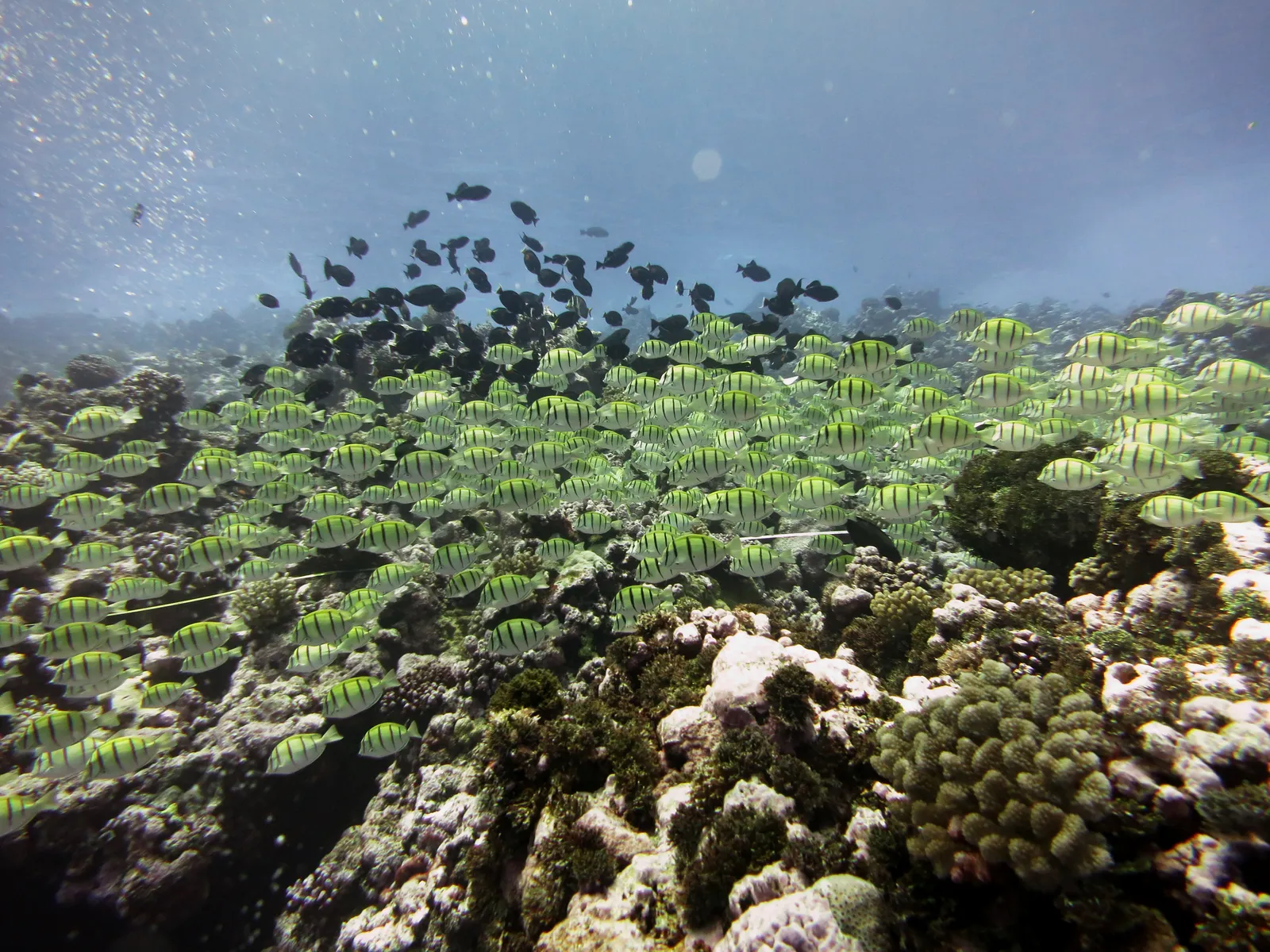
Sardine Reef is an offshore pinnacle whose name refers to the density of its fish schools, not the presence of sardines. The reef is a large, submerged oval with a top at 5 meters, sloping down to a sandy bottom around 25 meters. The site is a classic drift dive. The boat drops divers at the current split, and the group navigates along the pinnacle's flank, which is blanketed in a vibrant mix of hard and soft corals. The defining feature is the sheer volume of fish; schools of surgeonfish, bannerfish, and fusiliers are so thick they often block the sunlight. This concentration of prey attracts predators, and it is common to witness giant trevallies and Spanish mackerel actively hunting throughout the dive. In the large gorgonian fans, divers with sharp eyes can locate Bargibant's pygmy seahorses (Hippocampus bargibanti).

  • Depth: 5–30 meters
  • Current: Moderate to strong
  • Marine Life: Schooling fusiliers, surgeonfish, bannerfish, hunting GTs, wobbegong sharks, pygmy seahorses
  • Certification: Open Water with drift experience; AOW preferred
04

Manta Sandy

Manta Sandy is a shallow channel between two small islands that serves as one of Raja Ampat's most reliable cleaning stations for reef manta rays (Mobula alfredi). The site is a sandy plateau at a maximum depth of 15 meters, with several large coral bommies that harbor colonies of cleaner wrasse. The dive plan is static: divers descend and position themselves behind a low retaining wall of dead coral, remaining motionless to avoid disturbing the mantas. From this vantage point, you can watch multiple individuals, often up to a dozen, circle gracefully overhead as they are serviced by the cleaner fish. The peak season for aggregations is December through March. Strict adherence to the code of conduct is enforced—no chasing, touching, or blocking the mantas' path. This focus on a single species makes Manta Sandy a critical stop on any Central Raja Ampat itinerary.

  • Depth: 10–18 meters
  • Current: Slight to moderate
  • Marine Life: Reef manta rays (Mobula alfredi), blacktip reef sharks, cuttlefish, various nudibranchs
  • Certification: Open Water; excellent buoyancy control is mandatory

02

Misool: The Southern Realm of Soft Corals

Misool is the southern of Raja Ampat's "Four Kings," an archipelago of limestone islands surrounded by some of the most biodiverse reefs on Earth. This area, protected by the Misool Marine Reserve, is celebrated for its kaleidoscopic soft coral gardens, dramatic underwater topography, and as a critical habitat for oceanic manta rays. The logistics of reaching this remote region mean that Misool diving is accessible only via liveaboard, typically on longer 9- or 11-day voyages. The investment in time is rewarded with access to sites of exceptional health and vibrancy. Explore our dedicated private charter options to build a custom Misool-focused expedition.

01

Magic Mountain (Shadow Reef)

Magic Mountain is a vast, submerged seamount located in Misool's southern waters. Its long, exposed ridge, which rises to 7 meters below the surface, serves as a cleaning station for two distinct species of manta ray. This is one of the few locations in the world where divers can reliably observe both the larger oceanic manta ray (Mobula birostris) and the reef manta ray (Mobula alfredi) at the same cleaning station. The dive involves descending onto the ridge, securing a position with a reef hook, and observing the pelagic activity. Beyond the mantas, large Napoleon wrasse, schools of chevron barracuda, and several species of reef shark are常客. The site's exposure means it is subject to powerful and sometimes vertical currents, making Magic Mountain a dive suitable only for highly experienced divers comfortable in challenging conditions.

  • Depth: 7–40+ meters
  • Current: Strong, with potential for down-currents
  • Marine Life: Oceanic and reef manta rays, Napoleon wrasse, grey reef sharks, schooling jacks
  • Certification: Advanced Open Water with significant experience in strong currents
02

Boo Windows

Boo Windows, also known as Boo Rock, is a small island in the Boo Island chain, named for two large, swim-through holes eroded completely through the rock just below the waterline. The "windows" sit at a shallow depth of 2-5 meters, creating a dramatic photographic opportunity as you begin the dive. After passing through one of the windows, the dive continues along a steep wall that is densely packed with vibrant yellow and orange soft corals and enormous gorgonian sea fans. The reef is patrolled by schools of batfish and silversides. Underneath ledges and table corals, divers can often find well-camouflaged tasseled wobbegong sharks. The surge can be strong near the surface, requiring careful timing and awareness when navigating the windows.

  • Depth: 3–30 meters
  • Current: Slight to moderate, can have surge
  • Marine Life: Exceptional soft coral coverage, wobbegong sharks, schools of batfish, green sea turtles
  • Certification: Open Water; comfort with swim-throughs is beneficial
03

Nudi Rock

Nudi Rock is a small islet in the Fiabacet chain, shaped distinctly like a sea slug from a certain angle. This site is a macro photographer's objective, though the fish life is equally impressive. The dive is a wall circuit around the rock, which is covered in a tapestry of soft corals and sea fans. The walls and crevices host an extraordinary diversity of nudibranchs, from the common Chromodoris species to rarer finds. It is also a prime location for finding the endemic Raja Ampat pygmy seahorse (Hippocampus pontohi), which lives on hydroids along the wall. Schools of yellowtail fusiliers and oceanic triggerfish are abundant, creating a dynamic backdrop for the macro subjects.

  • Depth: 5–30 meters
  • Current: Moderate
  • Marine Life: Numerous nudibranch species, Pontoh's pygmy seahorse, ghost pipefish, frogfish, dense schools of fusiliers
  • Certification: Open Water
04

Four Kings

The Four Kings site is a complex of four submerged pinnacles in the heart of Misool. These towering rock formations rise from a depth of over 40 meters to within 5 meters of the surface. The entire area is a whirlwind of marine life, fueled by the currents that sweep between the pinnacles. The structures are completely covered in a dense layer of multi-colored soft corals and filter-feeding crinoids. Navigating the site involves drifting from one pinnacle to the next, using the rock formations as shelter from the main current flow. Glassfish swarm in the protected lees, hunted by lionfish and groupers. In the blue, schools of jacks and barracuda are a constant presence. This is a quintessential Misool dive, showcasing the region's signature color and biomass.

  • Depth: 5–40 meters
  • Current: Moderate to strong
  • Marine Life: Unrivaled soft coral density, massive schools of glassfish and fusiliers, Napoleon wrasse, reef sharks
  • Certification: Advanced Open Water required
03

The Fam Islands and Penemu

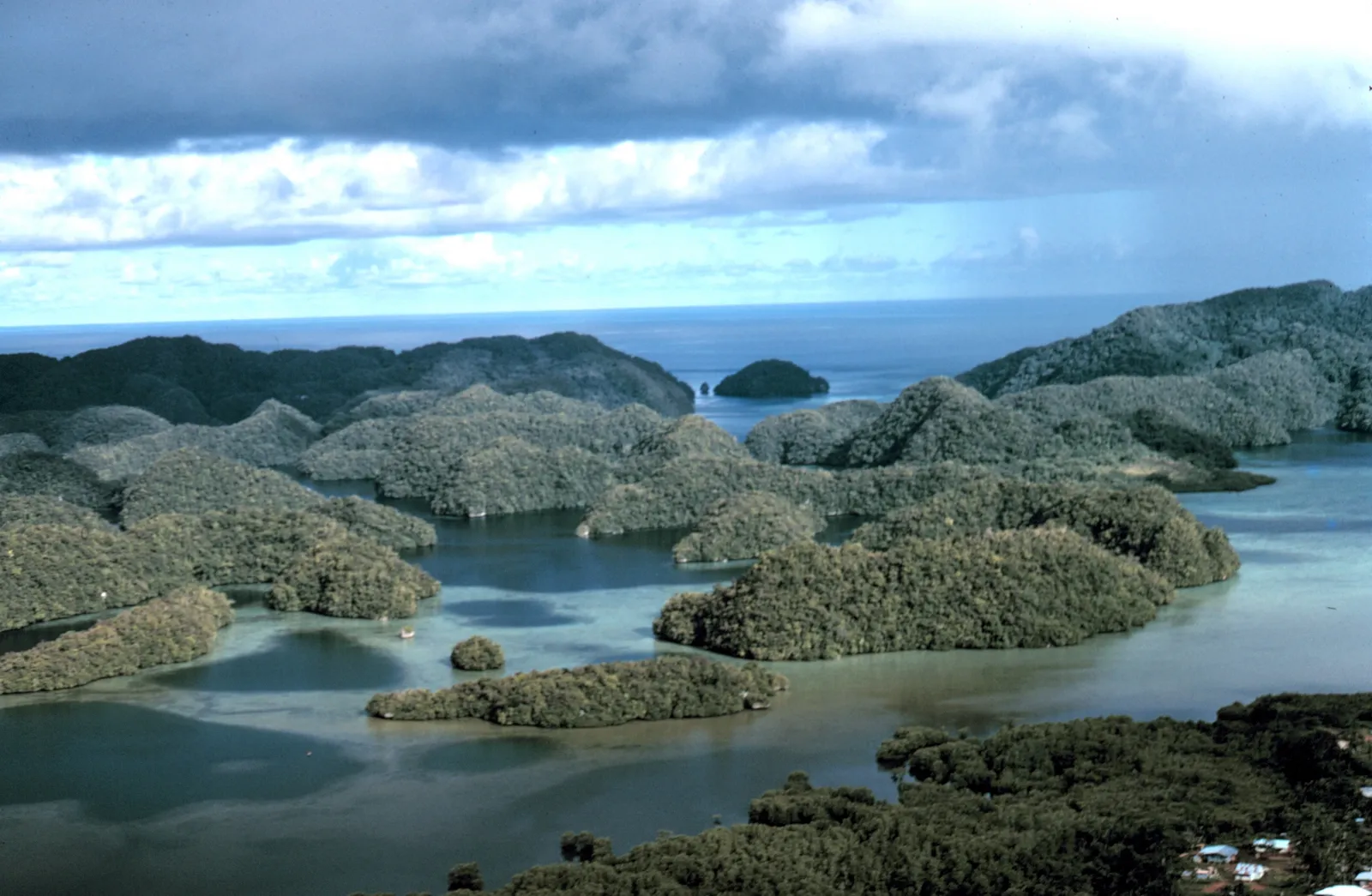
The Fam Islands are an archipelago situated centrally in Raja Ampat, roughly equidistant from the Dampier Strait and Misool. This strategic location makes them a common feature on longer itineraries that combine the northern and southern regions. The area is defined by its stunning karst island topography, most famously seen from the Pianemo viewpoint, and its exceptionally healthy hard coral gardens. The underwater environment here offers a contrast to Misool's soft coral dominance, showcasing vast plateaus of staghorn and table corals. Our liveaboard pricing and availability page details which trips include this spectacular region.

01

Melissa's Garden

Melissa's Garden is an expansive, shallow reef plateau located between three small islands in the Fam group. It is widely considered one of the most beautiful and healthy hard coral gardens in the world. The dive is typically conducted at a shallow depth profile, between 5 and 18 meters, allowing for extended bottom times to explore the vast coral fields. The density of Acropora (staghorn and table) corals is striking, forming an intricate, multi-layered habitat for thousands of reef fish. Anthias, damselfish, and chromis create a constant cloud of color above the coral. This is a primary habitat for the endemic Raja Ampat walking shark (Hemiscyllium freycineti), which is often found by guides under ledges, as well as wobbegong sharks and the occasional green sea turtle.

  • Depth: 5–20 meters
  • Current: Slight
  • Marine Life: Dense hard coral fields, walking sharks, wobbegongs, countless anthias, Pontoh's pygmy seahorses
  • Certification: Open Water
02

Keruo Channel

Keruo Channel is a narrow passage between two of the Fam Islands, featuring a dramatic, near-vertical wall on one side. The topography creates a perfect drift dive. Divers descend on the up-current end of the channel and are carried along the wall, which plunges from 3 meters to beyond 40 meters. The wall is adorned with immense purple and orange gorgonian sea fans, soft corals, and barrel sponges. Swarms of glassfish hug the wall for protection, attracting predators. Large Napoleon wrasse are frequently sighted here, as are green sea turtles. The top of the reef is a healthy hard coral garden, ideal for a multi-level ascent and safety stop.

  • Depth: 5–40 meters
  • Current: Moderate to strong
  • Marine Life: Gorgonian sea fans, Napoleon wrasse, green sea turtles, schools of batfish, glassfish
  • Certification: Open Water with drift experience
03

My Reef

My Reef is an exposed, offshore pinnacle that acts as a congregation point for fish life. The top of the reef is at 8 meters, and its location away from any major landmass means it is often subject to strong currents. This is a high-energy dive site. The main spectacle is the massive school of yellowtail fusiliers that envelops the entire pinnacle. This bait ball is constantly targeted by packs of giant trevallies, Spanish mackerel, and whitetip reef sharks. The action is fast and continuous. Divers typically find a spot on the up-current side to watch the predation unfold. The reef itself is healthy, but the focus here is squarely on the pelagic food chain in action.

  • Depth: 8–30 meters
  • Current: Strong
  • Marine Life: Schooling fusiliers, hunting giant trevallies, whitetip and blacktip reef sharks, Spanish mackerel
  • Certification: Advanced Open Water
04

Barracuda Point (Penemu)

Barracuda Point is located at the northern tip of the Penemu island cluster, near the entrance to the Pianemo lagoon. The site is a sloping reef that juts out into the current, attracting large schools of fish. As the name implies, a resident school of chevron barracuda, often numbering in the hundreds, is the primary draw. The dive typically begins by descending onto the current split, where divers can observe the barracuda, along with schools of jacks and batfish. Deeper on the slope, large groupers and Napoleon wrasse are common. The reef is covered in healthy hard corals and sponges. This is an excellent site for wide-angle photography, capturing the scale of the fish schools against the reef backdrop. For more information on photographic opportunities, read our guide on underwater photography in Raja Ampat.

  • Depth: 5–30+ meters
  • Current: Moderate to strong
  • Marine Life: Large schools of chevron barracuda, jacks, batfish, Napoleon wrasse, reef sharks
  • Certification: Advanced Open Water

04

The Far North: Wayag and Kawe

The northernmost reaches of Raja Ampat, including the islands of Wayag and Kawe, represent the archipelago's remote frontier. This region is defined by the iconic karst pinnacles of Wayag's lagoons and the unique experience of diving on the equator itself in Kawe. These sites are typically only accessible via longer liveaboard voyages of 11 days or more, or by private charter, due to the significant distance from the central departure port of Sorong. The diving here is characterized by strong oceanic currents and encounters with large pelagic species.

01

The Passage

The Passage is a unique dive site that is geologically more a river than a reef. This narrow, winding channel separates the islands of Gam and Waigeo. The dive is a high-speed drift through the 20-meter-deep channel. The underwater scenery is surreal: mangrove roots from the jungle above hang down into the saltwater, and the rocky walls are covered with soft corals, sponges, and sea fans that thrive in the nutrient-rich flow. The overhead jungle canopy filters the sunlight, creating dramatic light beams that penetrate the water. Marine life includes archerfish near the surface, schools of silversides, and numerous macro subjects like nudibranchs and flatworms hiding in the crevices.

  • Depth: 3–20 meters
  • Current: Strong and river-like
  • Marine Life: Soft corals on mangrove roots, archerfish, gobies, unique macro subjects, dramatic lighting
  • Certification: Advanced Open Water, due to strong flow and overhead environment
02

Eagle Rock

Eagle Rock is a pair of rocky islands in the Kawe archipelago that famously straddle the equator. This site offers the rare opportunity to cross from the northern to the southern hemisphere underwater. The dive site itself consists of several submerged pinnacles and a sloping reef subject to powerful oceanic currents. These currents attract large aggregations of marine life, including schools of sweetlips, bumphead parrotfish, and jacks. Manta rays are frequently seen feeding in the current. The topography includes swim-throughs and canyons, providing a dynamic environment to explore.

  • Depth: 10–35 meters
  • Current: Strong and can be unpredictable
  • Marine Life: Manta rays, schooling sweetlips, bumphead parrotfish, grey reef sharks
  • Certification: Advanced Open Water with extensive drift experience
03

Black Rock

Black Rock, also in Kawe, is a collection of dark volcanic rocks that break the surface, creating a complex underwater system of pinnacles, ridges, and valleys. The site is a fish vortex. The currents swirling around the rocks concentrate nutrients, which in turn support an incredible density of fish. Huge schools of fusiliers, surgeonfish, and snappers are present on every dive. The constant motion of these schools attracts predators, and it is common to see giant trevallies and Spanish mackerel hunting. The reef substrate is covered in a healthy carpet of corals, providing a colorful contrast to the dark volcanic rock.

  • Depth: 5–30 meters
  • Current: Moderate to strong
  • Marine Life: Immense fish biomass, hunting pelagics, whitetip and blacktip reef sharks, barracuda
  • Certification: Advanced Open Water
04

Wayag Ranger Station Jetty

While not a traditional open-water dive site, the area directly under the ranger station jetty in Wayag's main lagoon is a noteworthy marine encounter. In the shallow, protected water (2-5 meters deep), dozens of juvenile

Coral reef and reef fish — Baker Island reef Anthias 2023

Plan Your Raja Ampat Voyage

Our dive concierge team is ready to design your private phinisi charter. We manage all logistics — from arrival in Sorong to your departure.