
Physical Characteristics
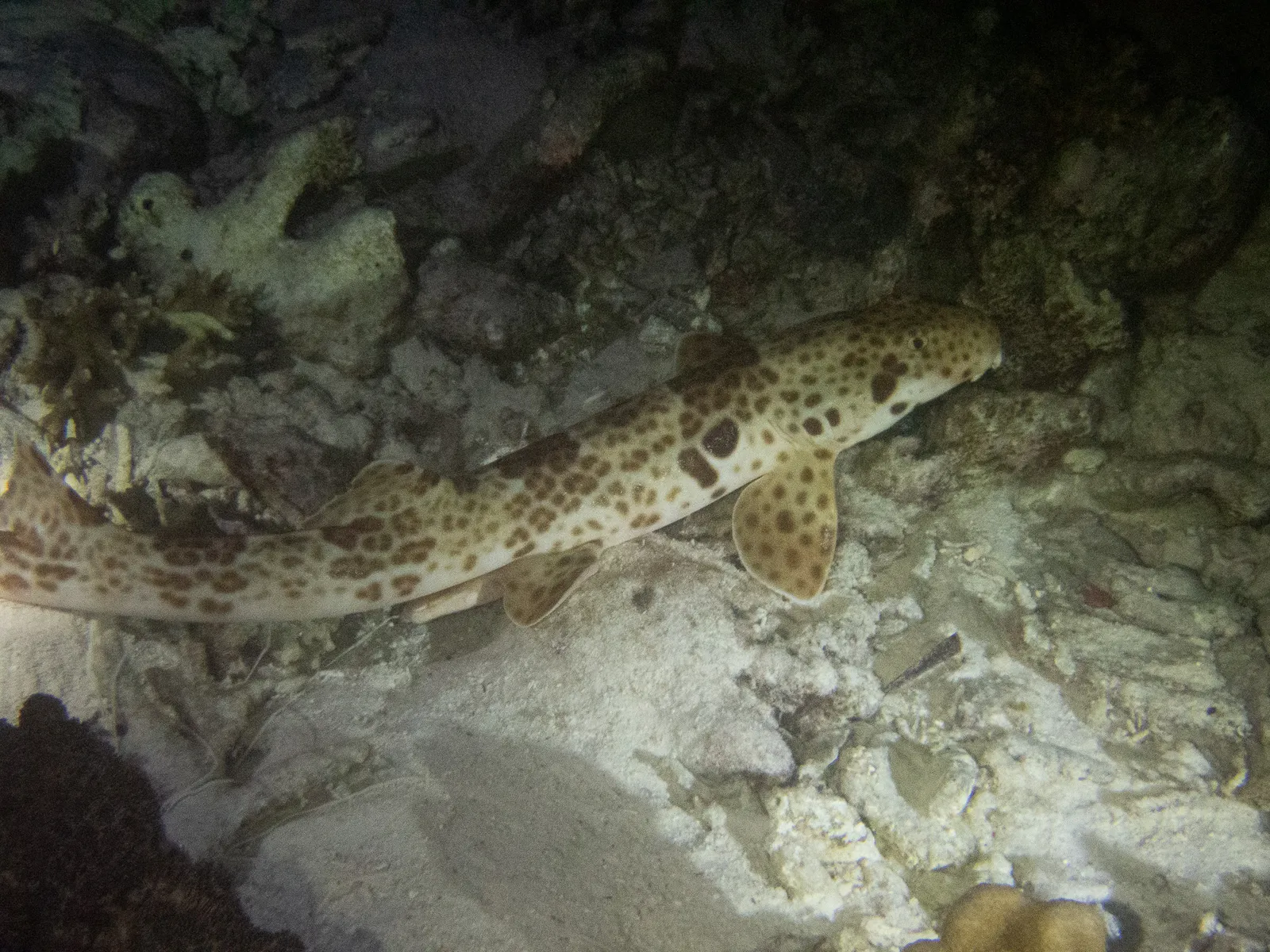
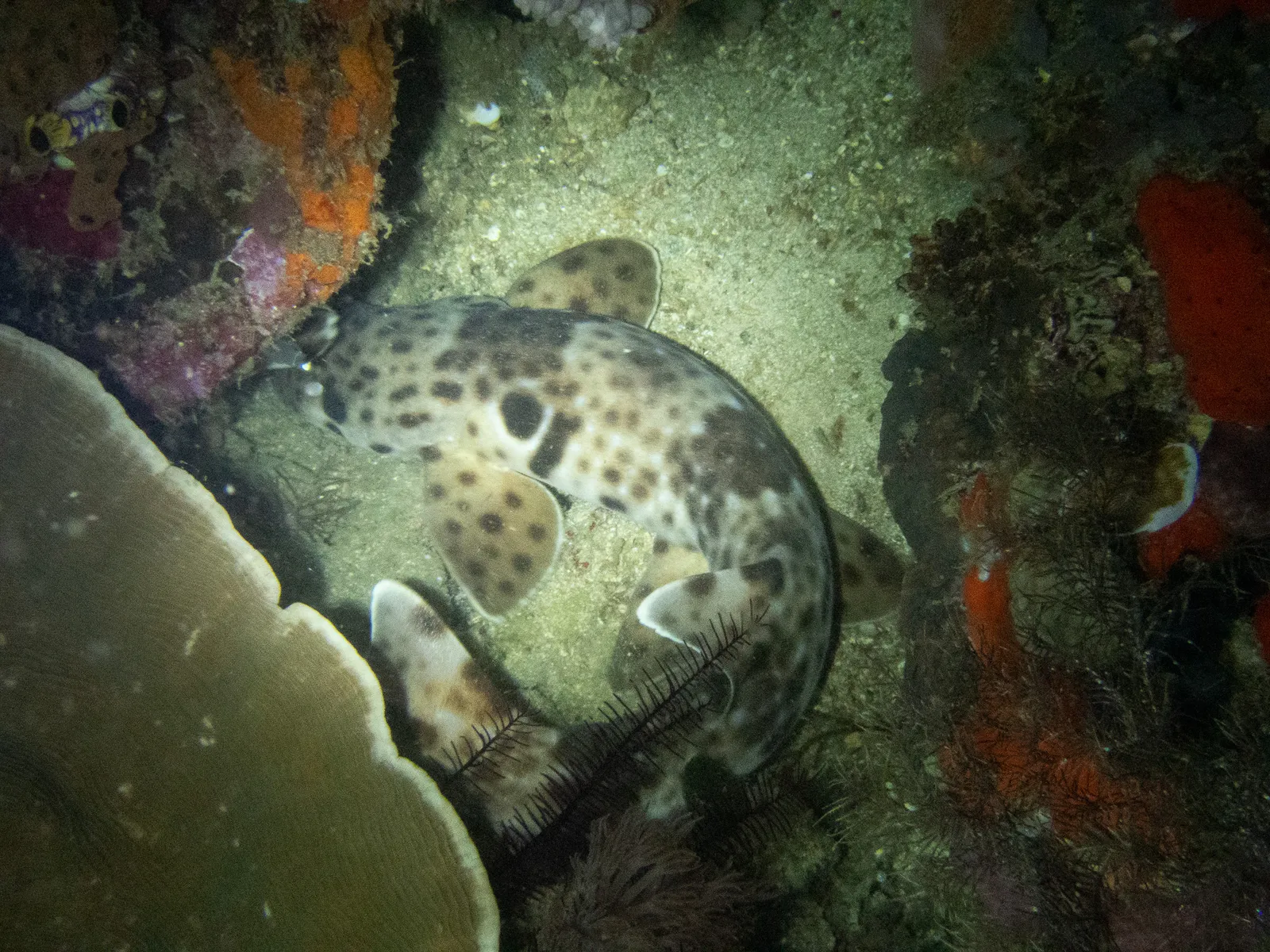
The shark has a slender, cylindrical body that tapers to an elongated caudal fin, which constitutes nearly half its total body length. Its coloration is a functional camouflage, typically a tan or brownish base overlaid with a distinct pattern of large, dark, ocellated spots. These polygon-shaped blotches are often clustered and provide effective disruption of its outline against the rubble, sand, and complex coral structures of the seafloor. Unlike the more uniform patterns of other epaulette sharks, the specific arrangement and shape of these spots are unique to the Raja Ampat species. Its head is flattened, with a blunt snout and small, suctorial mouth positioned ventrally—ideal for foraging for invertebrates hidden in the substrate. Its eyes are small and set high on the head, providing a targeted field of vision for its immediate path.