In this article
- The Engine of Abundance: Understanding Raja Ampat’s Hydrodynamics
- The Anatomy of a High-Voltage Drift Dive
- The Advanced Diver’s Toolkit: Technique and Gas Management
- Navigating the Epicenters: Three Archetypal Drift Dives
- The Briefing: Your Cognitive Map for the Dive
- Frequently Asked Questions About Raja Ampat Drift Diving
- Related reading
Mastering Raja Ampat Currents: A Guide to Drift Diving for Advanced Divers
Raja Ampat drift diving is the controlled practice of using oceanic currents to navigate dive sites. Across this 40,000 km² archipelago, water movement is the defining force, a conveyor belt of nutrients that supports 75% of the world’s known hard coral species. Currents here, particularly in the Dampier Strait, regularly run between one and four knots. Mastering Raja Ampat drift diving requires precise technique, specific equipment, and an understanding of hydrodynamics. It is not passive flight; it is an active discipline. For the advanced diver, these currents are the mechanism that unlocks the region’s highest concentrations of marine biomass, turning a dive into a meticulously executed traverse through the most dynamic underwater ecosystems on the planet.
The Engine of Abundance: Understanding Raja Ampat’s Hydrodynamics
The sheer volume of marine life in Raja Ampat is a direct consequence of its powerful currents. The archipelago sits at a critical junction between the Pacific and Indian Oceans, acting as the primary conduit for the Indonesian Throughflow—a massive movement of warm equatorial water from west to east. This global oceanic current forces immense volumes of water through the region’s 1,500+ islands.
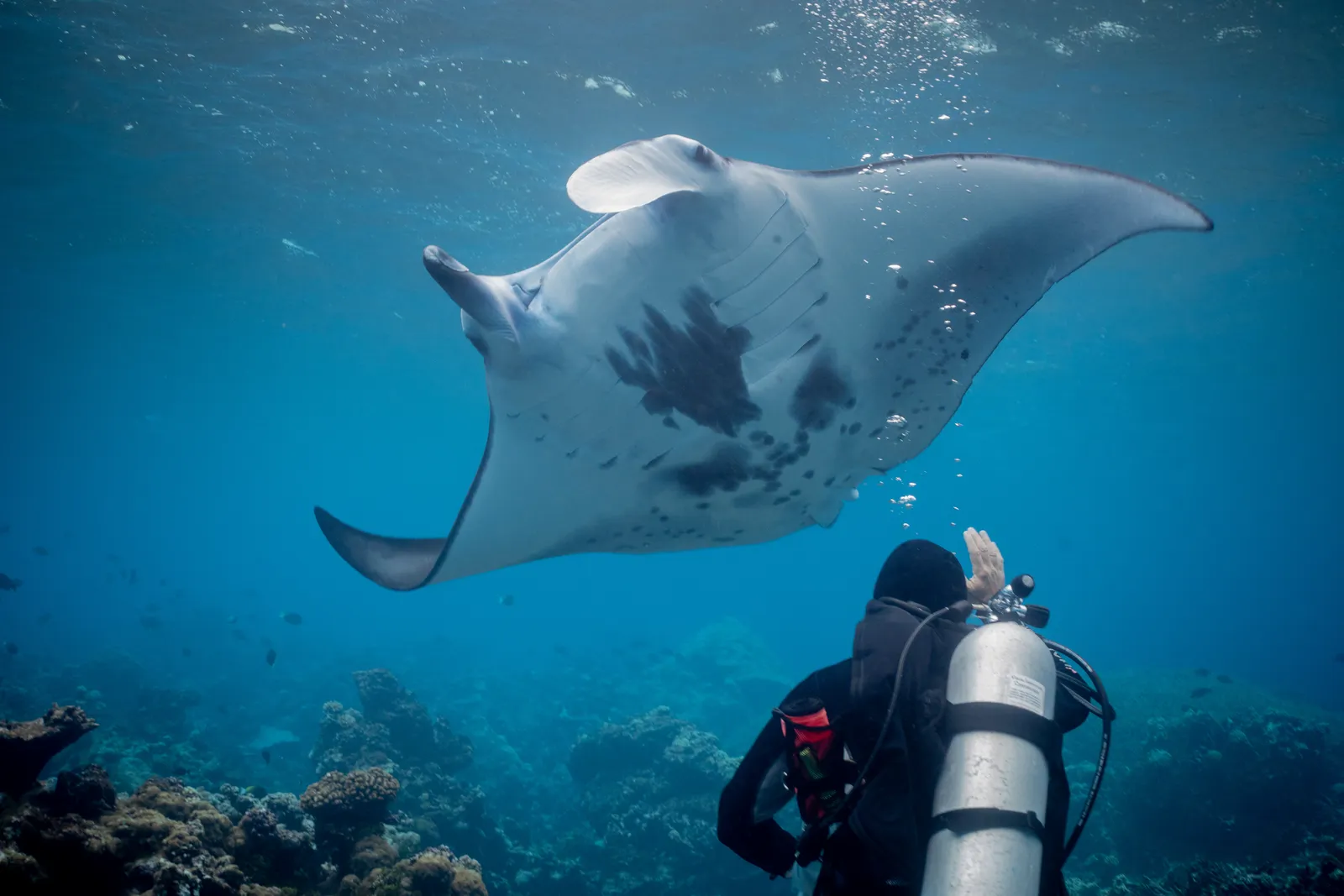
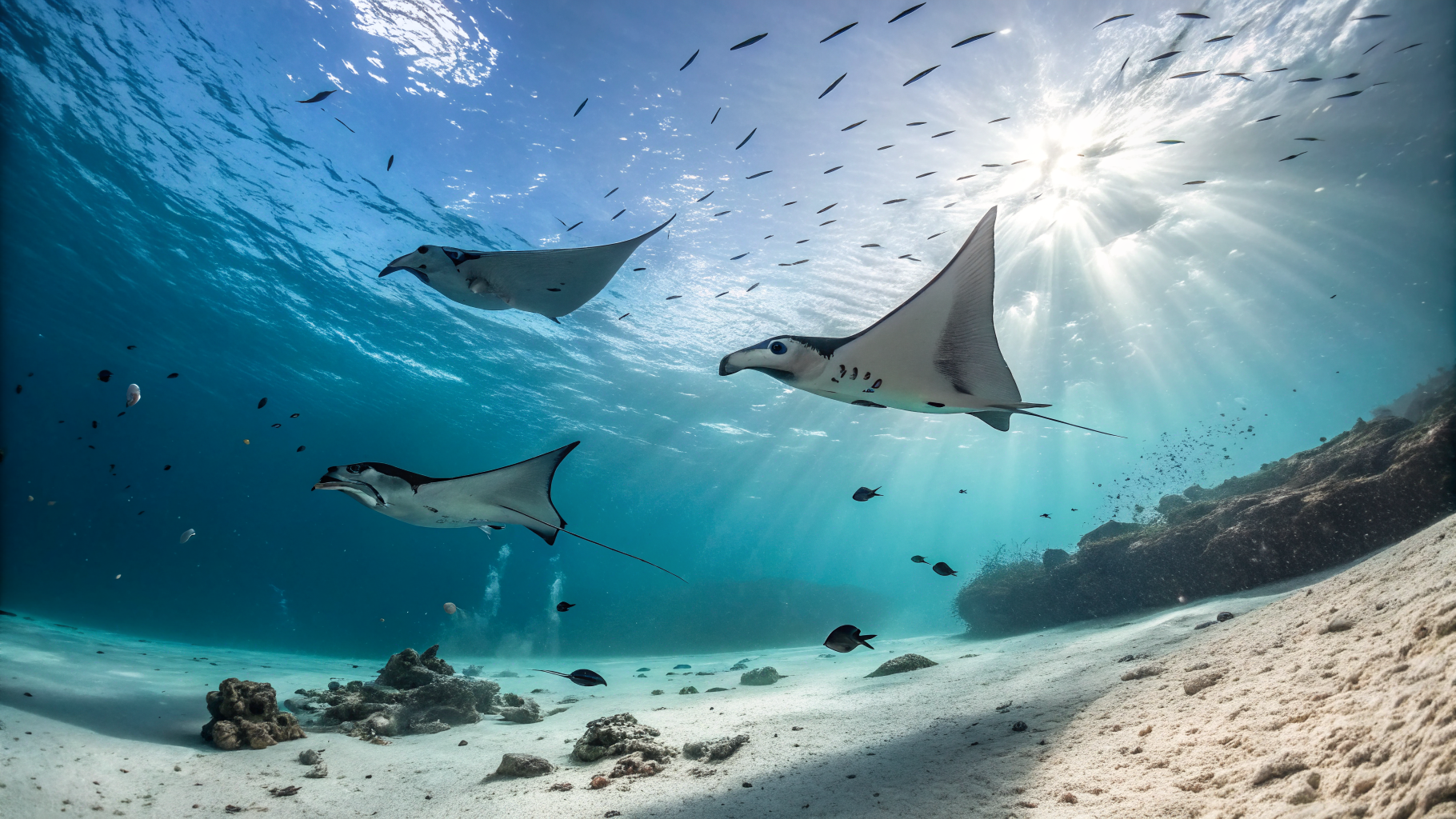
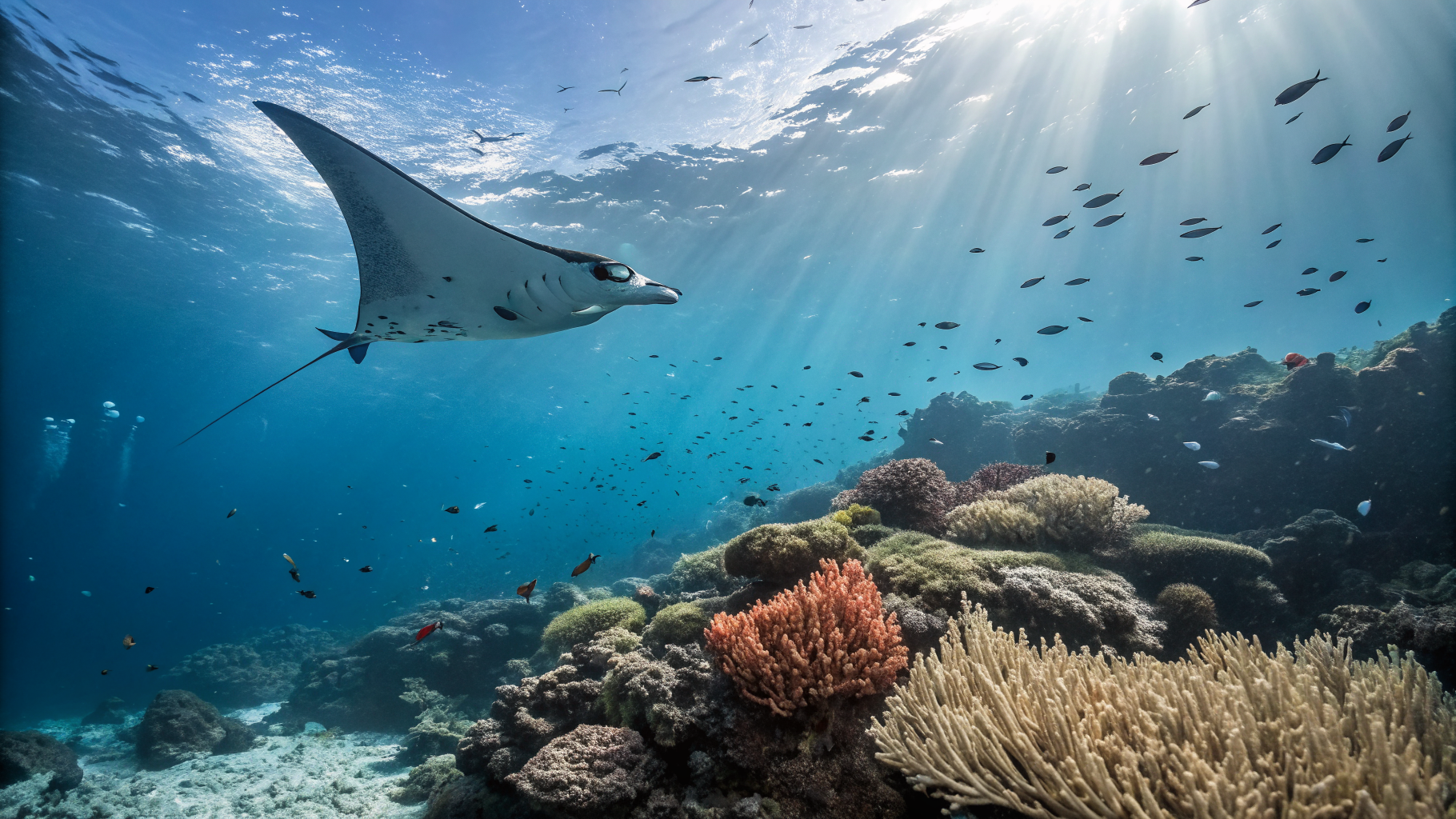
This macro-phenomenon is amplified on a local scale. The islands, channels, and submerged pinnacles of Raja Ampat funnel this flow, accelerating the water over and around the reef systems. The effect is a constant delivery of plankton-rich water, the foundational fuel for the entire food web. This is why sites like Cape Kri, which holds the 2012 record for fish species on a single dive at 374, are positioned to intercept this flow. The currents dictate where life congregates, from the smallest anthias facing into the flow to the oceanic mantas that appear at cleaning stations when the tidal movements are just right. Understanding this is fundamental; we are not just diving in a current, we are diving within the circulatory system of a global marine epicenter.
The Anatomy of a High-Voltage Drift Dive
A successful drift dive in Raja Ampat follows a structured profile, a sequence of actions designed to maximize safety and position divers for the best encounters. Every phase, from entry to exit, is a calculated procedure. Our dive guides and vessel captains, with over 1,240 voyages operated, have refined this process into a precise methodology.
H3: The Negative Entry
The dive begins before you enter the water. On the tender, you are fully kitted with your BCD empty of air. On the guide’s signal, the group executes a simultaneous back-roll entry. The objective is to descend immediately as a cohesive unit, passing quickly through the surface chop and any conflicting surface currents. This technique minimizes the risk of separation and places the team directly into the more laminar, predictable flow of the main current at depth. It is a rapid, committed entry that sets the tone for a controlled, high-awareness dive.
H3: The Reef Hook Sequence
The reef hook is an essential tool for advanced Raja Ampat diving, allowing you to remain stationary in a strong current without exertion. Its use is a specific skill. The guide will identify a piece of dead rock or substrate, well away from any living coral. You then deploy the hook, letting the line unspool as you drift a few feet past the anchor point. Once the line is taut, you add a small amount of air to your BCD to achieve neutral buoyancy, lifting your fins off the reef. You are now tethered, floating effortlessly in the current like a kite. This is the moment to observe. With no energy spent on propulsion, your focus shifts to the spectacle unfolding as sharks, trevallies, and schools of fusiliers patrol the current in front of you.
H3: Blue Water Exit and Safety Stop
Exiting the dive requires equal precision. The guide signals the ascent. As a group, you will drift away from the reef into blue water. Each diver deploys their Delayed Surface Marker Buoy (DSMB) from their safety stop depth, typically around 5 meters. This signals your position to the tender crew on the surface. To maintain group cohesion in the current during the three-minute stop, divers often employ a “tornado” or “stacked” formation, holding a visual reference on the guide or a central point. The tender will then maneuver to pick up the divers in a safe, down-current sequence, ensuring no one is ever left behind.
The Advanced Diver’s Toolkit: Technique and Gas Management
Success in strong currents depends less on physical strength and more on refined technique and mental composure. Efficiency is the primary objective. Every movement should be deliberate, and every piece of equipment must be streamlined.
H3: Surface Air Consumption (SAC) Rate: The Currency of Bottom Time
Your gas consumption rate is the single most critical factor determining your bottom time and safety margin. In Raja Ampat’s currents, the target for an experienced diver should be a SAC rate between 10-15 liters per minute. A high SAC rate (20 L/min or more) significantly curtails your dive time and can compromise your ability to handle unforeseen circumstances. Achieving a low SAC rate is a product of excellent buoyancy control, a relaxed breathing pattern, and minimal physical exertion. You do not swim against the current; you use it. By perfecting this, you extend your immersion in the environment and end the dive with a comfortable reserve.
H3: Essential Equipment: The Reef Hook and Pointer
Beyond standard dive gear, two items are non-negotiable for Raja Ampat’s signature drifts.
- Reef Hook: A simple metal hook on a 4-6 foot line, attached to a D-ring on your BCD. As detailed above, this is for extended, stationary observation periods. We provide these on all our Raja Ampat liveaboard voyages.
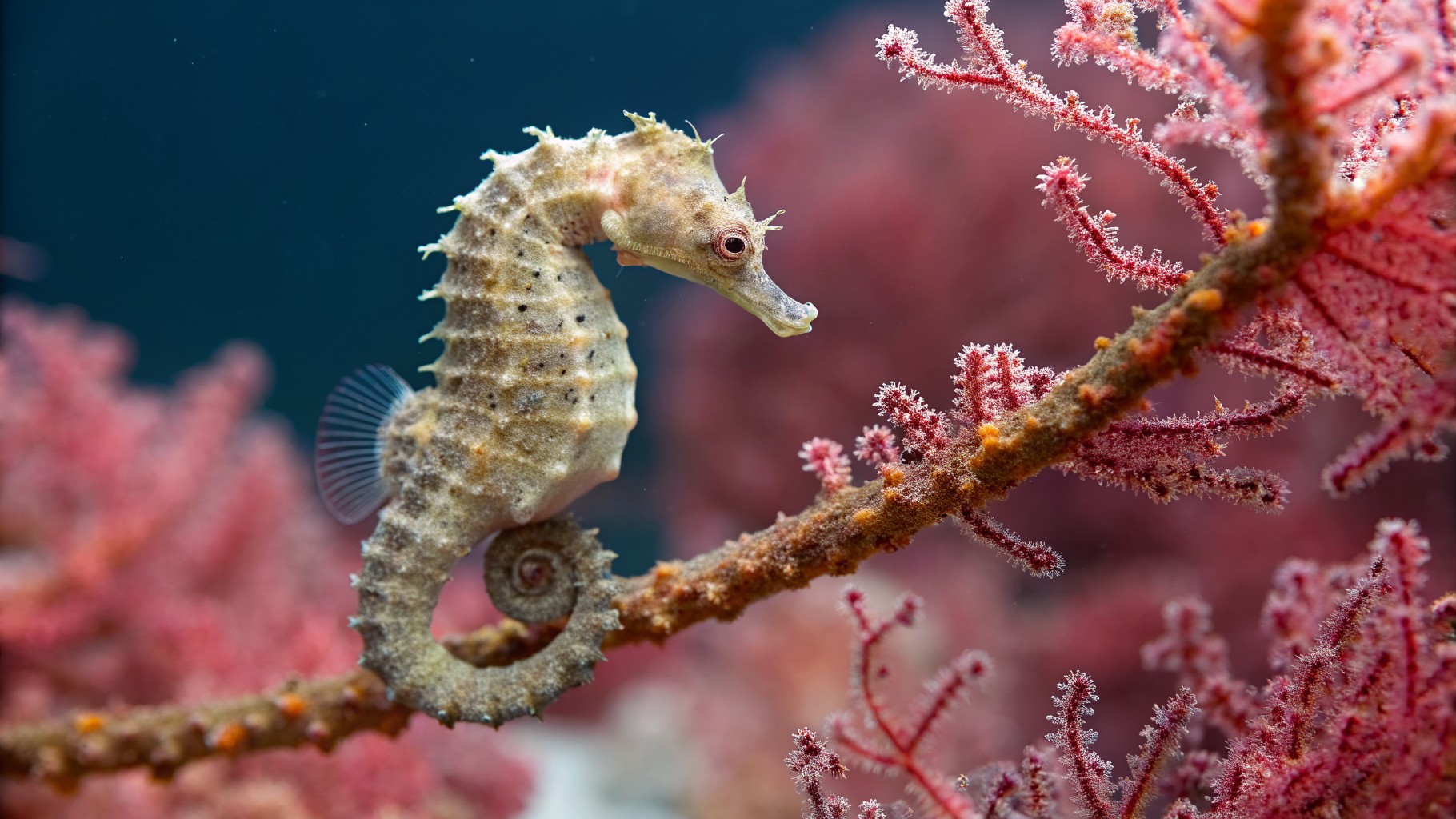
- Pointer Stick: A short, solid metal rod (often called a “muck stick” or “current finger”). This is not for hooking, but for brief, momentary stabilization. A gentle touch on a piece of rock allows you to hold your position to examine a small subject, like the endemic pygmy seahorse (*Hippocampus pontohi*), without deploying your full reef hook. It is also an effective tool for signaling to your buddy or guide.
H3: Body Position and Streamlining
Your body profile in the water directly impacts your energy expenditure. All equipment must be secured and streamlined. Hoses should be tucked in, consoles secured, and nothing should be left dangling to create drag. In the water, maintain a horizontal trim with your knees slightly bent. Small, efficient frog kicks are used for minor position adjustments, not for propulsion against the current. Your movements should be fluid and calm, conserving energy and, by extension, your gas supply.
Navigating the Epicenters: Three Archetypal Drift Dives
The principles of drift diving are best understood when applied to specific sites. The dive sites of the Dampier Strait are where these techniques are put to the ultimate test. Water temperatures remain a consistent 27-30°C with visibility often exceeding 30 meters.
H3: Sardine Reef
Sardine Reef is a large, oval-shaped submerged pinnacle in the center of the Dampier Strait, fully exposed to the Indonesian Throughflow. The dive plan here is dictated entirely by the direction of the current. Divers are dropped “upstream” at the current’s splitting point. The front of the reef is a wall of action, with grey reef sharks, whitetips, and wobbegongs patrolling the edge. Huge schools of fusiliers, surgeonfish, and bannerfish—the “sardines” that give the reef its name—pack so densely they can obscure the reef itself. The technique here is to use the reef hook at the splitting point, observe the main action, then release and drift along one of the reef’s flanks, exploring the vibrant coral gardens and overhangs in the slightly calmer water.
H3: Blue Magic
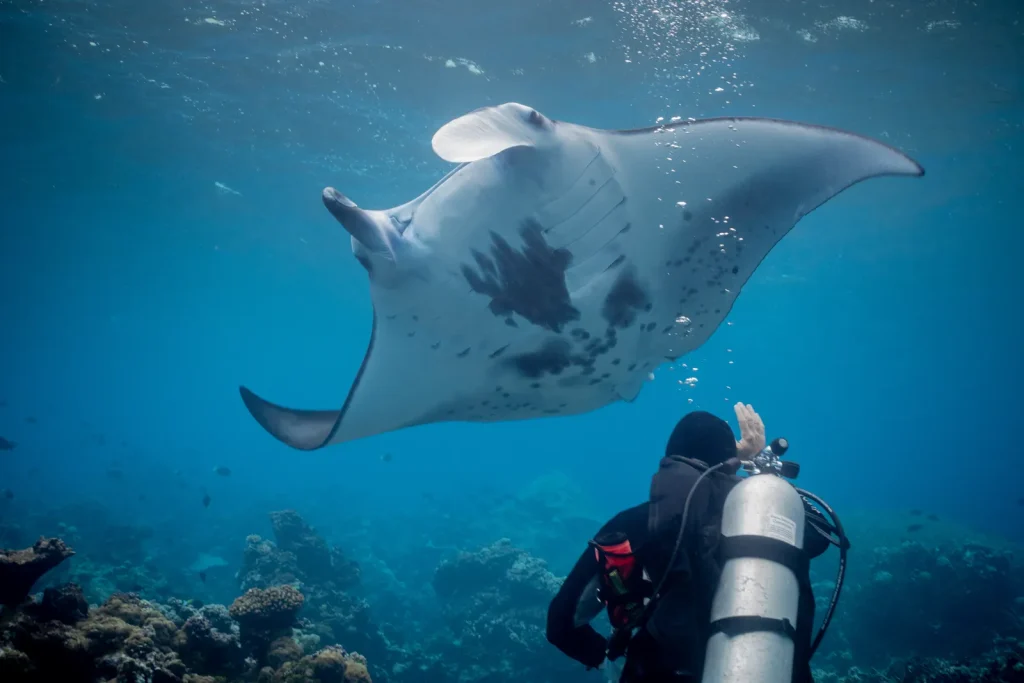
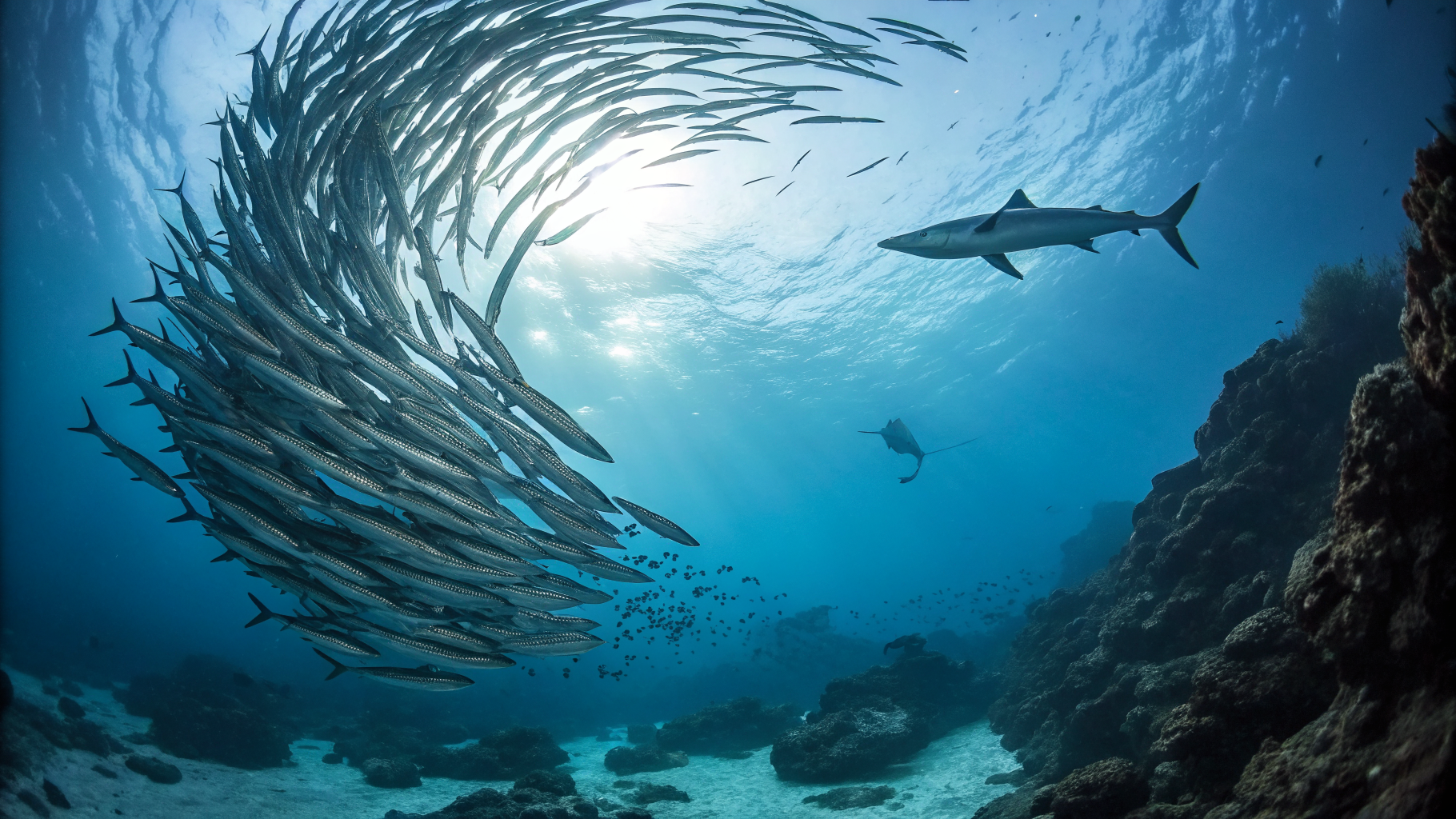
Another offshore pinnacle, Blue Magic is deeper and smaller than Sardine Reef, making the currents feel more intense. It is a known aggregation site for larger pelagics. The dive begins with a rapid descent to the top of the reef at around 10 meters. This site is a prime location to witness oceanic mantas (*Mobula birostris*) at their cleaning stations. The key is to position yourself low on the reef profile, just out of the main current, and wait. Schools of big-eye trevally and barracuda often form large, swirling vortexes above the pinnacle. A dive at Blue Magic is a lesson in timing; hitting it at the right point in the tidal cycle is the difference between a good dive and a truly phenomenal one.
H3: Cape Kri
This is arguably the most famous site in northern Raja Ampat. Cape Kri is not a pinnacle but the easternmost point of a long island, extending like a finger into the strait. The dive profile is a pure, high-speed drift along a sloping coral wall. There is rarely a need for a reef hook here; the entire dive is spent in motion. The current sweeps you past an astonishing diversity of coral and fish life. It is a visual overload, requiring you to keep your head on a swivel. One moment you are observing a squadron of bumphead parrotfish, the next a blacktip reef shark cruises past. The dive ends by drifting into the calmer bay at the end of the point, where the endemic walking shark (*Hemiscyllium freycineti*) can sometimes be found on night dives.
The Briefing: Your Cognitive Map for the Dive
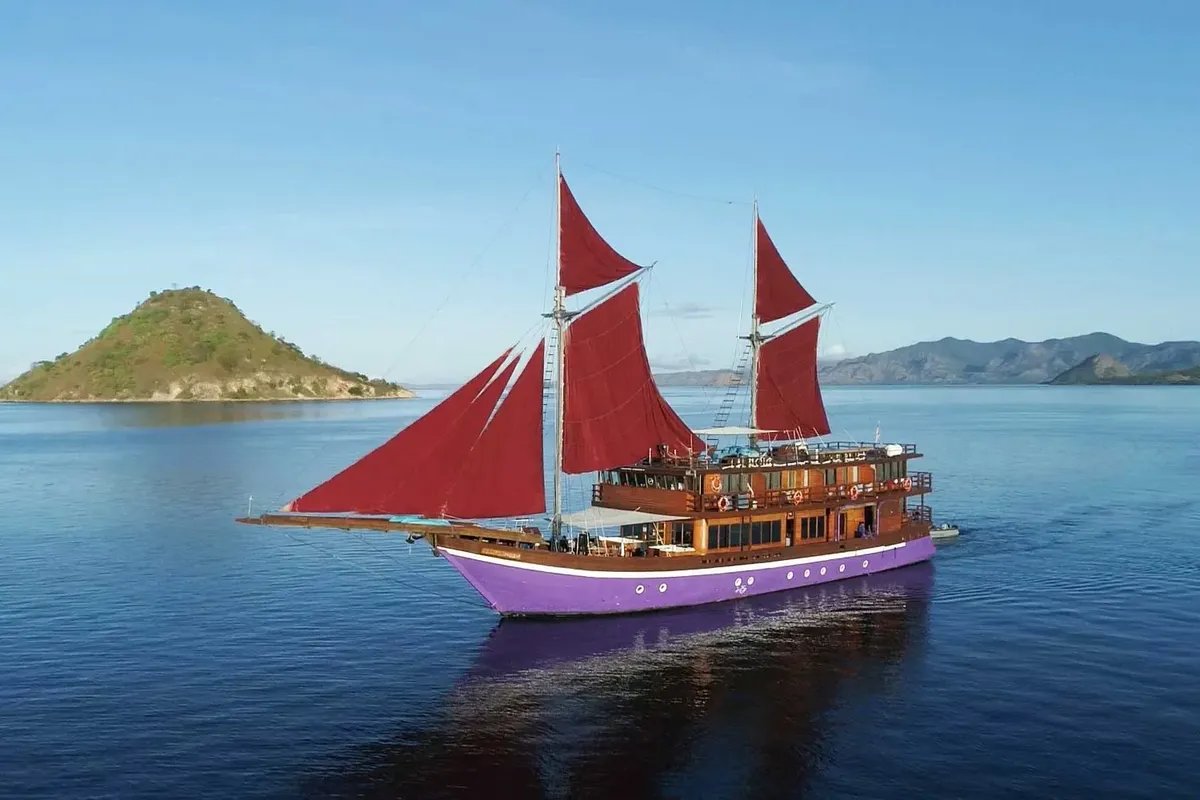
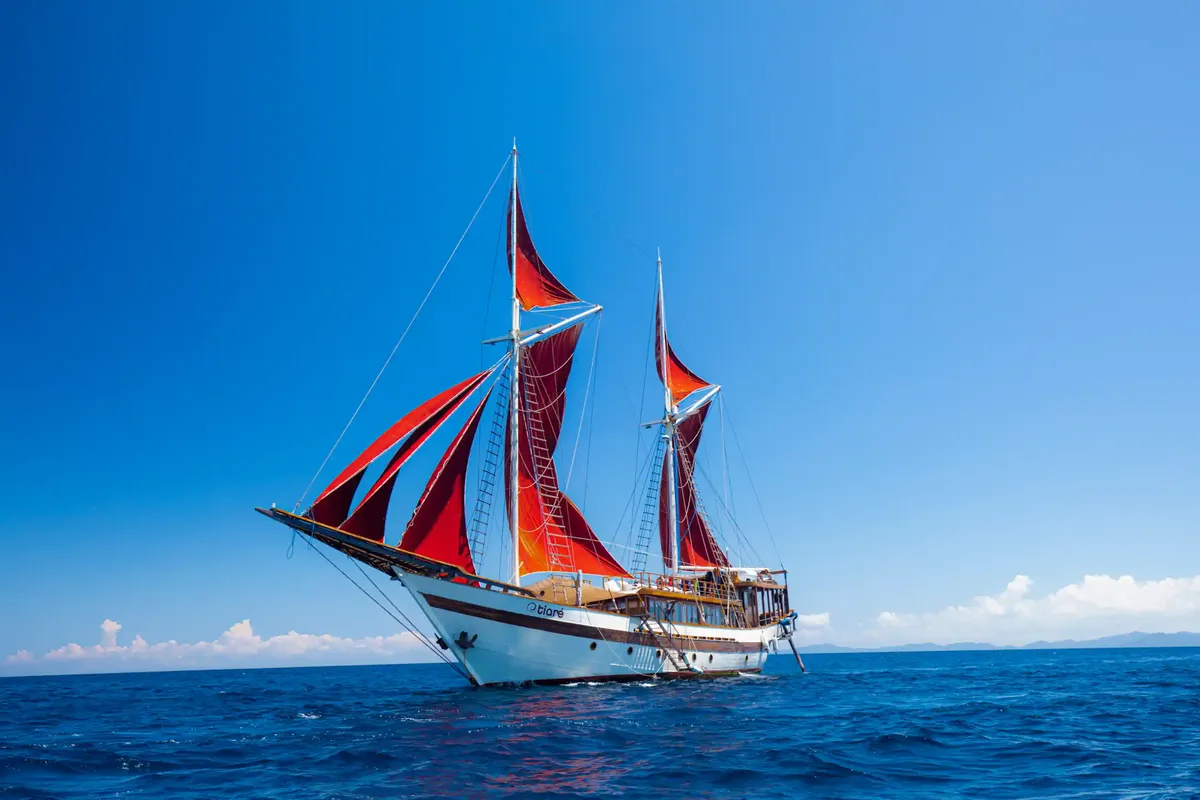
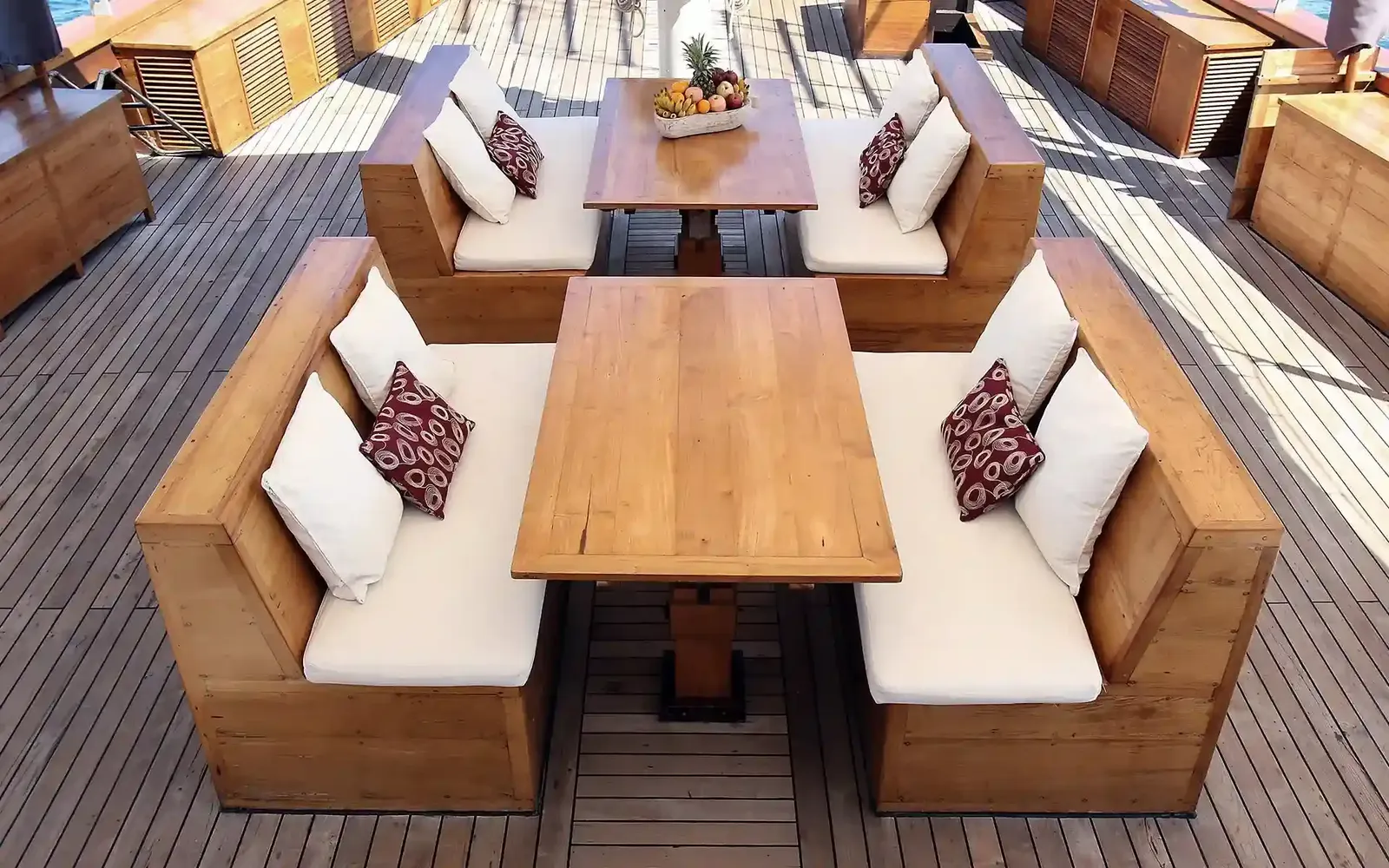
The most critical phase of any advanced drift dive happens on the deck of our phinisi schooner. The pre-dive briefing, led by our experienced cruise directors, is not a formality; it is the construction of a shared mental model for the entire dive team.
Our briefings are detailed and specific. We display tide charts and discuss the expected current strength and direction. The entry point is not a general area but a precise GPS coordinate, relayed from the dive guide in the water to the captain, ensuring the drop puts you exactly at the start of the action. We outline the planned dive profile, the maximum depth, and the anticipated route across the reef. Most importantly, we establish clear contingency plans: lost diver procedures, group separation protocols, and emergency signaling. This level of planning, a hallmark of our 10+ years of liveaboard operations, mitigates risk and allows you to dive with full confidence in the surface and underwater support systems.
Frequently Asked Questions About Raja Ampat Drift Diving
H3: What is the minimum certification and experience required for these dives?
We require an Advanced Open Water certification with a minimum of 50 logged dives. Recent experience with drift diving is strongly recommended. The primary considerations are excellent buoyancy control, comfort in strong currents, and a low surface air consumption rate. Our guides assess each diver’s comfort level and may suggest alternative sites if conditions are too demanding for an individual’s experience.
H3: Is using a reef hook damaging to the coral reef?
When used correctly, a reef hook is a non-destructive tool. Our dive guides are rigorously trained to identify safe, non-living attachment points, such as bare rock or dead coral skeletons. We enforce a strict “no-touch” policy on all living coral. The purpose of the hook is to prevent contact with the reef, not to cause it. Proper technique, which we teach and supervise, is paramount.
H3: How do you manage gas supply on a potentially long and strenuous drift dive?
Gas management begins with planning. We analyze the dive profile and current strength to estimate gas consumption. All divers are expected to monitor their own SPG and communicate their gas levels to the guide at regular intervals. A low SAC rate is the best tool for extending bottom time safely. For certain technical profiles, which can be arranged on a private charter, higher capacity tanks or redundant systems may be utilized.
H3: What happens if the current unexpectedly changes direction or speed mid-dive?
Raja Ampat currents can be complex. Our guides are experts at reading subtle changes in water movement and observing fish behavior, which often indicates a shift. If a current changes, the guide will lead the group to a more sheltered area of the reef or signal for a safe, controlled ascent. The dive plan is always adaptable to the real-time conditions to ensure group safety.
H3: Do I need to pay a separate fee to dive in Raja Ampat?
Yes. All divers entering the Raja Ampat Marine Park are required to purchase a Marine Park permit tag. The fee is IDR 1,000,000 per person and is valid for one year. Our team will facilitate the purchase of this permit for you prior to the commencement of your voyage, ensuring all regulations are met. This fee directly funds conservation and community initiatives within the park.
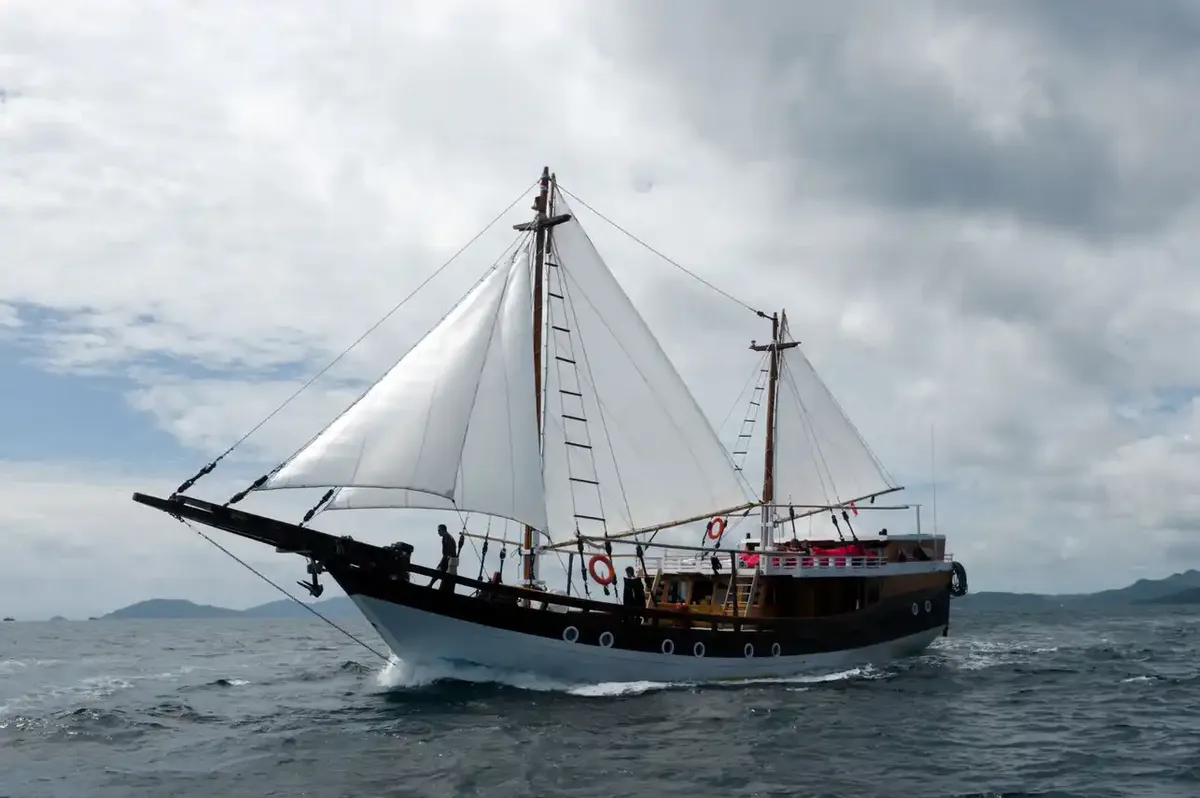
The currents of Raja Ampat are the lifeblood of the ecosystem and the key to its most profound diving experiences. They demand respect, skill, and preparation. Onboard our traditional phinisi yachts, our mission is to provide the operational excellence and expert guidance required to unlock these sites safely and confidently. With a team of 28 dedicated professionals and a decade of experience, we manage the logistics so you can focus on the dive. To discuss your next advanced diving expedition, contact our concierge directly on WhatsApp.
Plan your voyage with our specialists. Contact us on WhatsApp at +62 811-3823-875.