In this article
Phinisi vs Modern Yacht: Choosing Your Raja Ampat Vessel
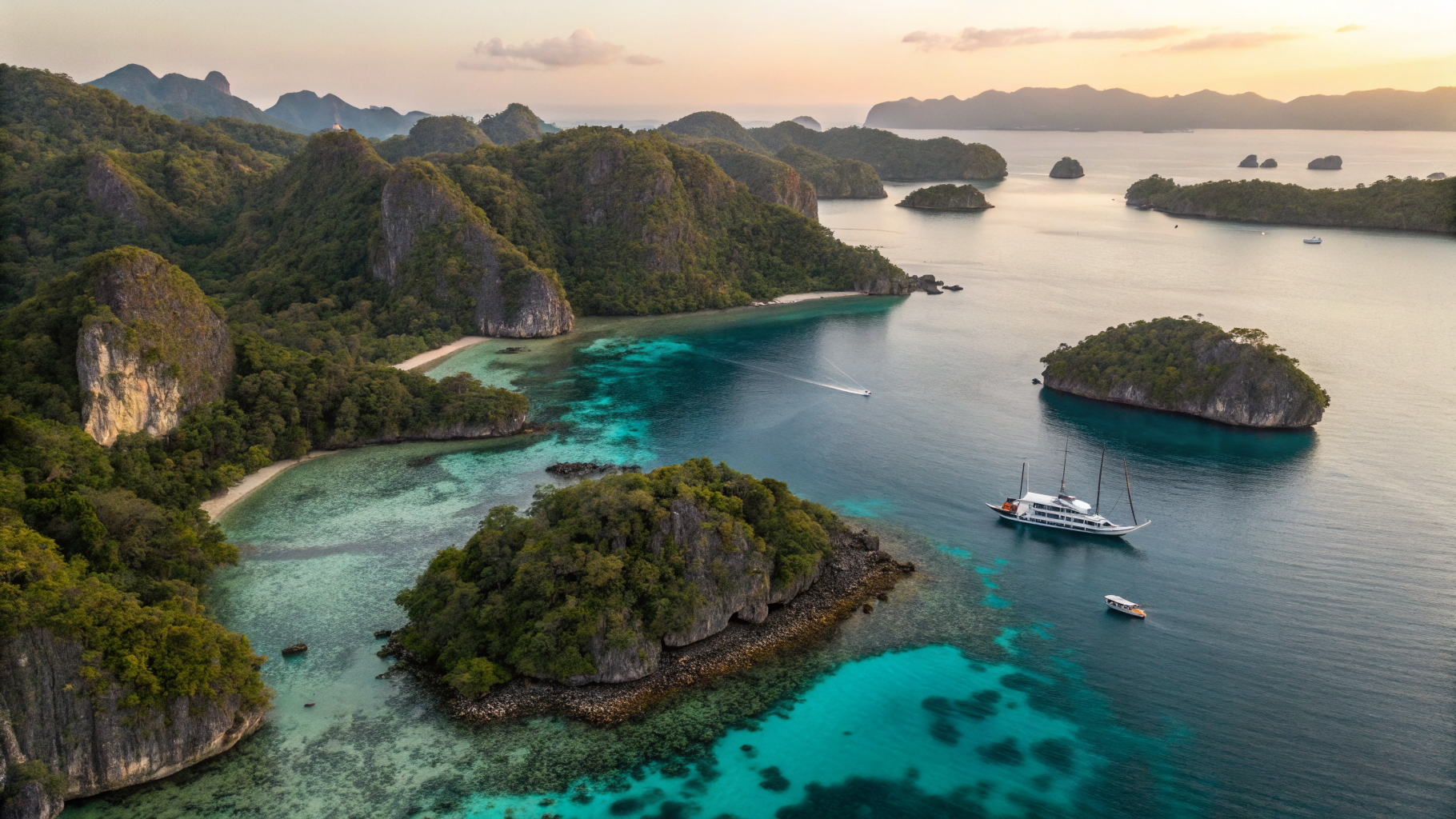
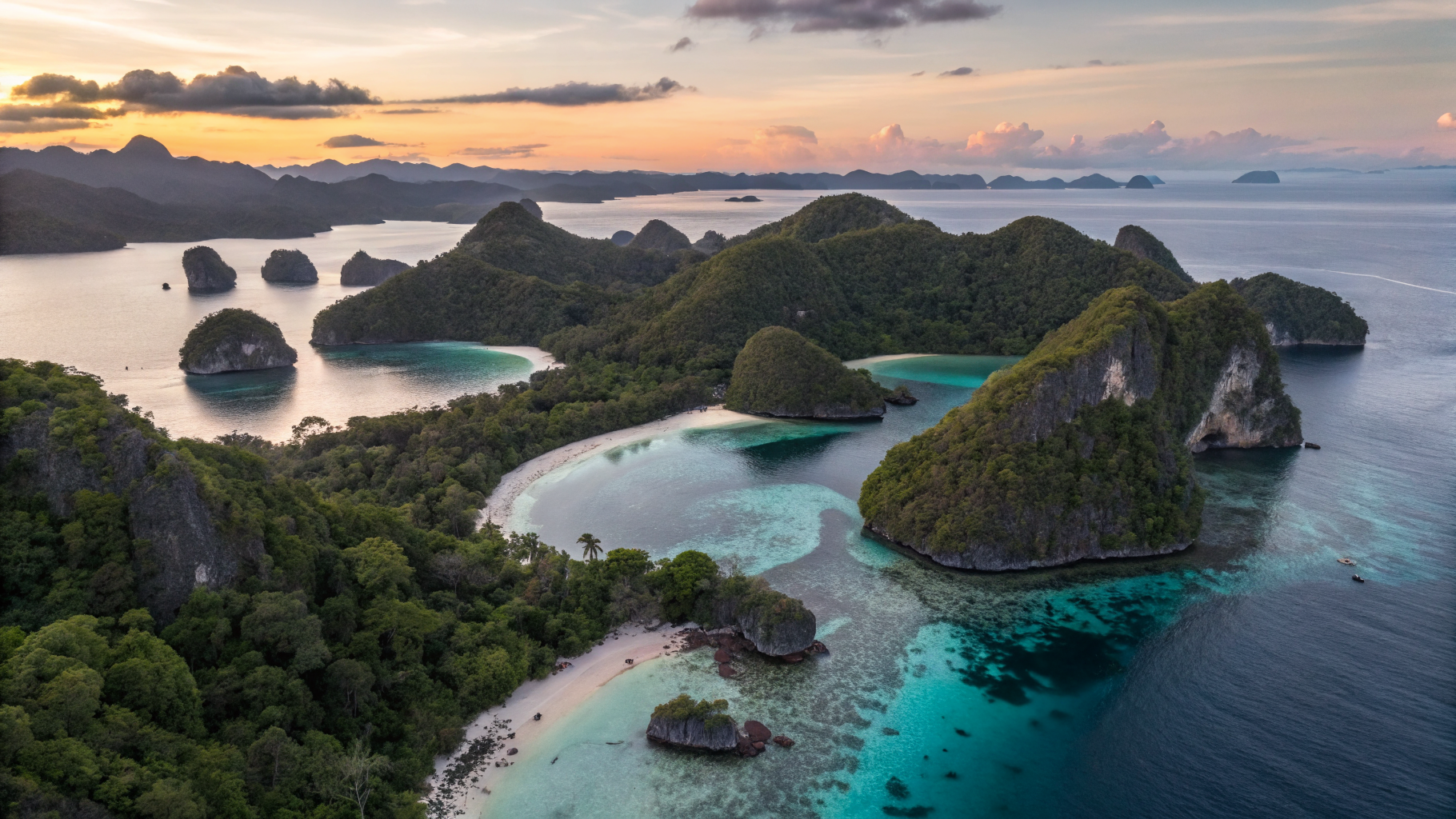
The decision between chartering a traditional Indonesian Phinisi or a modern dive yacht is the foundational choice for any Raja Ampat liveaboard. This is not a question of good versus bad, but of character versus engineering. A Phinisi vs Modern Yacht analysis hinges on understanding how hull construction, interior architecture, and propulsion systems dictate the nature of your voyage across Raja Ampat’s 40,000 square kilometers. The former offers a tangible connection to the archipelago’s maritime legacy; the latter provides a platform optimized for speed and technical precision. Your selection will define your itinerary’s pace, your comfort at sea, and your interaction with this marine ecosystem, home to 75% of the world’s known hard coral species.
Hull Design and Onboard Stability
A vessel’s behavior in the water is its most fundamental characteristic. The materials and design of its hull determine everything from the subtle motion you feel at anchor to its performance during open-sea crossings between the Dampier Strait and Misool. The contrast between handcrafted timber and precision-welded steel is the starting point of your decision.
The Phinisi Hull: A Sulawesi Legacy
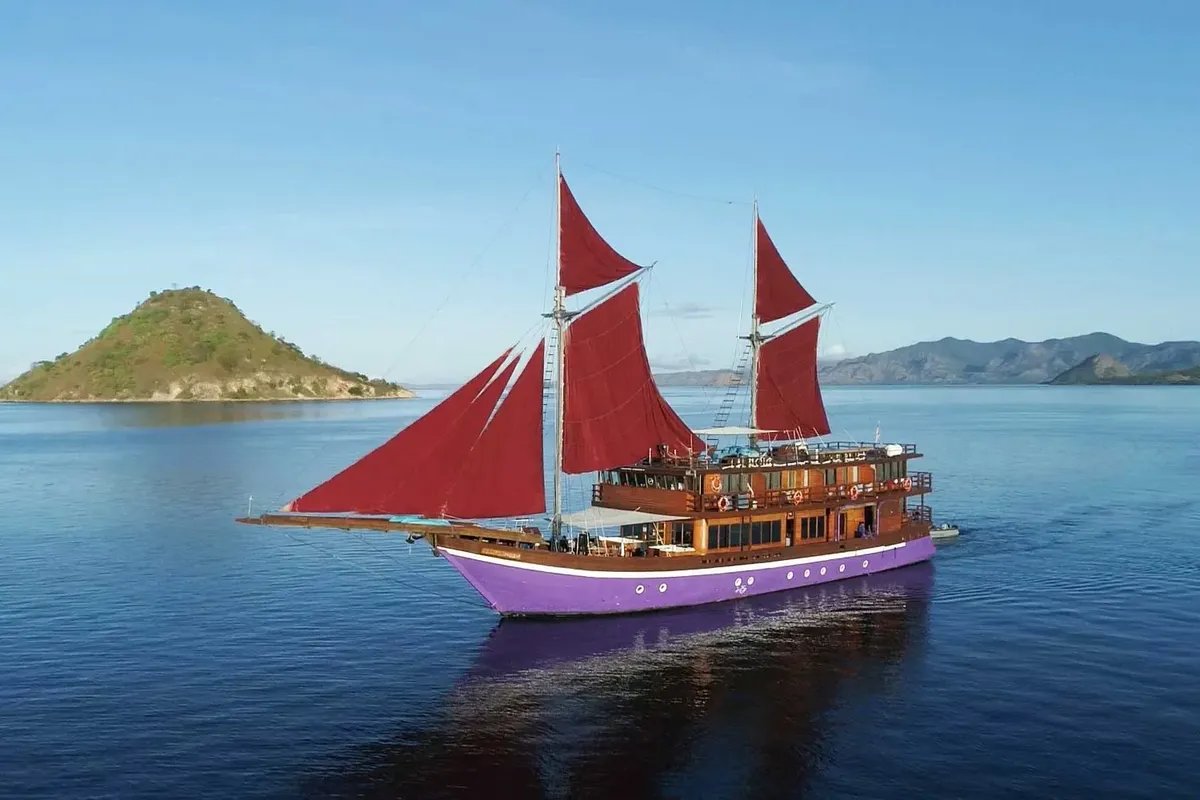
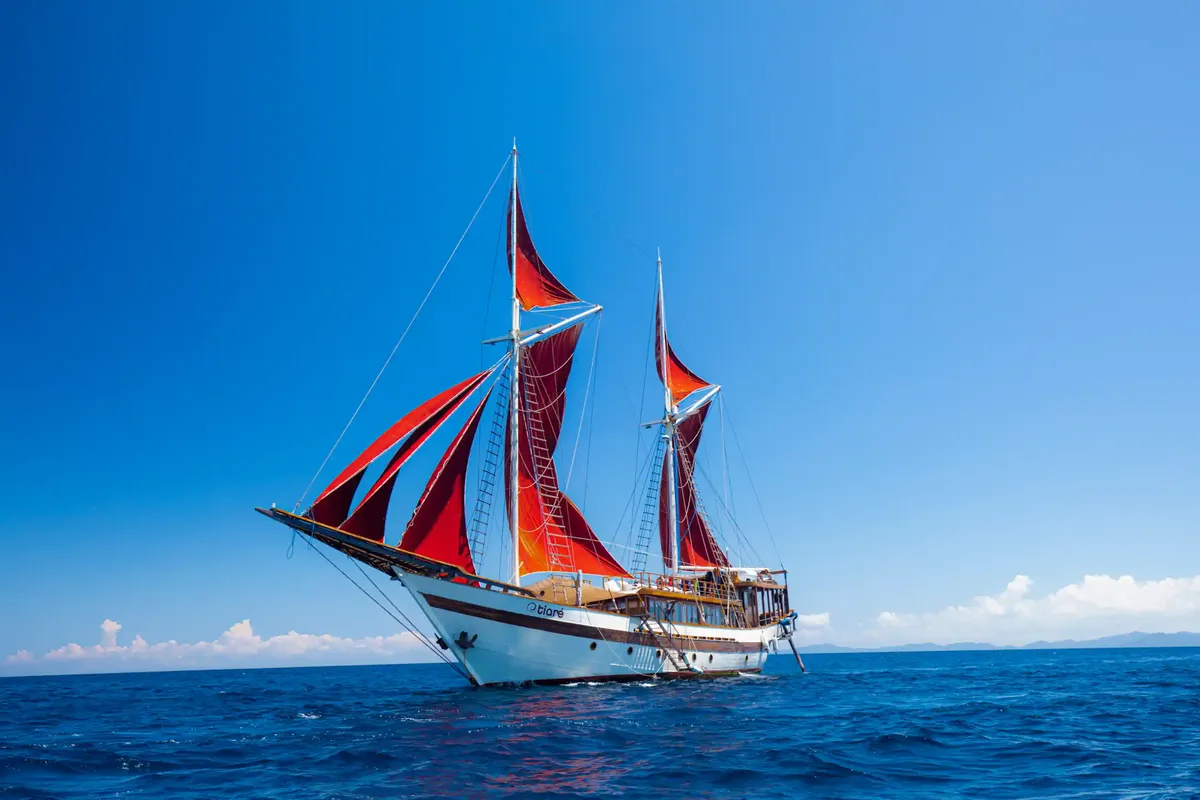
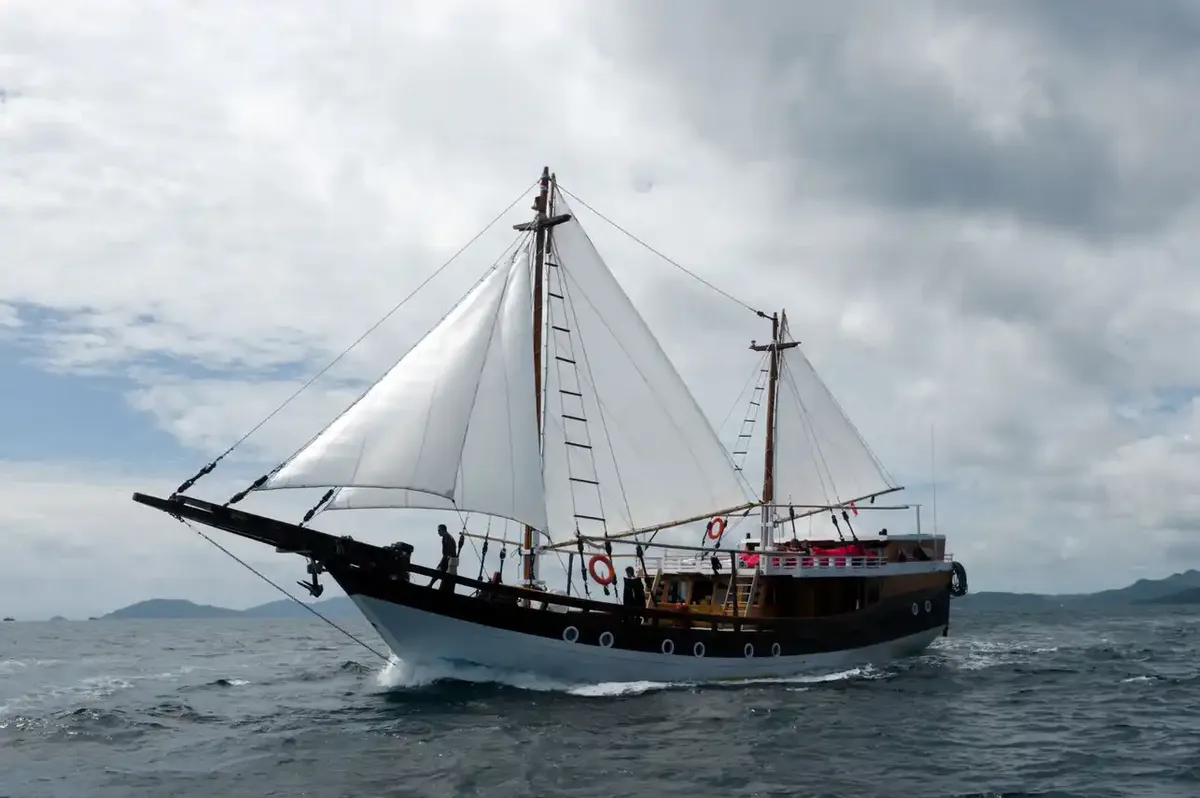
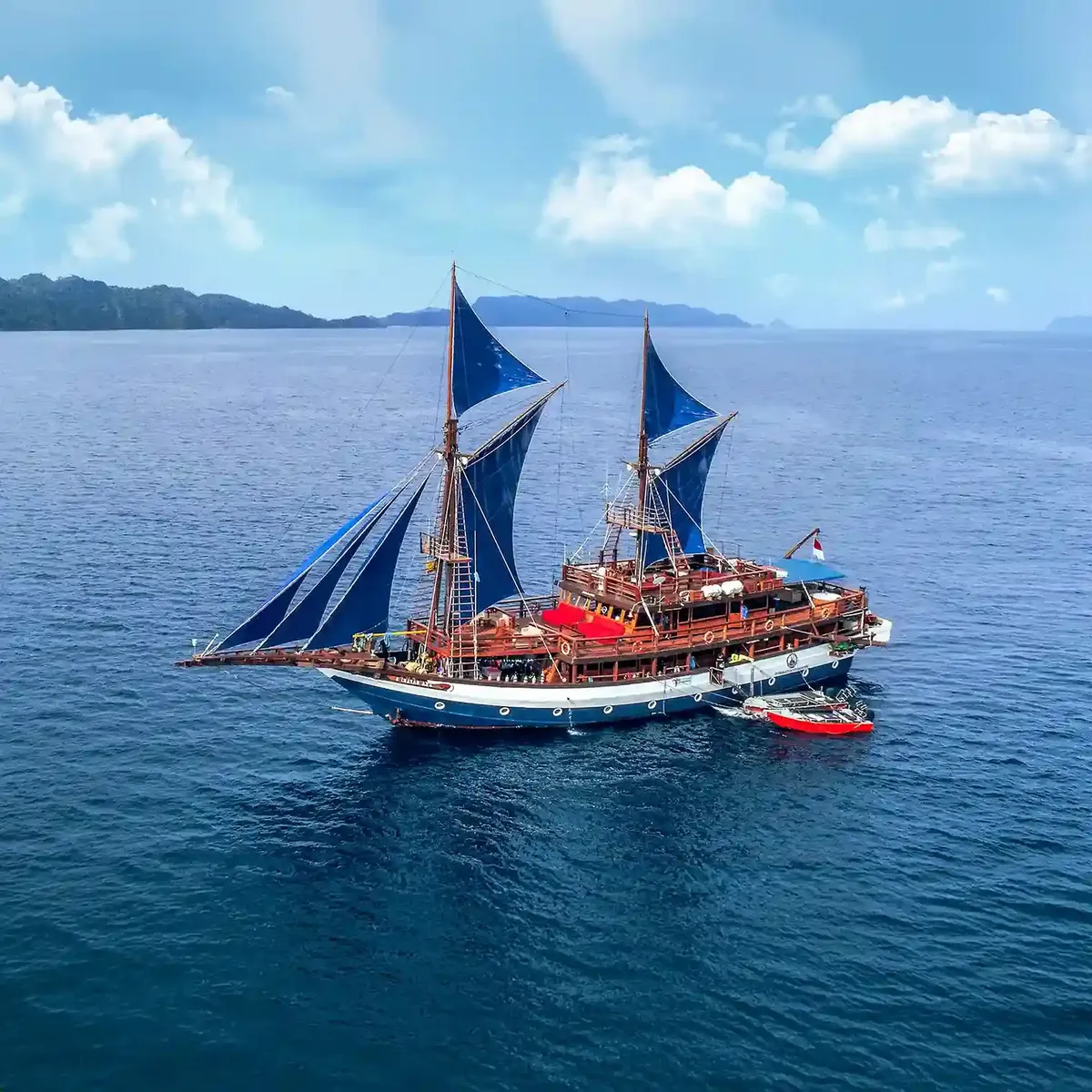
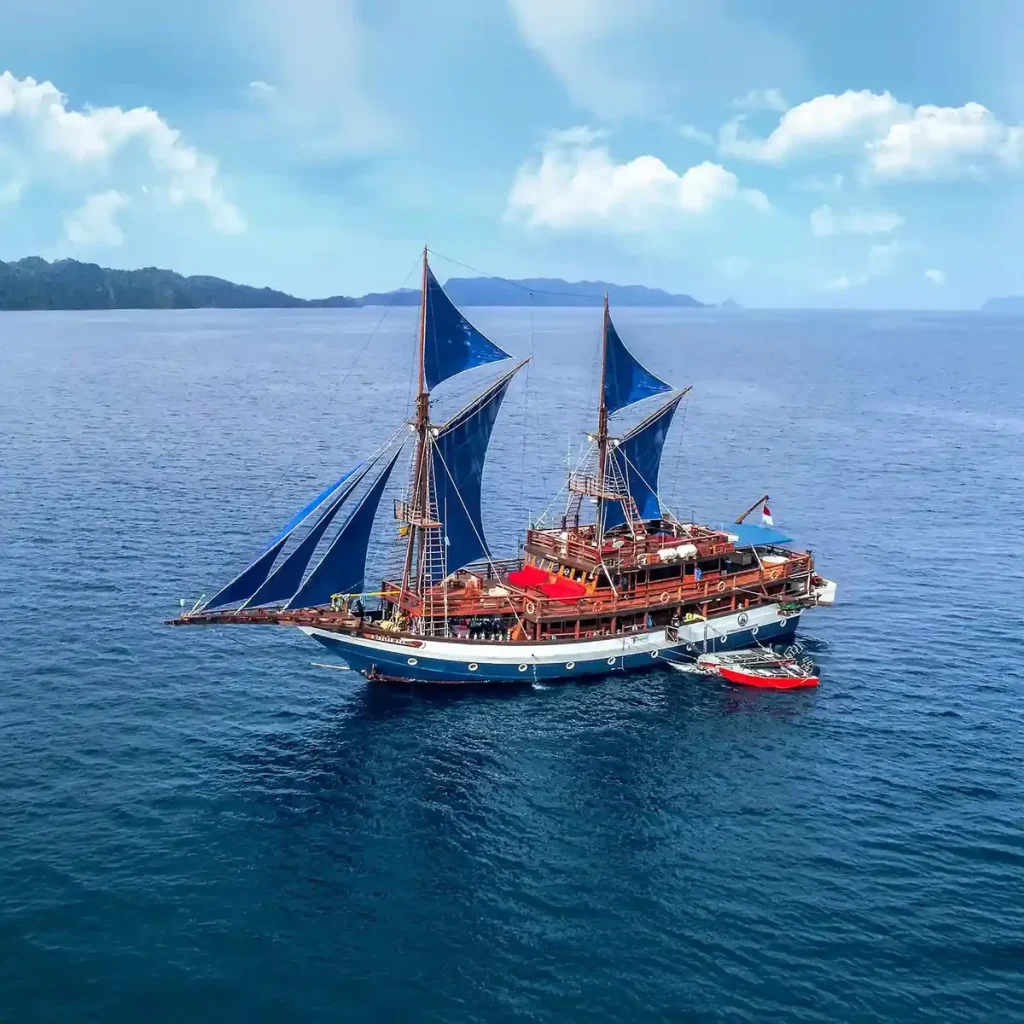
The Phinisi is a traditional two-masted wooden schooner, a design originating with the Bugis and Makassan people of South Sulawesi. Our Phinisis are built there, by hand, following centuries-old techniques. The hulls are constructed from heavy, dense timbers like ironwood (ulin) for the keel and teak for the planking. This substantial mass, combined with a deep, often rounded displacement hull, gives the Phinisi exceptional primary stability. When at anchor in a calm bay, the vessel feels solid and settled in the water. The inherent weight dampens small wave action, creating a tranquil platform. In a seaway, the motion is a predictable, steady roll. For many, the gentle creak of the timbers is an integral part of the authentic Indonesian seafaring experience. Our vessels typically measure between 30 and 50 meters, providing ample deck space while retaining the classic silhouette.
The Modern Yacht Hull: Engineered for Performance
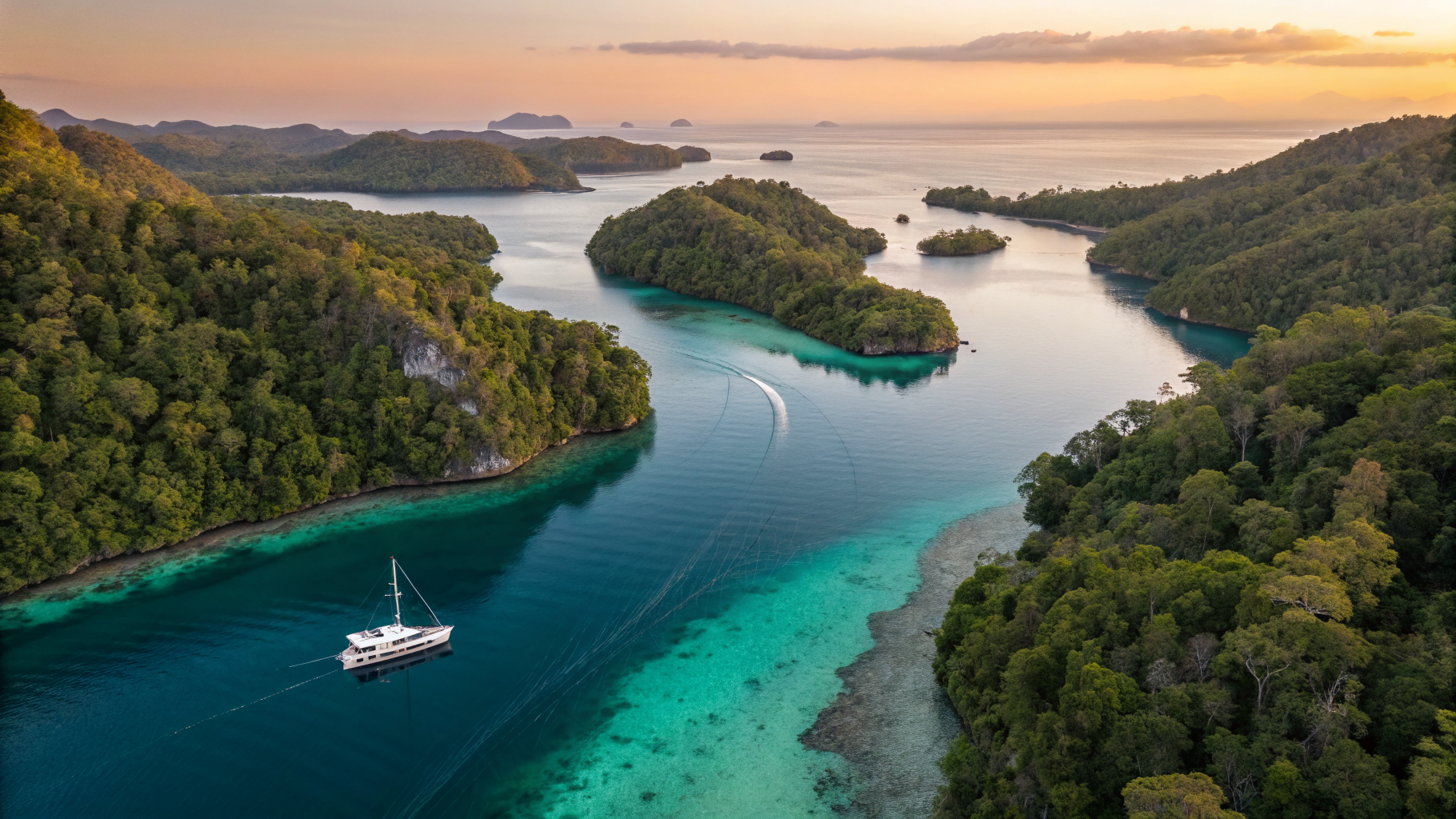
Modern dive yachts are constructed from steel or aluminum, materials that allow for precise naval architecture and the integration of advanced technology. Steel hulls are exceptionally strong and provide a comfortable, heavy displacement ride. Aluminum hulls are lighter, allowing for higher cruising speeds and shallower drafts. The key differentiator is the hull form and the frequent inclusion of active fin stabilizers. These computer-controlled underwater fins counteract the vessel’s roll, dramatically reducing side-to-side motion, particularly while underway. For guests sensitive to motion sickness or for voyages requiring long crossings in potentially variable conditions, a modern yacht with stabilizers offers a superior level of comfort. The experience is one of insulation from the sea’s movement, a quiet and consistently stable environment.
Interior Layout, Comfort, and Amenities
Beyond stability, the vessel’s interior design dictates the daily rhythm of life onboard. This is where the philosophical differences between the two vessel types become most apparent, shaping social dynamics, personal space, and your connection to the surrounding environment.
Phinisi Cabins and Social Spaces
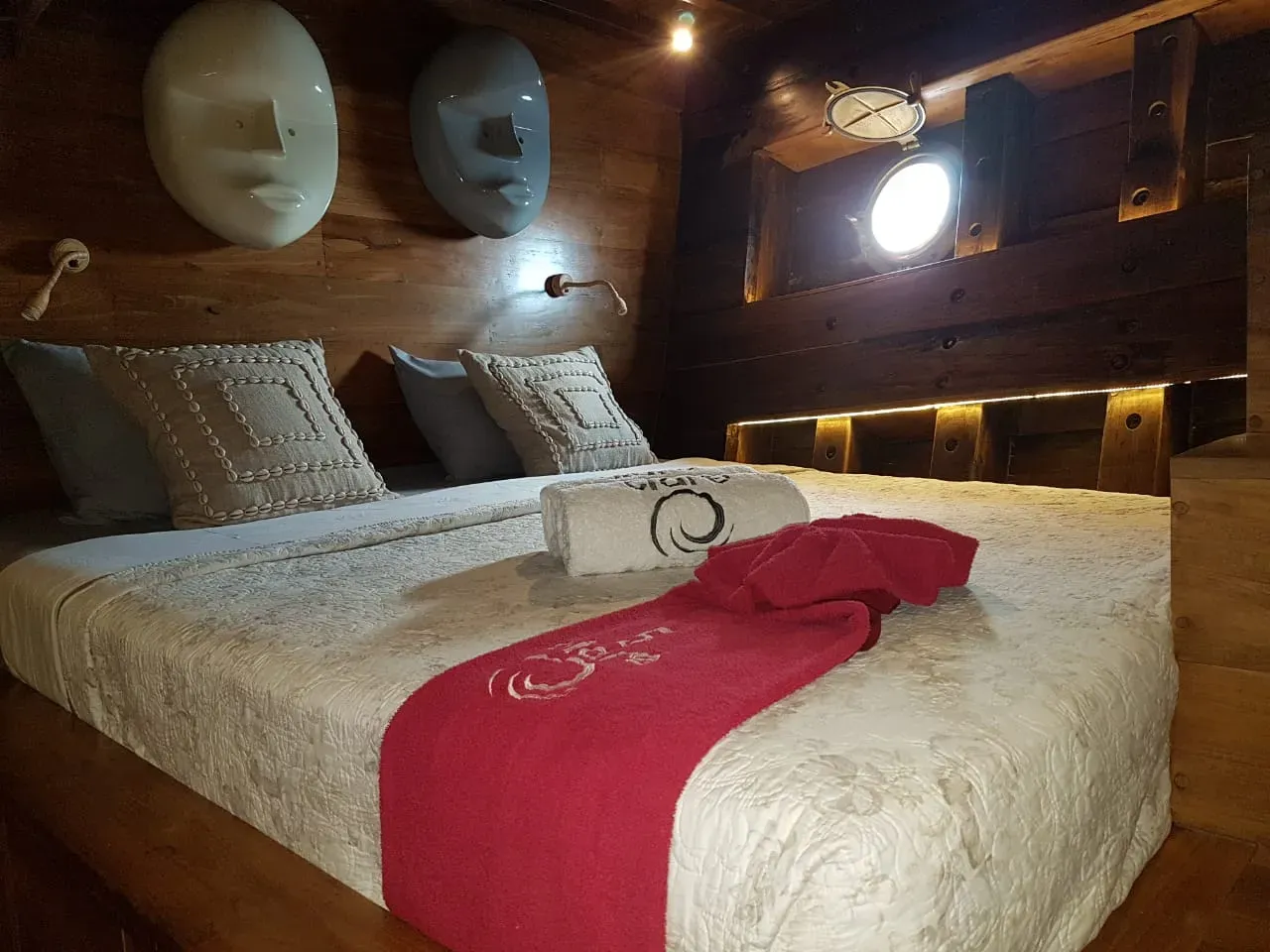
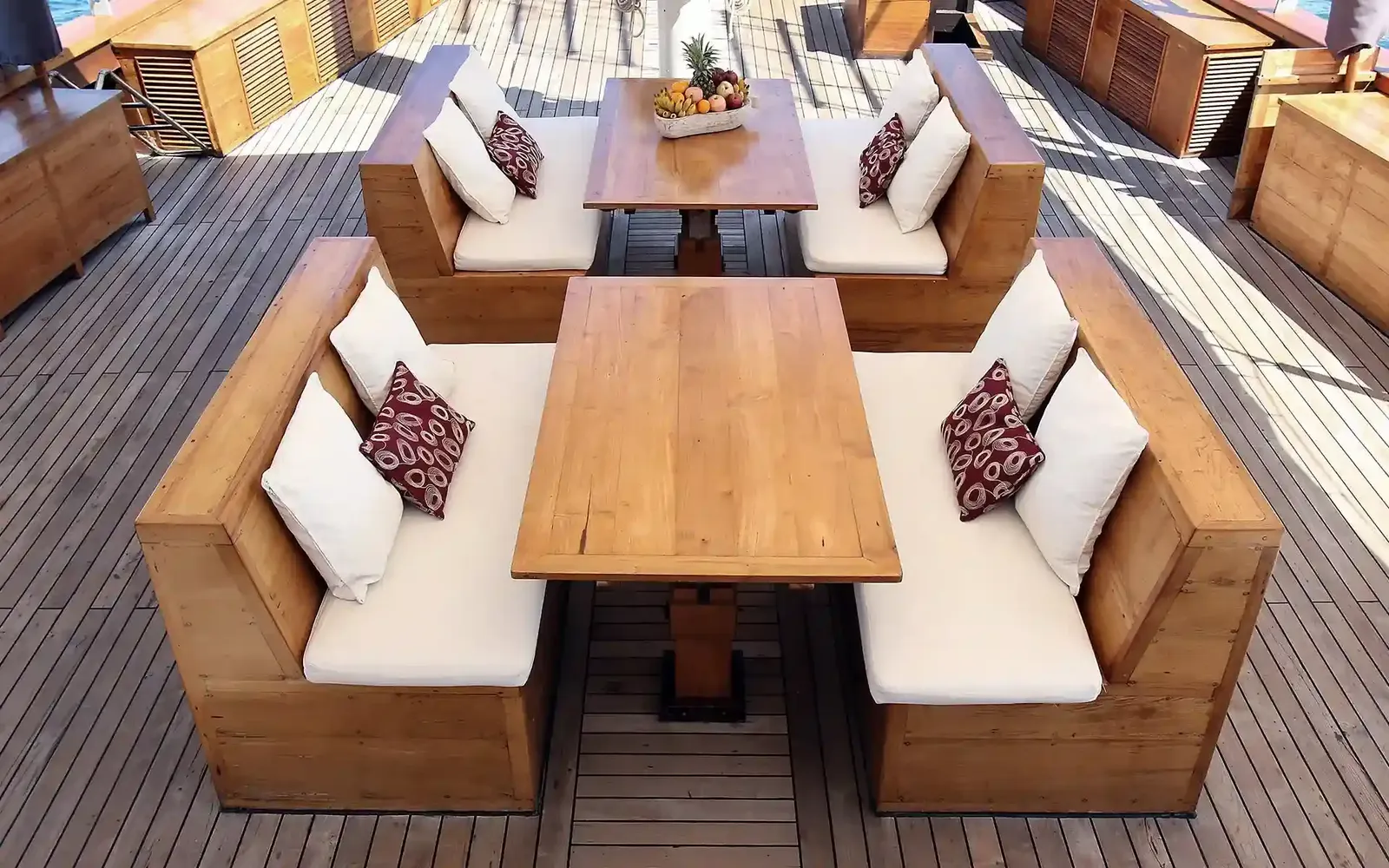
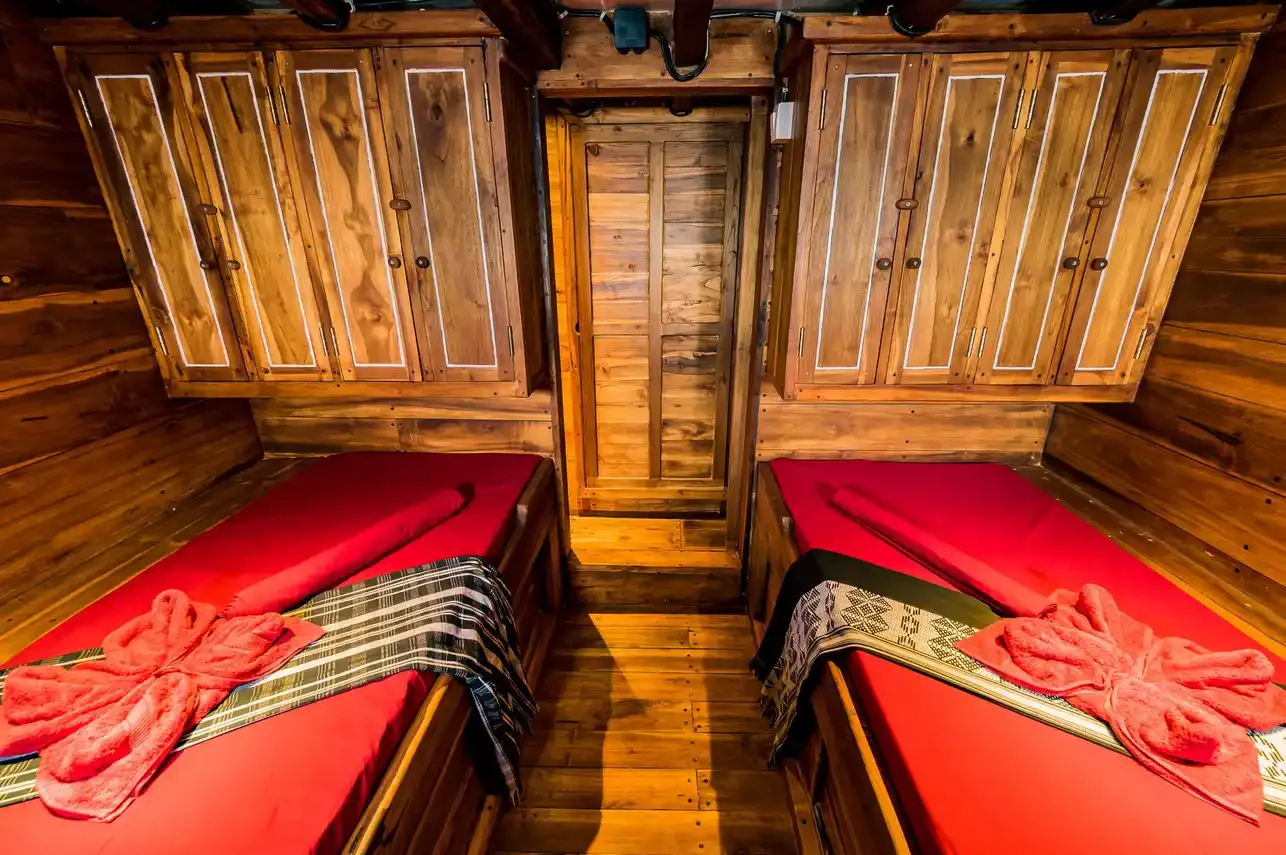
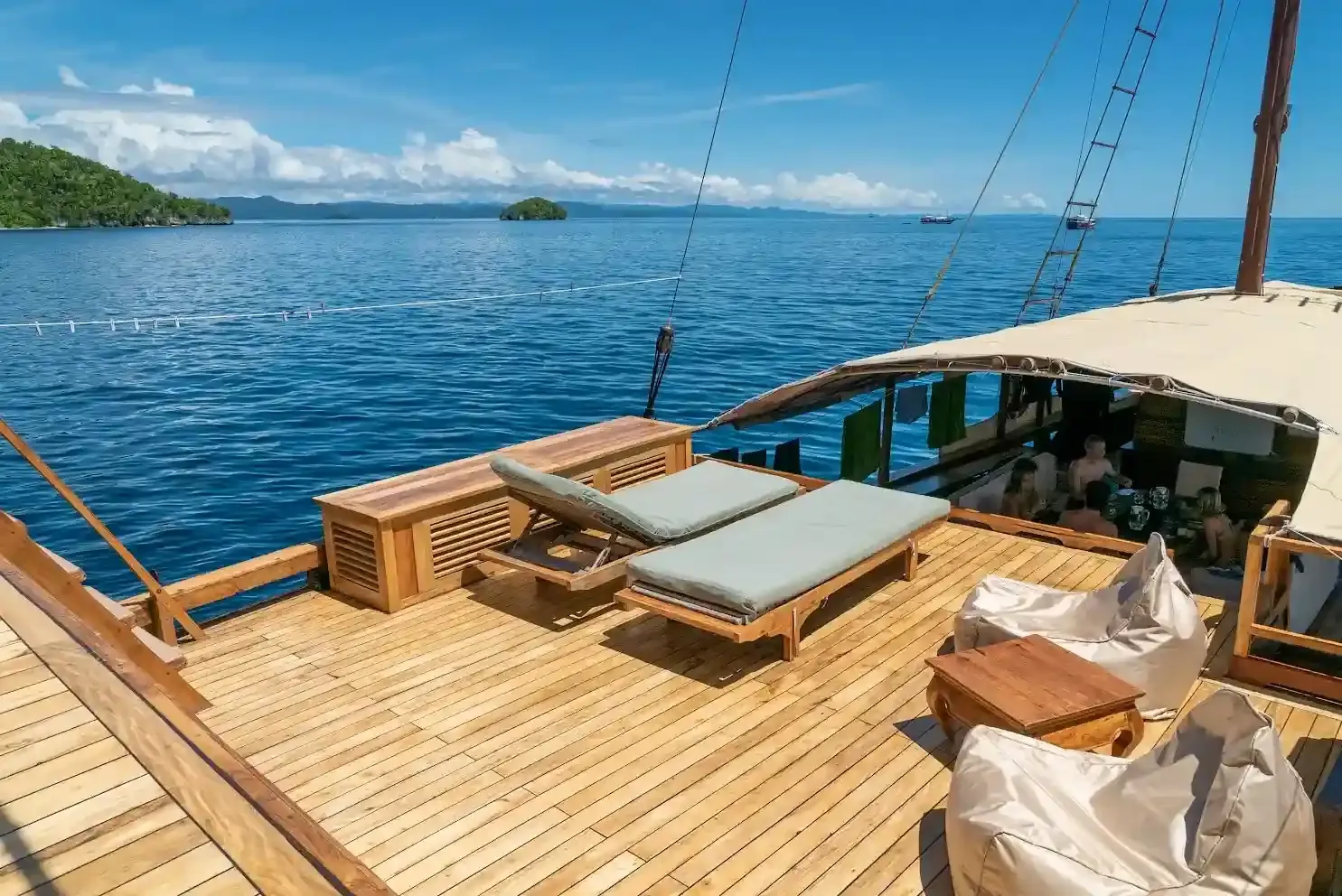
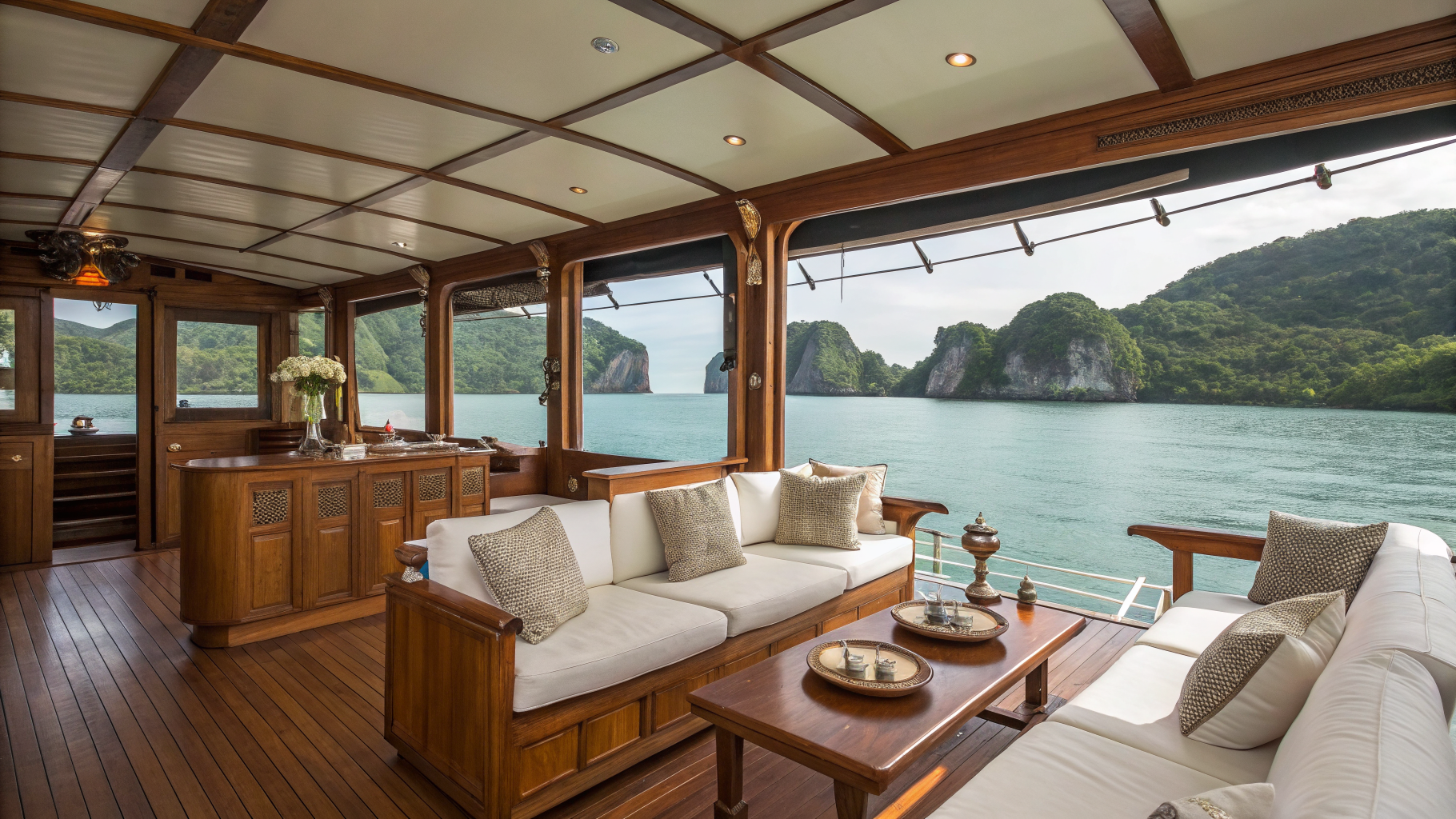
A Phinisi’s layout celebrates communal, open-air living. The soul of the vessel is its expansive main deck, often shaded, which serves as the central hub for dining, dive briefings, and relaxing between excursions. The design encourages interaction and a constant connection to the sea and sky. Cabins, typically accommodating 12 to 16 guests, are often located on the lower deck. While comfortable and air-conditioned, with en-suite facilities, they are designed primarily as private spaces for rest. The aesthetic is one of rich, polished teak, brass fittings, and handcrafted details. The focus is less on enclosed, interior saloons and more on creating varied, shaded outdoor spaces for every time of day. Air conditioning is standard, but the wooden construction means it may be less potent than the hermetically sealed systems of a modern yacht.
Modern Yacht Interiors: Climate Control and Privacy
A modern yacht’s interior is engineered for privacy and perfect climate control. Cabins may be more numerous and are often spread across multiple decks, providing greater separation and sound insulation. It is common to find master or VIP suites on the main or upper decks, featuring large panoramic windows. The central social space is typically a fully enclosed, air-conditioned saloon with comfortable lounge seating and an integrated entertainment system, offering a respite from the tropical heat. While ample outdoor deck space is always included, the design provides a distinct choice between the interior and exterior environment. For guests who require a consistently cool, quiet, and private retreat, the modern yacht’s architecture is a clear advantage. This design also allows for more specialized facilities, such as dedicated indoor camera rooms or libraries.
Range, Speed, and Itinerary Flexibility
Raja Ampat is an immense territory of over 1,500 islands. The distance between the northern dive sites around Waigeo and the southern lagoons of Misool is significant. Vessel speed is not a matter of luxury but a critical logistical component that directly impacts what you can see and do. This is a key differentiator in the Phinisi vs Modern Yacht decision.
Cruising Speed of a Phinisi
A Phinisi, with its heavy displacement hull, typically cruises at a stately 7 to 9 knots. This pace is perfectly suited for immersive, regionally-focused itineraries. A 10-day trip might concentrate solely on the Dampier Strait, allowing for multiple dives at iconic sites like Cape Kri—where Dr. Gerald Allen recorded 374 fish species on a single dive in 2012—without long, overnight passages. The journey itself becomes part of the experience; you are always moving at a speed that allows you to absorb the passing scenery of karst islets and coastal villages. The trade-off is range. A voyage encompassing both northern and southern Raja Ampat on a Phinisi would require a longer duration or would sacrifice time at the destinations for time in transit.
The Modern Yacht’s Advantage in Transit
Modern displacement or semi-displacement yachts cruise at 10 to 14 knots, and sometimes faster. This seemingly small increase in speed has a dramatic effect on itinerary possibilities. The passage from the Dampier Strait to Misool, which can take the better part of a day and night on a Phinisi, can be accomplished far more quickly on a modern yacht. This efficiency allows for comprehensive “best of” itineraries that cover the entire Raja Ampat archipelago in a 10 or 12-day trip. It maximizes time spent diving and exploring, reducing time spent on passage. For a private charter with a specific and ambitious list of destinations, the speed and range of a modern yacht are invaluable assets.
The Dive Operation: Deck and Equipment
The primary purpose of a liveaboard is to facilitate a seamless diving experience. The layout of the dive deck, the quality of the tenders, and the support for underwater photography are critical operational details that differ significantly between vessel types.
Diving from a Phinisi
The dive operation on a Phinisi is integrated into the main deck. The aft section is typically configured with gear stations, rinse tanks, and storage. It is a spacious, open-air environment where divers prepare for excursions. All dives are conducted from high-powered tenders (zodiacs), which ferry divers directly to the optimal entry points of the dive sites. The crew is adept at managing equipment in this traditional space. While camera facilities are provided, they may be less extensive than on a purpose-built yacht; camera tables and rinse tanks are standard, but a dedicated, climate-controlled camera room is rare.
Purpose-Built Dive Decks on Modern Yachts
Modern dive yachts feature highly organized, multi-level dive platforms at the stern, engineered for efficiency. Each diver typically has an individual, numbered station where their BCD and regulator remain set up for the entire trip. High-pressure air and nitrox filling stations are often integrated directly into the stations. These decks feature dedicated, multi-level camera tables with charging points, air guns, and adjacent freshwater rinse tanks. Hot-water showers are positioned on the dive platform itself for an immediate post-dive rinse. The entire process, from gearing up to boarding the tenders, is streamlined for speed, safety, and comfort, a testament to over a decade of operational refinement by our parent company, Komodo Luxury, across 1,240 voyages.
Making the Decision: A Framework for Your Voyage
Your choice is a reflection of your priorities. There is no single “better” vessel; there is only the right vessel for your specific objectives. As a premier dive concierge, our role is to help you clarify those objectives and match them with the ideal platform.
Choose a Phinisi if: Your priority is the journey itself. You value a deep connection to Indonesian maritime heritage, the aesthetic of handcrafted wood and sail, and expansive open-air living. You prefer a relaxed, immersive pace, focusing intensely on one or two regions of Raja Ampat per trip. The ambient sounds of the sea and the wooden hull are, for you, a feature, not a distraction.
Choose a Modern Yacht if: Your priority is performance and comfort. You want to cover the maximum possible range, experiencing the full diversity of Raja Ampat in a single voyage. A consistently climate-controlled interior, minimal roll thanks to stabilizers, and a highly efficient, purpose-built dive deck with dedicated camera facilities are essential to your enjoyment and operational needs.
Frequently Asked Questions about Raja Ampat Vessels
Are Phinisis safe for open-water crossings in Raja Ampat?
Yes. Our Phinisis are modern vessels built to international safety standards, equipped with the latest navigation, communication, and safety equipment. Their heavy displacement hulls are exceptionally seaworthy. The motion profile in rough seas differs from a stabilized monohull, which is a matter of personal comfort preference, not a question of safety. We operate with a full complement of 28 experienced staff to ensure adherence to all protocols.
Is one vessel type better for viewing specific marine life?
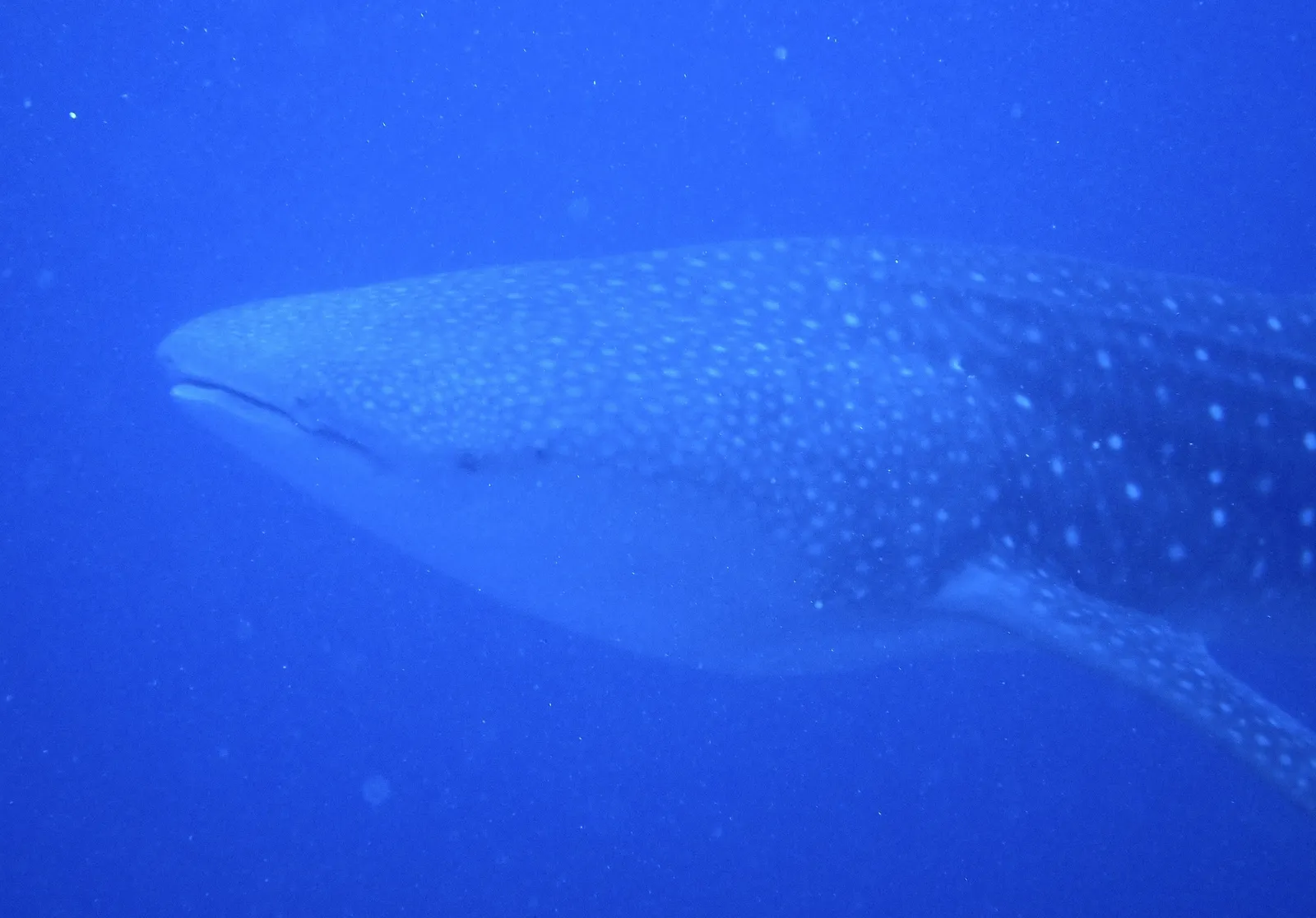
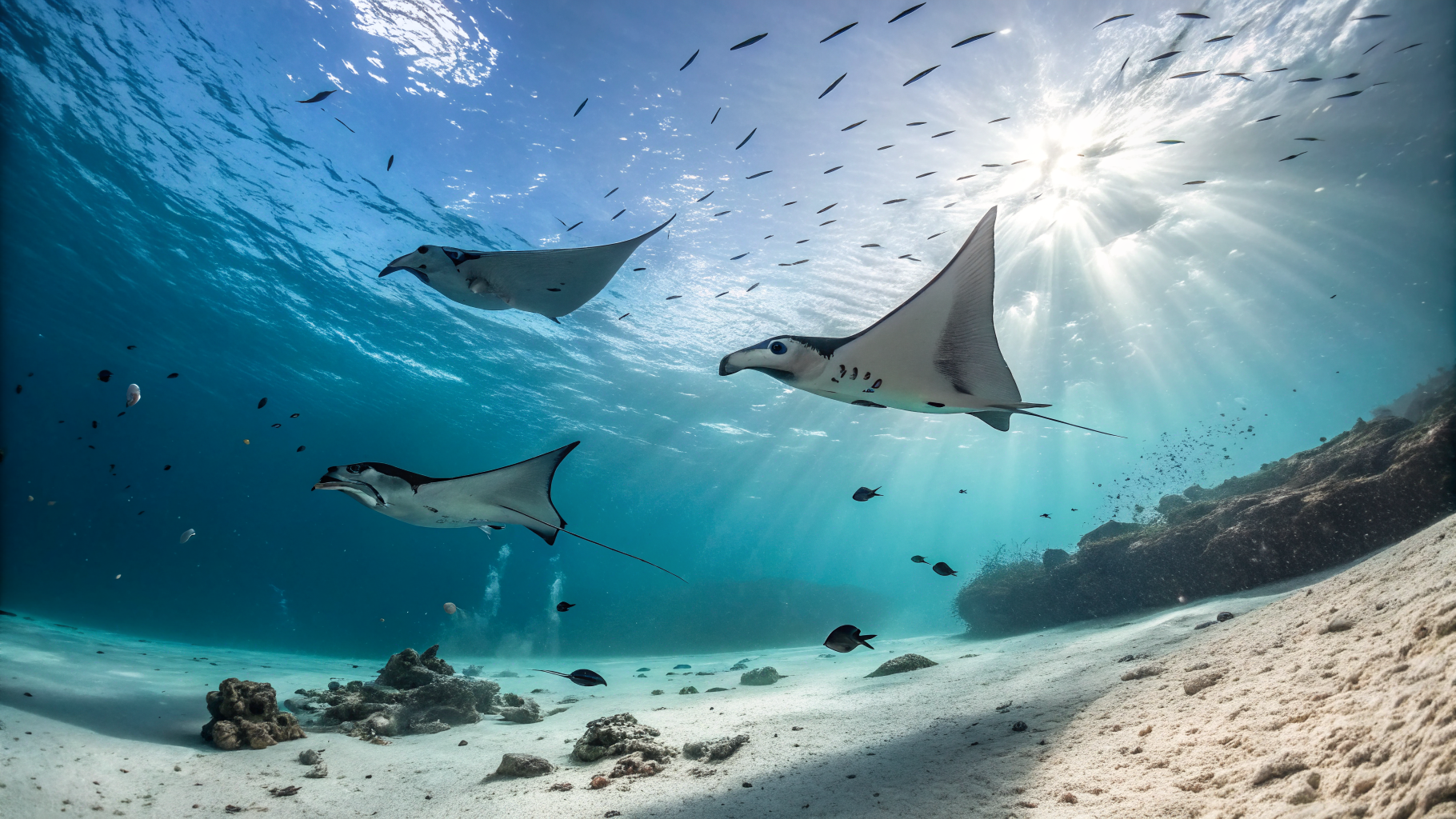
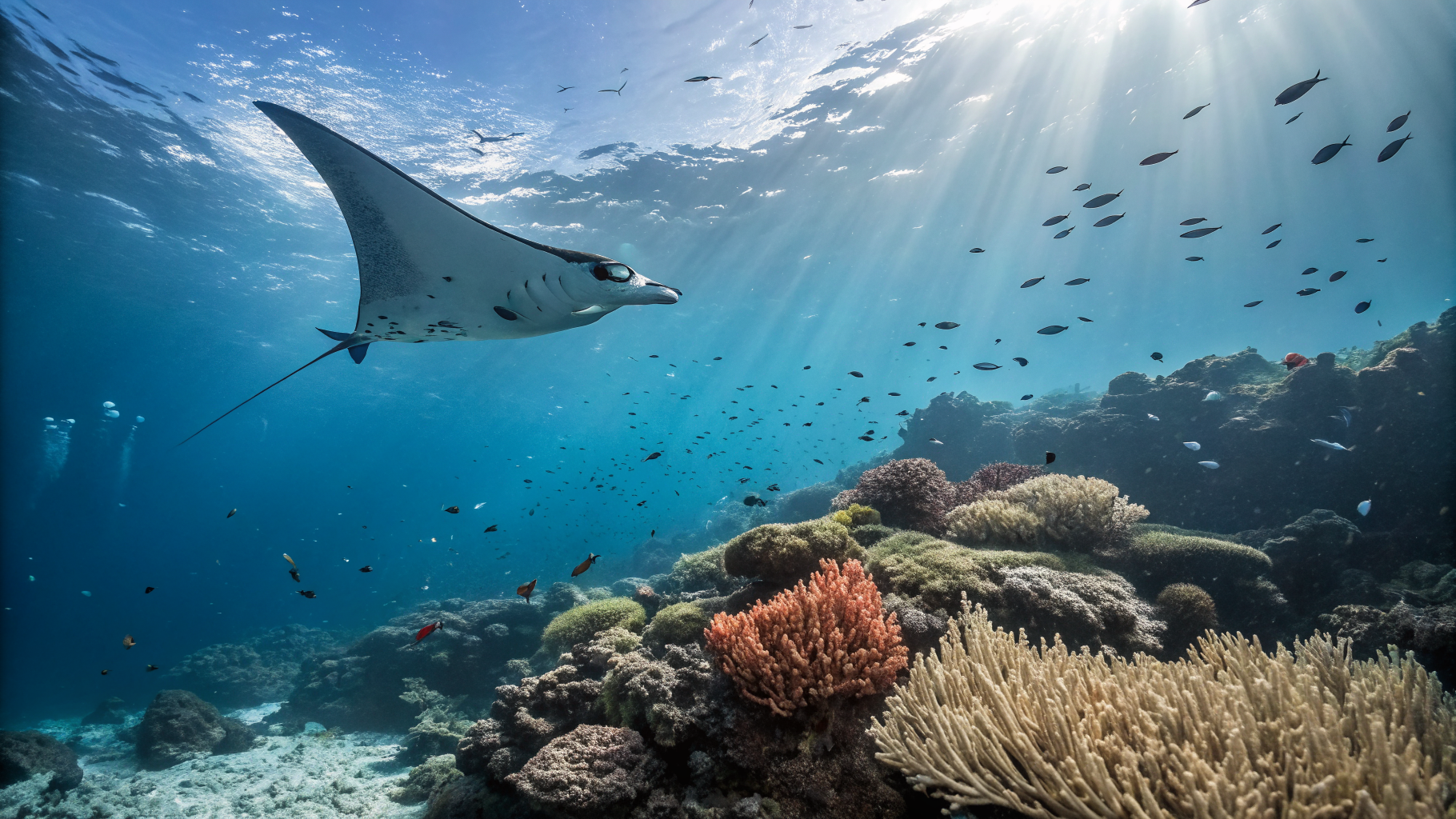
No, the vessel itself does not determine marine encounters. Access to all dive sites, from seeing the endemic walking shark (Hemiscyllium freycineti) on a night dive to watching oceanic mantas (Mobula birostris) at Magic Mountain, is via tenders. The critical factors are the Cruise Director’s expertise and the itinerary. Peak manta aggregation from December to March is equally accessible from either vessel type, as both can reach key sites like Manta Sandy.
How does the cabin arrangement differ between the two?
Phinisis typically feature 6-8 cabins, often located on the lower deck to maximize open-air social space above. This configuration accommodates 12-16 guests. Modern yachts may offer more cabins across multiple decks, often including master suites with panoramic windows on the main or upper deck. This can provide more privacy and separation between guest cabins and the vessel’s primary social areas.
Does the vessel choice affect the cost of the trip?
The vessel is a primary driver of cost. Key factors include its size, age, build quality, amenities (such as fin stabilizers), and crew-to-guest ratio. A new, large, stabilized modern yacht will generally command a higher price point than a classic Phinisi of the same size. However, a highly customized luxury Phinisi can be comparable. For a detailed cost analysis, we can prepare a proposal for a private charter on various platforms.
What is the departure port and how do I get there?
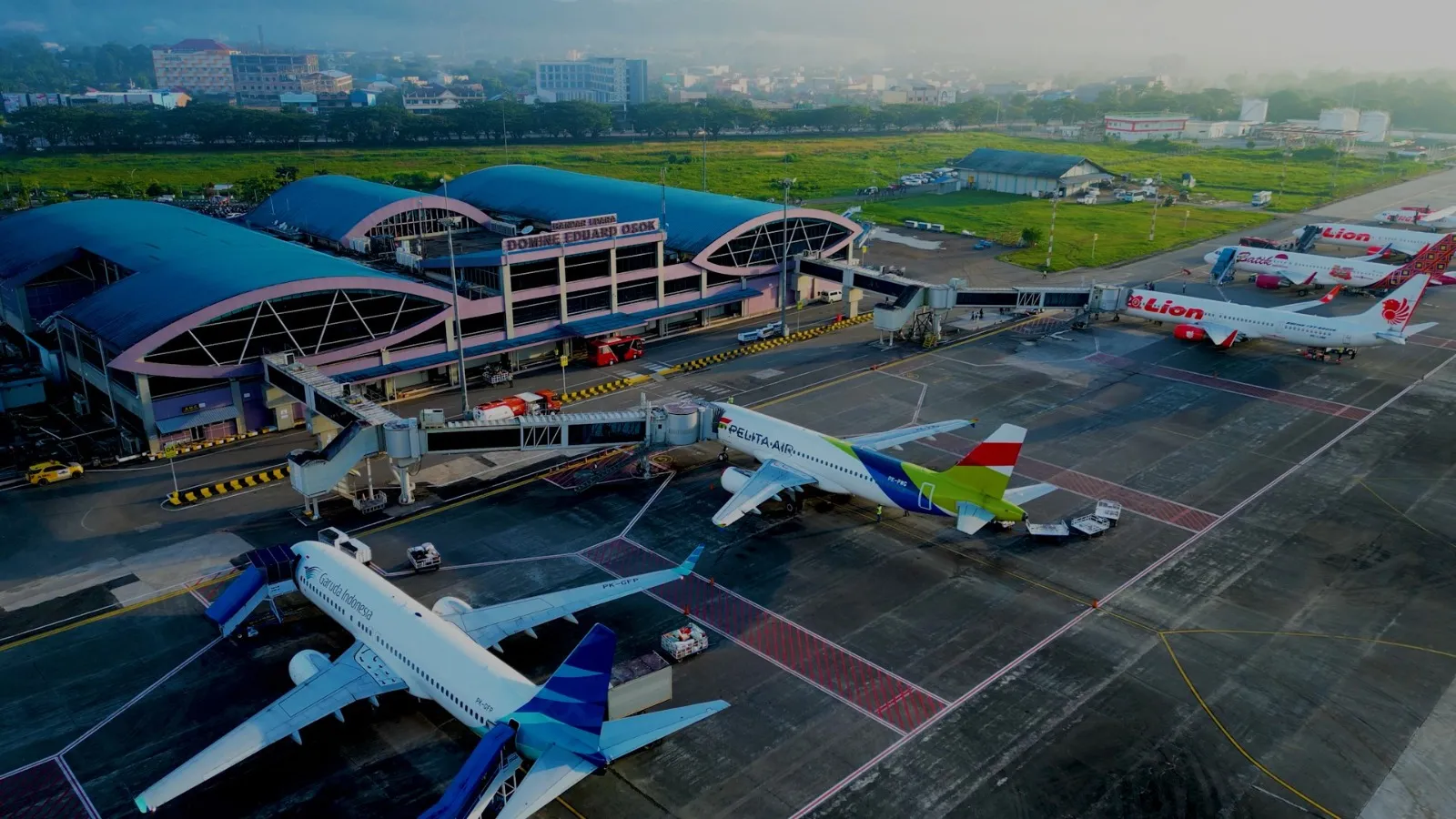
All our Raja Ampat voyages depart from and return to the port of Sorong (SOQ), West Papua. Sorong is accessible via domestic flights from Indonesia’s major international hubs, primarily Jakarta (CGK) and Denpasar, Bali (DPS). Our concierge service coordinates all domestic travel logistics for our guests, ensuring a seamless transfer from your arrival airport directly to the vessel, where your Raja Ampat liveaboard begins.
The choice between a Phinisi and a modern yacht is personal. It sets the tone for your entire expedition through Raja Ampat. At Raja Ampat Liveaboard Voyages, our deep operational experience allows us to provide specific, candid advice tailored to your group’s composition, dive experience, and travel style. We invite you to discuss your objectives with our specialists. Contact us directly on WhatsApp at +62 811-3823-875 to begin planning your voyage.