Skip to content
Raja Ampat Liveaboard Diving
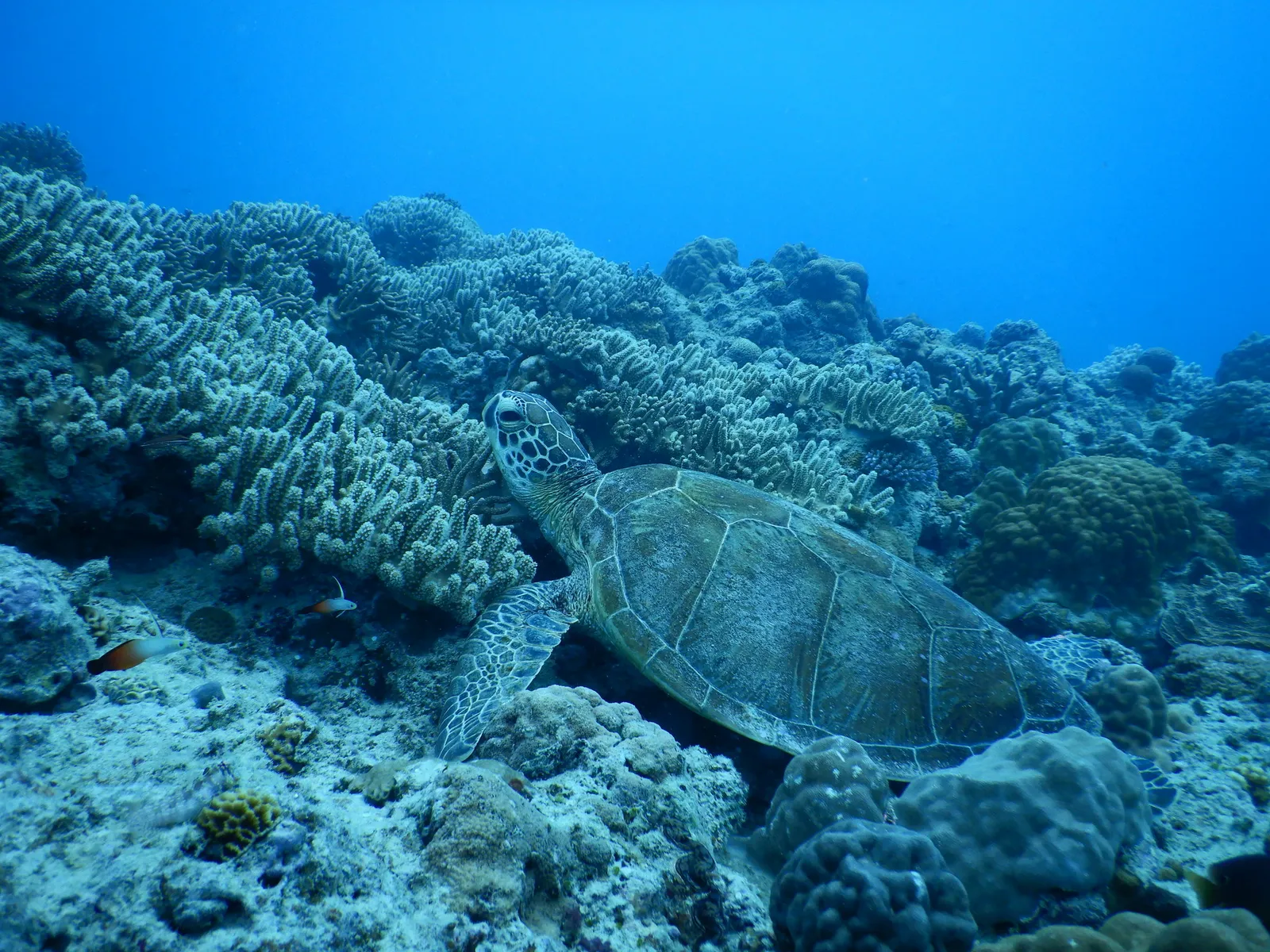
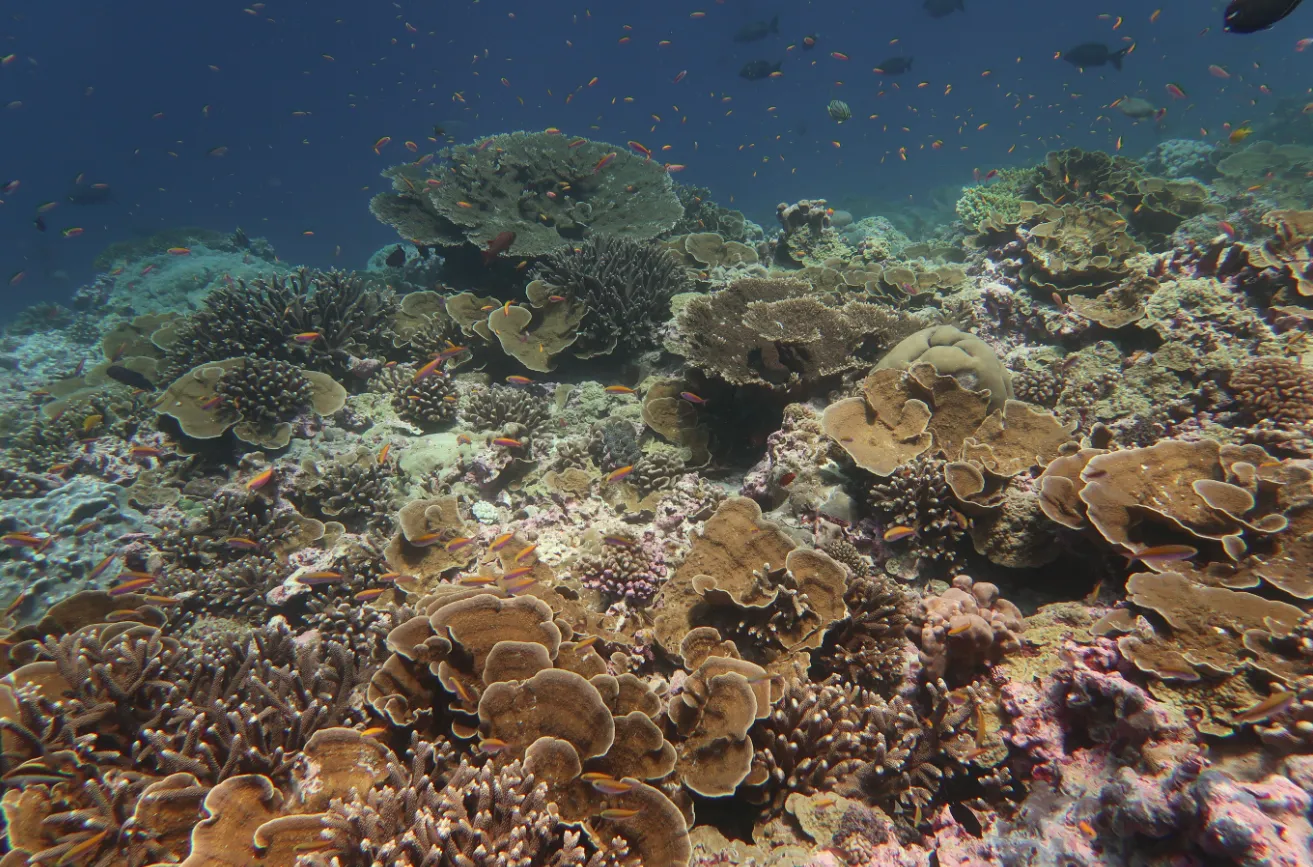
Coral reef and reef fish — Mimic goatfish coral reef Howland Island 2023

About Us

First-Hand Dive Logs — Eight Voyages, Documented

Our dive briefings are not static documents.

They are dynamic, informed by continuous, real-time observation from our most senior crew and scientific advisors. What follows is a selection of field notes from our team's dive logs. These entries document specific encounters, behavioral observations, and environmental conditions across Raja Ampat's 40,000 km² marine area. They serve as a direct intelligence feed, shaping our dive plans to align with current marine life activity, from manta aggregations to the nocturnal patterns of endemic walking sharks. We record this data to enhance guest safety, maximize opportunities for significant sightings, and contribute to a deeper operational understanding of this ecosystem. Each log entry represents a data point in our comprehensive map of the region's underwater topography and its inhabitants, ensuring our guidance is based on direct, recent experience rather than generalized knowledge. This is our commitment to operational precision.

01

Manta Sandy — 2024-12-18 — guide log

Depth: 12m | Time In: 09:15 WIT | Time Out: 10:02 WIT | Conditions: Mild southerly current, 30m visibility, 29°C

The objective was to log cleaning behavior for my ongoing study of Mobula alfredi social dynamics. We positioned our four-person group on the sandy bottom, 15 meters from the primary coral bommie that serves as the cleaning station. Within five minutes, the first reef manta, a large female with a distinctive propeller scar on her left cephalic lobe, arrived. She initiated a cleaning sequence with a group of bluestreak cleaner wrasse (Labroides dimidiatus), hovering motionless for 12 minutes. Over the 47-minute observation period, we documented five separate individuals, three females and two males, using the station. We noted a clear hierarchy; the larger females commanded longer, uninterrupted cleaning sessions, while the smaller males performed quicker passes. The mild current seemed to aid their ability to remain stationary with minimal effort. An interesting observation occurred at 09:48, when a juvenile male attempted to approach the station while the scarred female was present. She responded with a slight pectoral fin flick, a clear signal that caused the male to divert his path. This subtle, non-aggressive assertion of dominance is a key data point for our research.
02

Cape Kri — 2023-11-04 —

Depth: 18m | Time In: 11:10 WIT | Time Out: 12:05 WIT | Conditions: Moderate current on the point, 25m visibility, 28°C

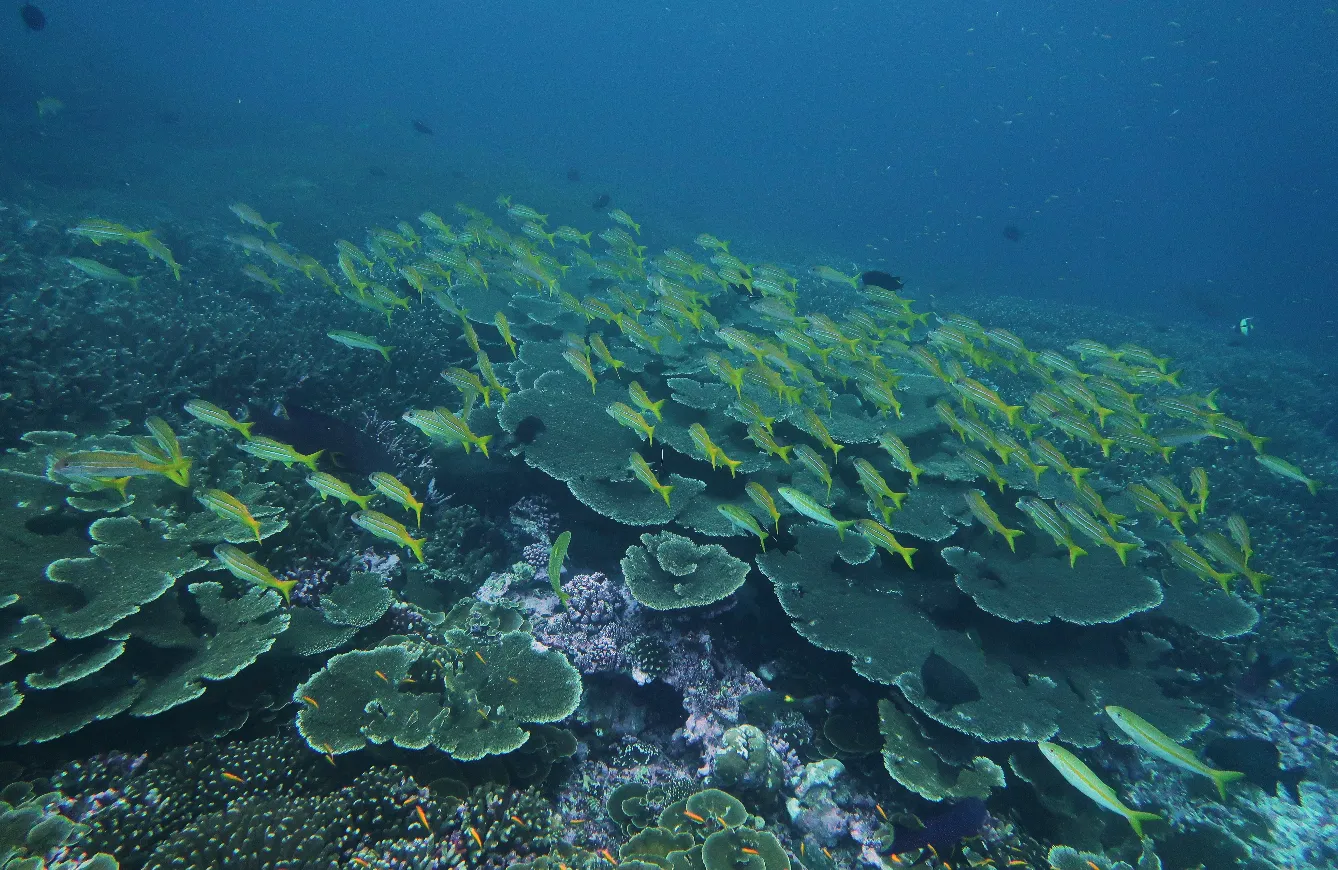
From the bridge during my anchor watch, the surface above Cape Kri showed the tell-tale signs of intense activity: birds diving and the water boiling with fusiliers. I knew the guests were in for a demonstration of biomass. Descending with them later, the density of fish was immediate. Dr. Gerald Allen’s 2012 record of 374 fish species on a single dive here is not an abstraction; it is a physical reality you must push through. My primary role was to monitor the group as they navigated the split point of the current. A school of bigeye trevally, several thousand strong, formed a vortex that extended from 10 meters down to the reef slope at 25 meters. The sound was a low-frequency hum, a vibration felt in the chest. I watched our divers hold their position, fins barely moving, completely enveloped by the wall of silver. My anecdote from this dive was a practical one: a guest, mesmerized by the trevally, began to drift from the group. A simple hand signal and a direct line of sight were enough to bring him back to the safety of the reef edge. It’s a constant reminder that even in a spectacle, a guide's attention must remain on the divers.

03

Magic Mountain, Misool — 2025-02-21 — guide log

Depth: 22m | Time In: 10:30 WIT | Time Out: 11:18 WIT | Conditions: Strong down-current, 20m visibility, 28°C

Magic Mountain in peak season requires a specific protocol. The currents that attract oceanic mantas (Mobula birostris) are formidable. My briefing emphasized negative entry, immediate descent to 20 meters, and mandatory reef hook deployment. I also advised any guests sensitive to vertigo to consider a scopolamine patch, as the combination of strong currents and deep blue exposure can be disorienting. We hooked in on the exposed pinnacle, facing into the current. The reward was almost immediate. Four oceanic mantas, identifiable by their T-shaped dorsal markings and significantly larger size than their reef counterparts, materialized from the blue. They were not here to be cleaned; they were feeding, their giant mouths agape to filter plankton brought in by the currents. The largest, a female with a wingspan I estimated at over five meters, passed within three meters of our group. Her movements were slow and deliberate, a stark contrast to the water rushing past us. The experience is less about interaction and more about bearing witness to a powerful pelagic event. We unhooked after 20 minutes, drifting over the rich reef top for our safety stop, the entire group silent and clearly moved by the scale of what they had just seen.

04

Boo Windows, Misool — 2024-10-30 — voyage desk log

Depth: 8m | Time In: 14:00 WIT | Time Out: 14:55 WIT | Conditions: No current, 35m visibility, 30°C

This was my first time guiding guests through Boo Windows, and I focused the briefing on buoyancy control and spatial awareness. The site's signature feature is the two large swim-throughs on the rock's western face. We descended to 10 meters and approached the larger "window" at a depth of 8 meters. I went through first to position myself on the other side and photograph the divers as they emerged, silhouetted against the open blue water. The sunlight penetrating the openings creates distinct shafts of light that illuminate the entire cavern. The interior surfaces are completely covered in soft corals, predominantly orange and purple Dendronephthya, and swarms of glassfish pulse in the shadows. My memorable moment was with a guest who was initially hesitant about the enclosed space. I instructed her to deflate her BCD completely and use gentle fin strokes, pulling herself through with her hands on the bare rock patches. As she came out the other side into the sunlit coral garden, she gave a definitive "OK" signal, her eyes wide. She later told me the visual reward of the garden on the far side, an explosion of color, made the transit worthwhile.

05

Aljui Bay, Wayag — 2025-01-12 — guide log

Depth: 6m | Time In: 20:30 WIT | Time Out: 21:25 WIT | Conditions: Slack tide, 15m visibility, 27°C (night)

The specific goal for this night dive was to locate a juvenile Raja Ampat walking shark (Hemiscyllium freycineti) for photographic documentation, contributing to my 2024 paper on their early-life habitat utilization. Aljui Bay’s shallow rubble zones are a known nursery. We moved slowly, keeping our beams low to the seafloor to minimize disturbance. At 42 minutes into the dive, under a small ledge of Acropora coral, I spotted it. The juvenile, approximately 25cm long, displayed the distinct banding pattern that fades as they mature. Instead of swimming, it used its pectoral and pelvic fins in an alternating motion to "walk" across the substrate, a behavior perfectly adapted for navigating complex reef structures without exposing itself in the water column. I motioned for my dive buddy to keep his distance while I took a series of non-intrusive photographs, documenting its location and the surrounding habitat. The shark showed no signs of stress, continuing its search for crustaceans among the rubble. An anecdote: my dive computer’s backlight failed just before the dive. I had to rely on my torch to illuminate my SPG, a small inconvenience that sharpened my focus on the environment rather than my instruments, which is likely why I found the shark.

06

Wedding Cake, Misool — 2022-03-08 —

Depth: 24m | Time In: 09:00 WIT | Time Out: 09:45 WIT | Conditions: Very strong down-current, 15m visibility, 28°C

Conditions at Wedding Cake were challenging. The briefing had been explicit: this is a high-voltage drift dive. Despite this, a diver panicked at 24 meters as a down-current pushed us from the wall. I saw his rapid breathing and wide eyes. My first action was to secure a position slightly below him, making direct eye contact and giving a firm "slow down" signal. He did not respond. I moved in, took hold of his BCD inflater, and added a small burst of air to arrest the descent. I then established a physical grip on his arm and pointed emphatically upward, beginning a slow, controlled ascent. The key was to keep him oriented away from the disorienting "blue" and toward the physical structure of the reef wall as we rose. At 10 meters, out of the current's main force, his breathing stabilized. We completed our safety stop, and I deployed my SMB early to signal the tender for an immediate pickup. The rest of the group, managed by the second guide, surfaced 200 meters down-current as planned. The extraction was smooth. Post-dive debrief focused not on blame, but on the physiological effects of nitrogen and the absolute necessity of trusting the guide's instructions in adverse conditions.

07

Yenbuba Jetty, Dampier Strait — 2023-07-15 — guide log

Depth: 11m | Time In: 19:45 WIT | Time Out: 20:50 WIT | Conditions: No current, 20m visibility, 29°C (night)

This was a macro-focused inventory dive beneath the Yenbuba village jetty. The pylons act as an artificial reef, creating a substrate for an immense diversity of cryptic life. My goal was to document pygmy seahorse populations on the Muricella gorgonian fans. Over the course of the dive, we successfully located three individuals of two different species: two Bargibant's pygmy seahorses (Hippocampus bargibanti) on a pink fan at 11 meters and, after a long search, a single Raja Ampat pygmy seahorse (Hippocampus pontohi) on a piece of Halimeda algae at 9 meters. The H. pontohi is not a gorgonian-dweller, a fact many divers are unaware of, so we brief this specifically. The anecdote of the dive came from a guest, a skilled photographer, who spent 20 minutes attempting to get a clear shot of one of the Bargibant's. He finally gave up, turned to me, and shrugged with a smile. He understood that the animal's welfare comes first; stressing it for a photograph by overusing a focus light is not our practice. His decision to stop demonstrated a respect for the environment that is more valuable than any image. He still talks about the search, not the photo.

08

Blue Magic — 2025-03-22 — voyage desk log

Depth: 28m | Time In: 08:30 WIT | Time Out: 09:19 WIT | Conditions: Moderate current, 30m visibility, 28°C

Blue Magic is an open-ocean seamount, so the dive plan is always contingent on conditions observed upon arrival. The current was running, so I made the call in the briefing for a negative entry to get below the surface chop and descend quickly as a group to the pinnacle's top at 10 meters. From there, we dropped down the current-facing side to 28 meters to look for pelagics. At 12 minutes into the dive, I scanned the blue and saw it: a distinct, tall dorsal fin and the unmistakable scalloped head of a great hammerhead shark (Sphyrna mokarran). It was a silhouette, perhaps 40 meters away, moving parallel to the reef. I got the attention of the group with my tank banger, and pointed into the blue. Four of the six guests saw it before it faded from view. The entire sighting lasted no more than 15 seconds. On the surface, the excitement was electric. The key takeaway, which I emphasized in the debrief, was the importance of the briefing decision. Had we descended slowly or spent time on the shallow reef top first, we would have missed the window. The hammerhead was deep. Our disciplined, direct descent put us in the right place at the right time. It validated the plan.

The observations detailed here form a small part of our extensive operational database. We maintain comprehensive logs for every dive conducted from our vessels, documenting environmental parameters, species interactions, and route efficacy. This information is proprietary and vital to our concierge-level service. However, for bona fide academic and marine conservation initiatives, we are open to sharing anonymized data sets. We believe collaborative efforts are essential for the long-term study and preservation of the Raja Ampat archipelago. Interested parties from research institutions may contact our science lead for further discussion.

Contact: WhatsApp +62 811-3823-875 | sales@komodoluxury.com

About Us

More in About Us

Coral reef and reef fish — Mimic goatfish coral reef Howland Island 2023

Plan Your Raja Ampat Voyage

Our dive concierge team is ready to design your private phinisi charter. We manage all logistics — from arrival in Sorong to your departure.